
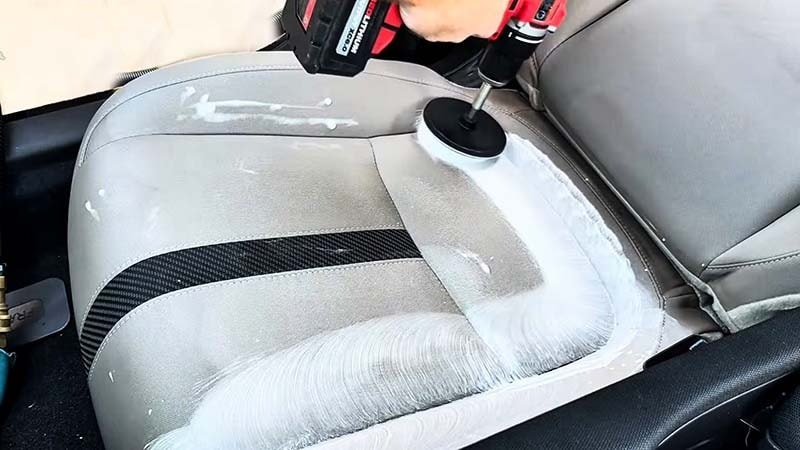
Shampooing is one of the most effective ways of keeping your car’s interior clean. But only if you do it the right way. From choosing the right products to using proper techniques, a good shampoo session can lift deep dirt, remove odors, and revive your car seats.
In this article, we break down the best methods to shampoo car seats and share important tips to avoid accidentally damaging your car interior.
What is Car Seat Shampoo?
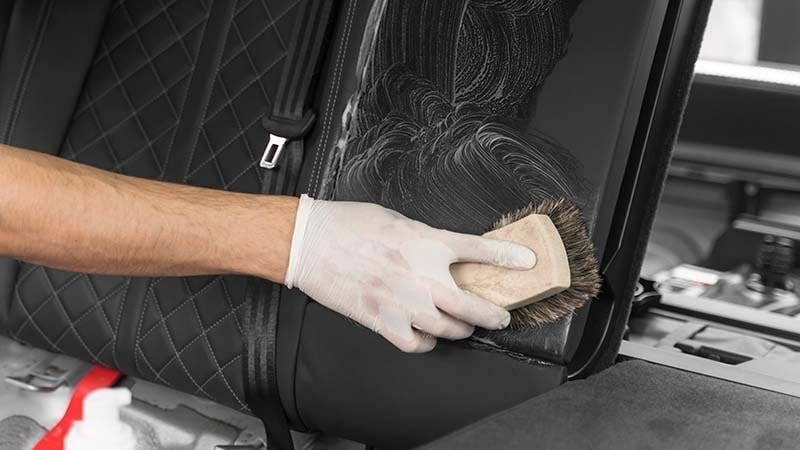
Car seat shampoo is a broad term used for car seat cleaning products. It generally consists of a liquid spray or foam designed specifically for cleaning and scrubbing car upholstery.
You will see these products marketed under different names. But all serve the same basic function of cleaning your car seats. The following are some common names for car seat shampoos.
- Upholstery Cleaner
- Carpet Cleaner
- Carpet Shampoo
- Interior Cleaner
- Fabric Cleaner
- Multi-Purpose Cleaner
- Car Detailing Shampoo
- Etc.
You will see specialized products marketed as leather seats only. However, in our experience, all-purpose car seat cleaners are just as effective as any leather-specific cleaning product.
Pre-Cleaning Preparation
Before you start shampooing your car seats, you need to follow our pre-cleaning process. It’s four small steps designed to ensure maximum cleaning and minimum seat damage.
1. Identify the Car Seat Material
Firstly, identify your car seat materials. Cloth-like fabrics, such as cotton, polyester, and nylon, are much harder to clean and require additional time and effort. These fabrics result in porous car seats that stay cool in summer but also absorb all sorts of environmental compounds.
Leather and faux leather seats are similar in performance and are easier to clean. Today, many cars use hybrid seat designs with leather sides and a cloth center.
2. Early Vacuum Cleaning
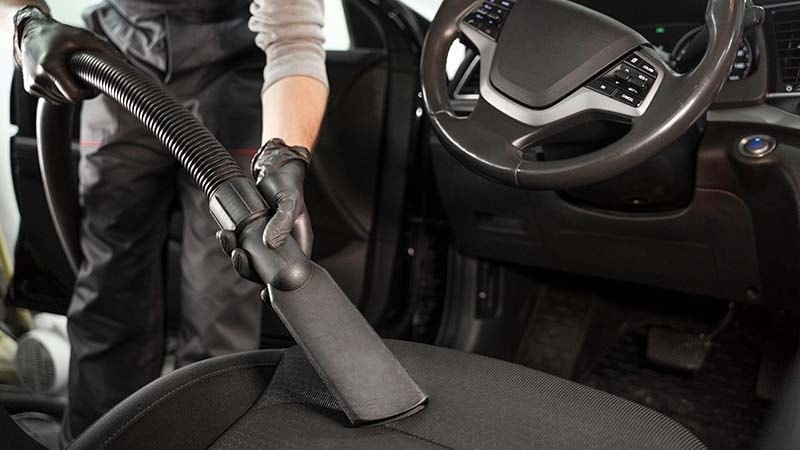
Remove loose dirt from your car by quickly vacuuming the seats. Dirt can often hide in crevices and seams. So, pay extra attention to those areas. A vacuum cleaner will lift most of the dust and dirt from your seats, making further cleaning a lot easier.
The last thing you want is to push the dirt deeper into your car seats during cleaning. If you don’t have a vacuum, use a soft brush and a microfiber cloth. Microfiber products attract dirt and trap it within their fibers.
3. Check for Stains Spots
Now, with most of the loose dirt gone, you can examine your vehicle’s interior for stubborn stains. We recommend doing this in a well-lit garage or outdoors in the sun, so you don’t miss any spots.
These stains will require special attention during the cleaning process.
4. Choosing the Right Cleaning Products
You can now choose your car seat shampoo based on the above information.
- For softer luxury car seats, you should avoid harsh chemicals.
- For leather seats, we recommend a good leather conditioner post-cleaning for maintenance.
- For deep cleanings, you may want to invest in a carpet extractor.
Select a car seat shampoo, scrubbing brush, and clean microfiber towel that best suits your car seat material.
How to Shampoo Car Seats? Step-by-Step Process
This is a quick step-by-step process to help you safely and easily clean car seats. You can modify the steps to fit your car’s interior and your specific cleaning requirements.
Step 1: Gather Cleaning Materials
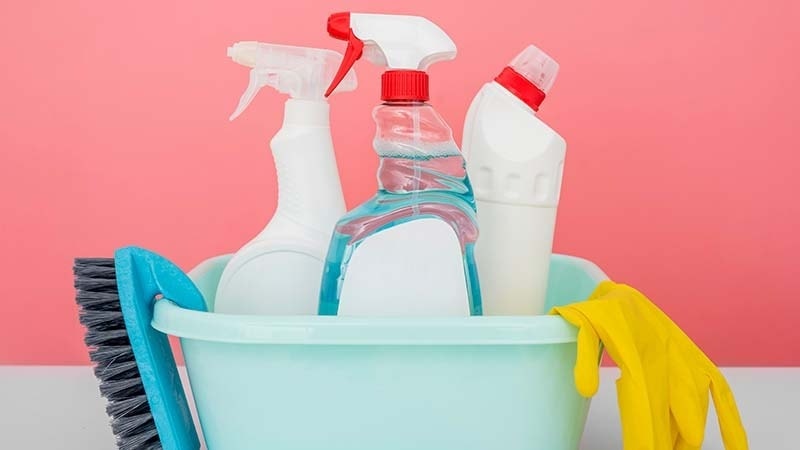
Your first step is to gather all the right tools and materials before you start cleaning your car seats. Here is a quick list of everything you will need.
- Car Seat Shampoo
- Clean Water
- Spray Bottle
- Soft Fabric/Upholstery Brush
- Microfiber Towel
- Scrubbing Mitt (Optional)
- Drill with Brush Attachment (Optional)
- Extractor (Optional – Only for Deep Cleaning)
Step 2: Mix Your Clean Solution
Commercial car seat shampoos are sold as ready-to-use sprays or concentrates. For light cleaning, a spray bottle is generally a good choice. But for serious car cleaners, we recommend getting a concentrate and diluting it to your needs.
We prefer a 1:8 ratio, that is, one part car seat shampoo and eight parts of clean water. But you should always check the product instructions for guidance.
Step 3: Test Your Solution
Car seat shampoos can have dangerous chemicals. We recommend testing your solution on a small section and adjusting the concentration as needed.
You should follow proper safety procedures and wear a face mask and gloves when handling these cleaning solutions.
Step 4: Lightly Spray the Car Seats
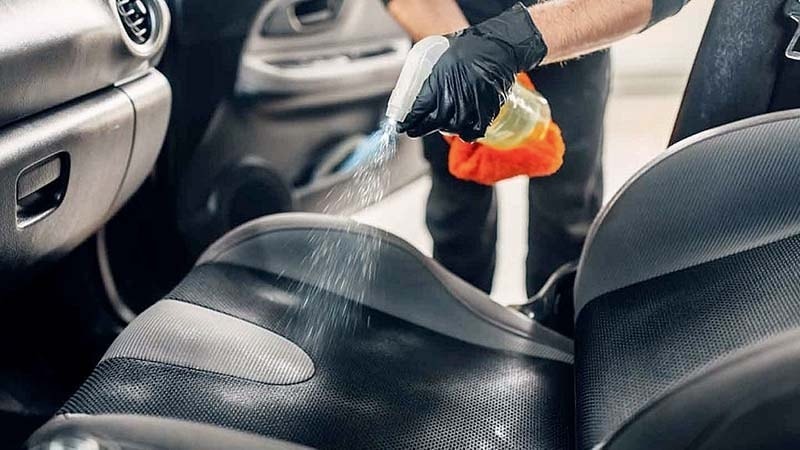
Spray from a distance and give your seats a light coat of the shampoo. Spraying from a close distance or heavy shampooing can lead to shampoo stains. This means the shampoo penetrates deep into the foam padding of your car seats and results in a dark spot.
Work on one seat at a time and one section at a time. Start with the base of the seat, then move to the back side, and focus on the headrest at the end.
Step 5: Gently Brush the Surface
Use a soft-bristle brush to scrub the shampoo into the car seats. Use straight overlapping strokes so you don’t miss any spots. The scrubbing will create a foam on the surface. A yellow or brown foam means the shampoo is removing oils and grime from the car seats.
Step 6: Wipe the Seat Dry
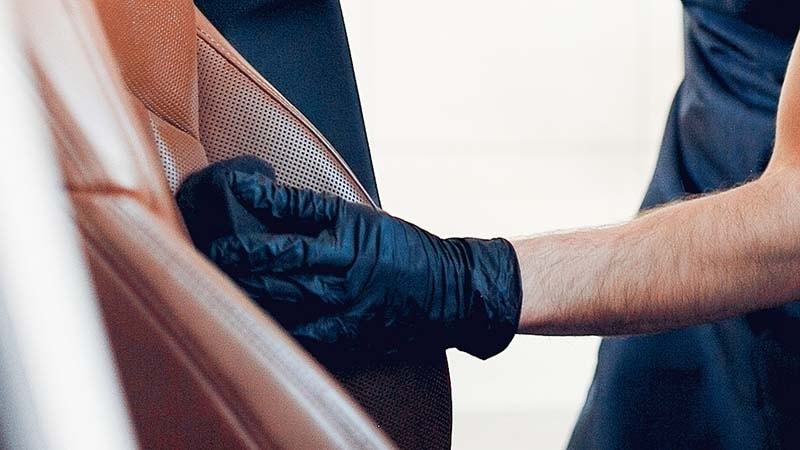
Now wipe your car seats with a clean microfiber towel. Microfiber towels are ultra soft and super absorbent. So they help your seats dry faster without resulting in unwanted micro-scratches.
You can use two microfiber towels. One for removing the shampoo and another for drying the car seats by absorbing the excess moisture.
Step 7: Repeat Steps Until Clean
Depending on your car seat’s condition, you will need to repeat the process. As a general rule, you will need two or three passes to remove stubborn stains. Don’t use too much shampoo. Go slow and steady.
Spray the solution on those stubborn spots, wait 10-15 seconds, then start scrubbing. Wipe everything clean to see if the stain changed color. Repeat steps until the stain is completely gone.
If you clean your car regularly and there are no major stains, then a single pass is sufficient.
Step 8: Wait for Seats to Dry
Wipe your seats dry with a microfiber cloth, then let the seats air dry completely. The easiest way to dry your car seats is to leave the car in the driveway with the doors open. The fresh air will dry the seats in 1-2 hours.
Alternatively, you can close all the doors, crank the rear windows, and turn on the car heater.
Special Considerations for Different Car Seat Materials
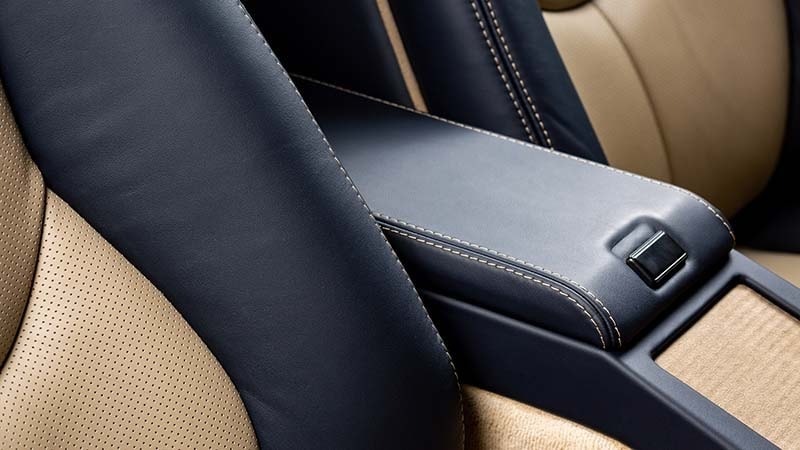
Now that we have covered the basics of shampooing your car seats, it’s time for some special considerations.
You might be worried if the above steps are safe for your car seats or not. In this section, we go through the most common car seat materials and share insights to help you customize the above cleaning steps to your specific needs.
1. Cloth Car Seats
When we say cloth car seats, we mean wool, cotton, and other fabric blends. These are natural car seat fabrics that are easy to damage.
Always use a soft-bristle brush to gently scrub the seats. You will find these soft brushes labeled as fabric and upholstery-safe.
2. Leather Car Seats
Leather seats are much easier to clean, but also shockingly easy to damage, especially if you have real suede leather seats. Make sure you don’t use rough brushes or other tools that can leave scratches on the car seat. Be particularly gentle with suede seats.
Remember how we told you not to overuse your cleaning solution because it will penetrate into the foam padding. That is not really an issue with non-porous materials like leather. Spray as much shampoo as you want and scrub it until all stains are gone.
After cleaning, you can use a leather conditioner to significantly extend your car seat’s life.
3. Faux Leather Seats
Synthetic or faux leather is a plastic called polyurethane (PU). It’s commonly branded as vegan leather or eco-friendly leather. Fake leather is actually more sturdy than real leather and requires no additional steps.
However, chemical cleaners with acetone will dissolve the fake leather, so be careful.
4. Polyester/Vinyl Car Seats
Similar to fake leather, plastic-based fabrics like polyester, nylon, and vinyl are also very resilient. Make sure you use a soft brush and lightly scrub the seats.
Your only real concern is accidentally scratching or damaging the car seats. Unlike cloth fabrics, scratches on polyester are very noticeable and difficult to hide.
5. Alcantara Car Seats
Alcantara is a trademarked synthetic material that is made from a blend of polyester and polyurethane. It resembles the texture of natural suede leather and is considered a highly premium material.
Like real suede, you need to take special care when you shampoo car seats. To keep your seats in top shape, we recommend regular cleaning at least once a month.
Deep stains on alcantara are very hard to remove, and it’s best to visit a professional car detailer and avail their services.
What is an Extractor? And Do You Need It?
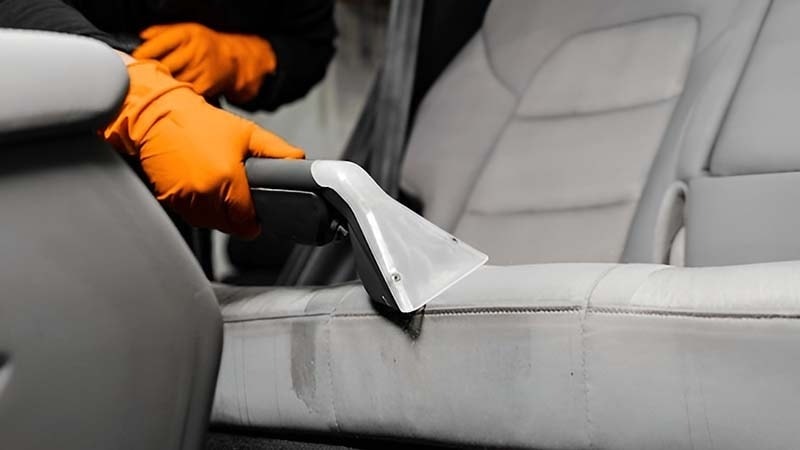
An extractor (also known as a carpet extractor, auto detailing extractor, or spot cleaning machine) is a vacuum-like device that pumps hot high high-pressure water into the car seats and immediately sucks it back. This process results in maximum dirt removal as the water washes the top surface of the seat.
Just to be clear. You do not need an extractor to shampoo car seats. It’s a professional tool designed for deep cleanings and professional car detailing. But it is one of the most convenient ways to clean car seats.
Extractors also remove excess shampoo and moisture from the seats. So if you ever make a mistake and use too much shampoo, you can fix it with an extractor.
Manual shampoo and cleaning is a lot easier when it’s one or two car seats. But the process becomes exponentially difficult when you have to clean your entire car. In such cases, an extractor can save you a lot of time and effort.
5 Tips for Cleaning Car Seats
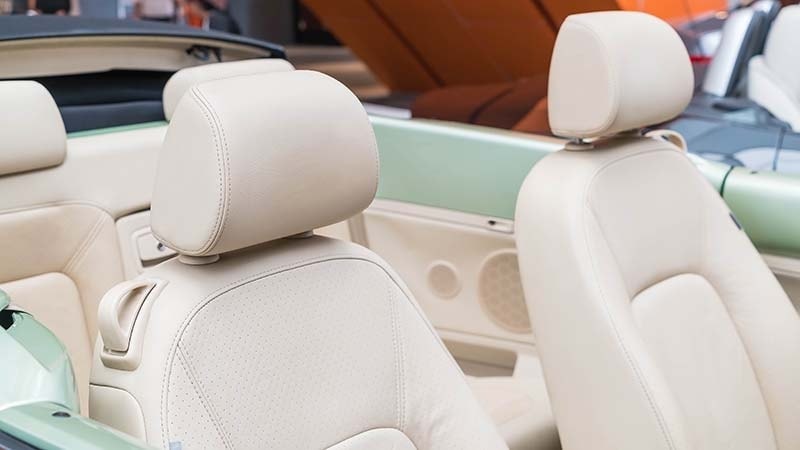
Cleaning car seats seems simple, but a few common mistakes can lead to stains, damage, or lingering odors. Here are five easy tips to increase the effectiveness of car seat shampoo.
1. Control Your Water Use
Using too much water will push dirt deeper into the foam, cause mold, and leave water rings. Use water sparingly and always dry your seats with microfiber towels after cleaning.
2. Don’t Use DIY Cleaning Solutions
You may be tempted to use dish soap or laundry detergent instead of a car shampoo. At best, these DIY solutions have lower effectiveness, and at worst, they can damage your car seat upholstery.
Also, avoid bleach and ammonia-based cleaners that can discolor fabric and weaken fibers.
3. Avoid Aggressive Scrubbing
Heavy scrubbing won’t remove stains faster or more effectively. It will only result in fraying cloth seats and scratched plastic seats. Use gentle, circular motions with a soft brush or microfiber cloth.
4. Dry Cleaning Before Shampooing
Using a vacuum or dry brush before cleaning will help reduce the risk of dirt smearing. Without pre-vacuuming, you will need multiple shampooing sessions to get all the dirt and debris out of the car seats.
5. Ample Drying Time
You need to give your car seats enough time to fully dry. Excess moisture will result in odd smells and potential mold buildup. Drying times will be longer for people living in humid areas and coastal regions.
Conclusion
Car seat shampooing is a necessary part of maintaining a fresh and clean interior. Whether it’s leather or polyester, pairing the right tools with the proper technique will breathe new life into tired upholstery. The best part is that you don’t need any special or expensive equipment to get the job done. Use this guide for your next car seat cleaning session.
Get Ultra-Soft Microfiber Towels from Manywell!
Manywell is a leading Chinese manufacturer of high-quality cleaning supplies. We make ultra-soft microfiber towels and scrubbing mitts for car detailing applications. All Manywell products are fully customizable with flexible MOQs.
Get a customized quote today. Contact us now!