
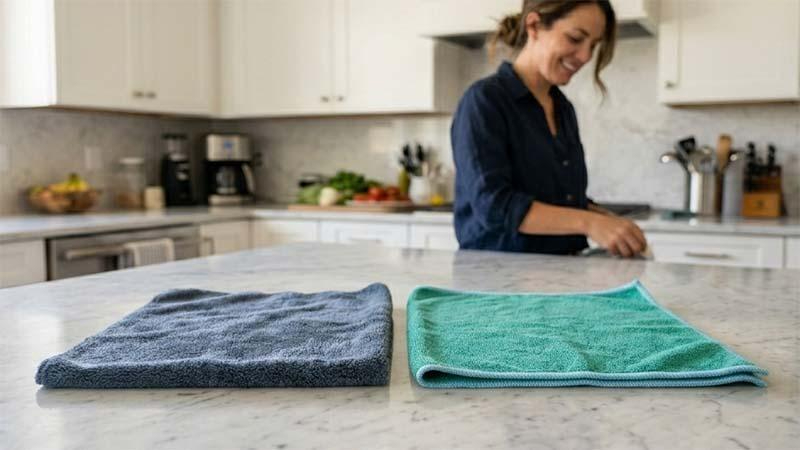
Microfiber towels are widely used across many industries. Their biggest benefit is the ability to endlessly customize every aspect of the towel. One such aspect is edge design. The two most popular microfiber edge designs are edgeless and overlocked.
In this article, we compare edgeless and overlocked microfiber towels to help businesses choose the right one according to their needs.
Why Do Microfiber Towel Edges Matter?
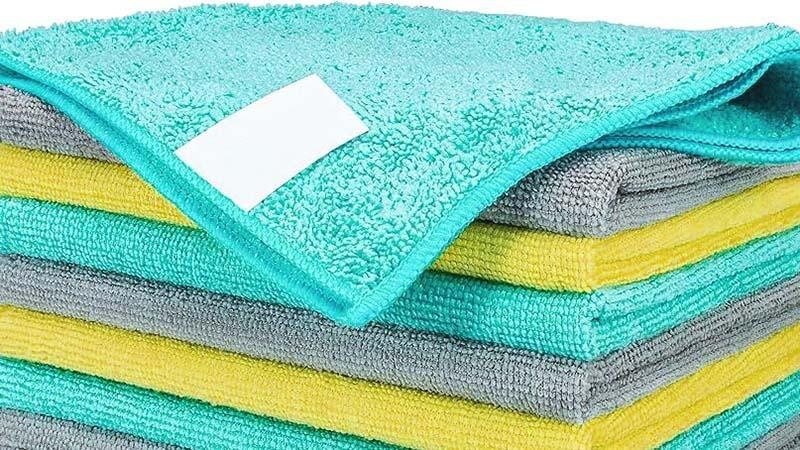
Microfiber towels are woven with polyester thread. Factories produce one large roll of microfiber cloth. Which is later cut into smaller, more manageable microfiber towels. The freshly cut microfiber towels have sensitive edges. These edges will fray over time and shed loose fibers.
Factories offer various post-processing options that seal the microfiber towel edges to prevent fraying. Today, we look at edgeless microfiber towels and overlocked or stitched-edge towels.
Edgeless Microfiber Towels
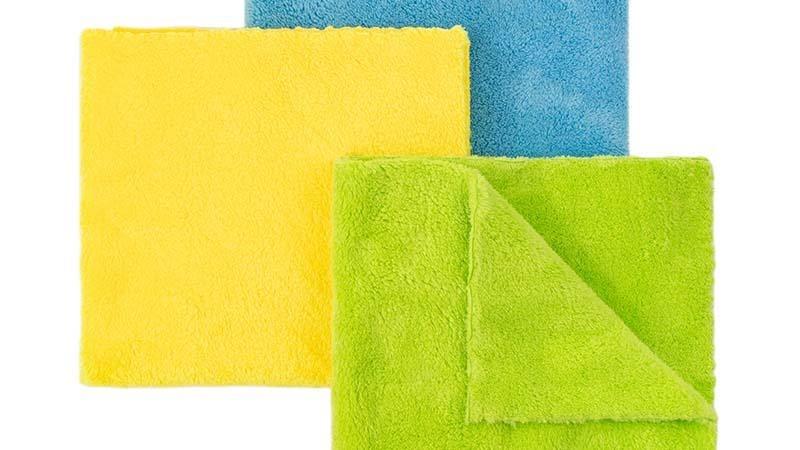
Edgeless microfiber towels have a consistent fabric structure throughout. The microfiber towel factory uses special cutting tools to shape the large rolls into smaller towels.
No extra fabric or thread is used to secure the edges of the microfiber. This results in a more efficient towel production process.
Edgeless microfiber towels have smooth and soft edges that are great for cleaning delicate surfaces and waterless washes.
- Delicate surfaces include phone screens, eyewear, photo-sensitive paint, and other easy-to-scratch fine surfaces.
- Waterless wash uses spray-on and wipe-off type detailing sprays. You want a microfiber towel with good softness to avoid fine scratches.
There are several ways factories can create an edgeless microfiber towel.
- Knife Cutting: A large and very sharp industrial blade is used to cut the microfiber towels without pulling on the loose threads.
- Ultrasonic Cutting: Uses a dull blade that vibrates with an ultrasonic frequency. The vibrating blade emits minimal heat. So, ultrasonically cut microfiber towels have stronger heat-sealed edges.
- Laser Cutting: Uses a powerful laser that cuts and sears the edges of towels. Laser cutting is uncommon because it can overmelt the edges and ruin the microfiber towel.
Overlocked Microfiber Towels
Overlocking is a stitching technique where the thread loops around the edge of a fabric to prevent fraying. Towels manufactured using this technique are durable, all-purpose cleaning tools. You can use them to clean car rims, kitchen surfaces, and to clean up large spills.
The compromise here is scratch resistance. Even the softest polyester thread is rougher compared to the soft microfibers. So you can accidentally scratch your phone screen with the overlocked edges.
The starting and ending points of an overlocked edge are rougher. You can minimize these rougher corners by using a different stitching technique.
- Continuous Stitching & Rounded Corners: The factory worker starts the overlock at one corner of the microfiber cloth and continuously runs the machine across all four sides until he comes back to the starting point.
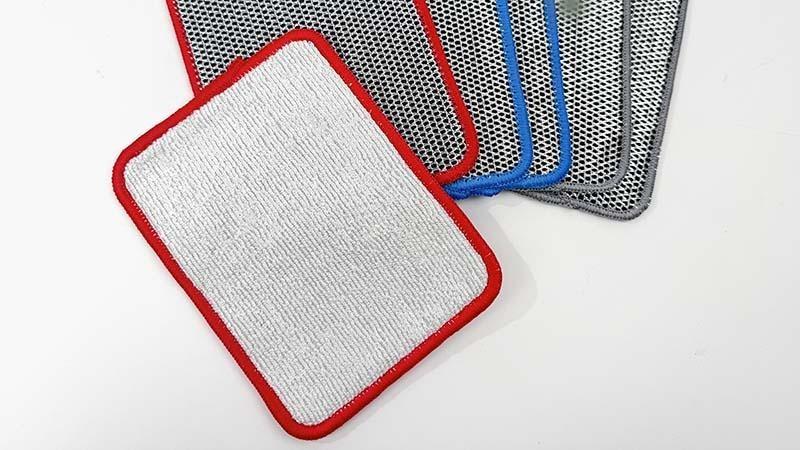
- Four Overlock Stitch & Square Corners: Four overlock stitches for each side of the microfiber towel. Resulting in four rougher corner points that can scratch surfaces.
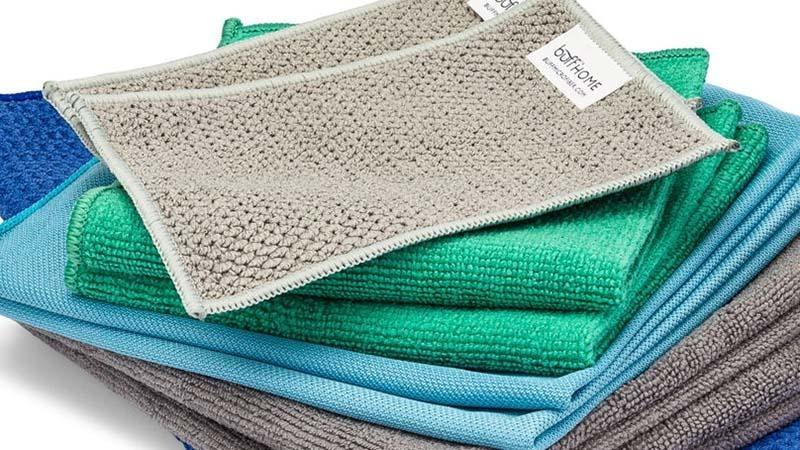
Quick Comparison: Overlocked Towels vs Edgeless Towels
Let’s pit overlocked and edgeless towels head-to-head and see how they perform.
| Property | Overlocked Towels | Edgeless Towels |
|---|---|---|
| Edge Finish | Overlocking Machine | Knife or Ultrasonic-Cutting |
| Scratch Resistance | Medium | High |
| Edge Softness | Firm | Very Soft |
| Fray Resistance | Very High | Medium |
| Absorbency | High | High |
| Towel Weight | 250-500 GSM | <400 GSM |
| Production Time | Longer | Shorter |
| Weave Options | Terry ClothPlain WeaveWaffle Weave | Terry ClothPlain Weave |
| Maintenance | Easy | Requires Care |
| Cost | Lower | Higher |
| Applications | General Cleaning | Delicate Surfaces |
| Best Use | Hospitality Cleaning | Car Detailing |
A quick look at the comparison table reveals some key insights into overlocked and edgeless towels.
1. GSM Restraints
Both overlock and edgeless microfiber towels are limited to lower GSM fabrics. These edge sealing techniques don’t work with thicker and heavier towels. We generally recommend overlocking and ultrasonic cutting for sub-500 GSM towels.
2. Weave Options
Most microfiber towels are available in different edge stitching. For example, you can get a terry cloth in an edged or edgeless version.
However, ultrasonic cutting is best suited to thinner microfiber towels with a flat weave. Textured towels, like a waffle weave, have raised surfaces that make them incompatible with an edgeless design.
3. Towel Absorbency
Microfiber towel edge options do not affect its absorbency. Both overlocked and edgeless towels are equally absorbent. Towel absorbency is mostly determined by towel weave and GSM weight.
Tighter weave traps the water droplets, and higher GSM weight means more absorbent fibers per inch of fabric.
4. Durability & Maintenance
Microfiber towels are considerably less durable than other cleaning tools. So you have to take proper care when washing and drying your microfiber towels.
- Edgeless towels require more care since their edges are exposed. This significantly limits the usability of edgeless towels.
- Overlocked towels are more forgiving. You can use them for almost any cleaning application, and they remain usable after several washes.
Speaking of washes. Never use fabric softeners with your microfiber towel. It coats the microfibers in a thin layer of fabric softener that prevents water absorption.
5. Applications for Edgeless and Overlock Towels
Edgeless Towel Applications
Textured edgeless towels are popular among automotive enthusiasts. Specific tasks include applying buffing wax, polishing surfaces, ceramic coating removal, and cleaning painted surfaces.
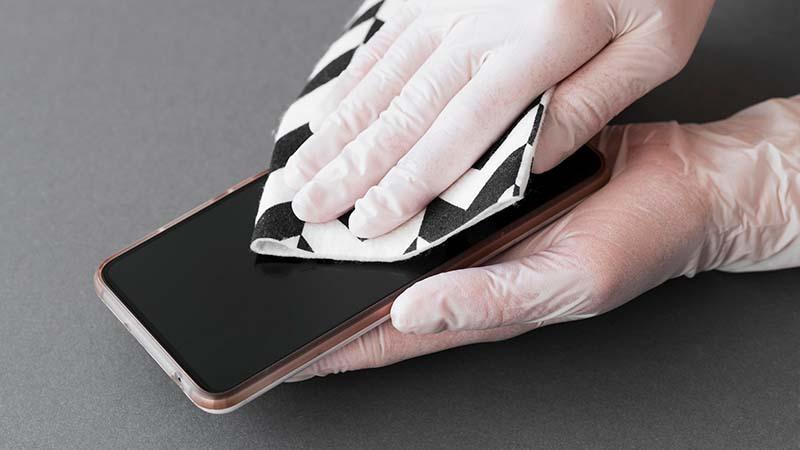
Edgeless versions of flat weave microfiber towels are commonly used to clean phone screens and eyewear. Since these surfaces are smaller, you can also use their overlocked versions for a similar result.
Overlock Towel Applications
Overlock towels are all-purpose cleaning and drying tools. Their biggest advantage is that you can use them on different surfaces without damaging the towel. They excel in cleaning glass windows, wood tables, car interiors, bathroom tiles, and other surfaces.

Because of their higher durability, overlocked towels can be deployed for dirty jobs like cleaning the grime and grease from your engine bays. So, no matter how dirty your towel gets, you can always wash it without fear of fiber damage.
Higher GSM Microfiber Towels with Hemmed or Piped Edges
We have yet to discuss two other towel edge options. As you increase the towel GSM (grams per square meter), you increase its thickness. Overlocked and ultrasonically cut edges are incompatible with thicker and fluffier towels.
Therefore, we used hemmed or piped edges for high GSM towels. This hides the exposed towel edges and prevents fraying.
Hemmed Edge Towels
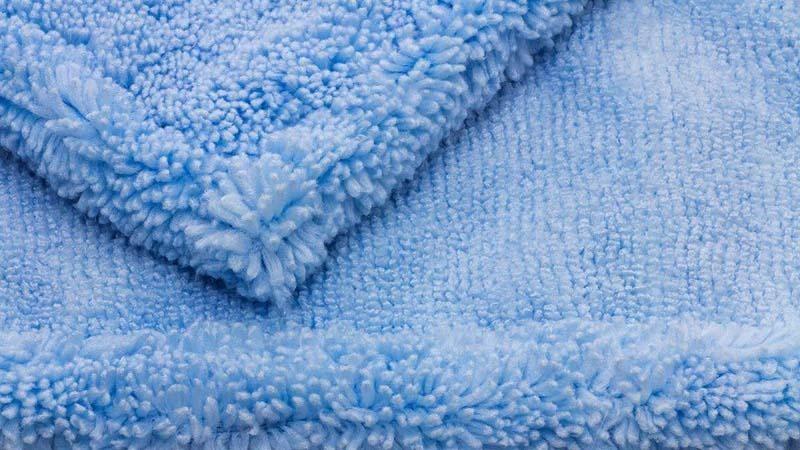
These towels have their edges folded in on themselves. So you get rounded and slightly thicker edges that are ultra soft. This process uses more fabric, so it’s generally more expensive. This edge stitching is reserved for towels weighing over 900 GSM.
We recommend hemmed towels for body care and drying large vehicles.
Piped or Banded Edge Towels
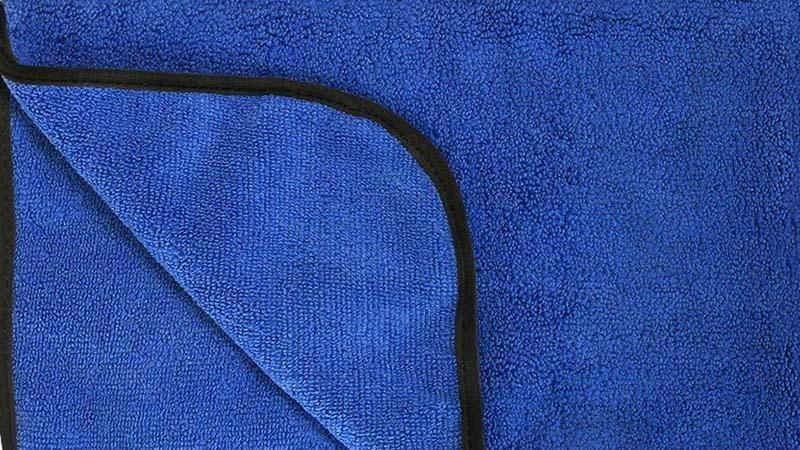
These towels are made by stitching a piece of soft fabric over the exposed edges. Higher quality microfiber towels use satin or suede fabric to seal the edges. You will often see microfiber towels over 500 GSM with a piped piano black trim.
How to Select the Right Drying Towel for Your Business: Overlock or Edgeless?
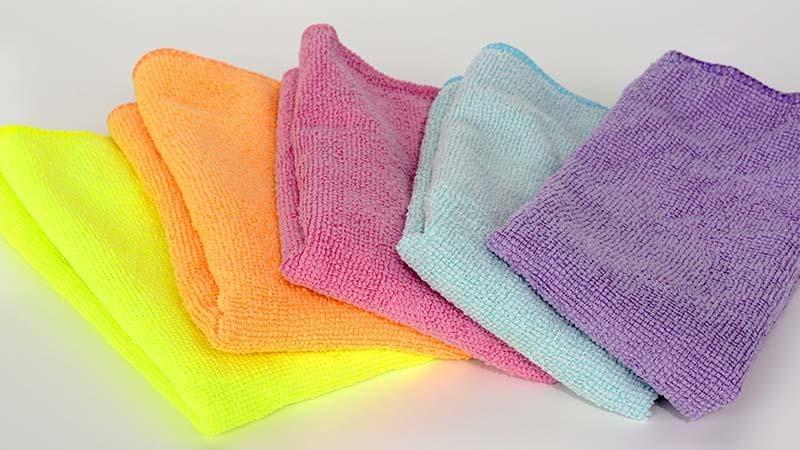
Here are five factors to consider when buying microfiber towels for your business.
1. Identify Your Desired Applications
Identify which type of applications your business focuses on. You can use either towel design for general cleaning applications. But you can only use edgeless towels for delicate surfaces.
- Overlock Towel: General Cleaning for All Non-Delicate Surfaces
- Edgeless Towel: Delicate Surfaces, Skin Care, and some General Cleaning
2. Outline Towel Weight & Sizes Requirements
Your towel’s weight and size will also impact your edge stitching options. We already mentioned that you need towels with a GSM of under 500 for overlocking and ultrasonic cutting.
Additionally, it’s important to note that larger towel edges (over 24 inches long) fray more easily. So we recommend using overlocking for any microfiber towel side that is over two feet long.
Learn more about how to choose the right towel size.
3. Balance Durability with Softness
Durability is a big selling point for any business. You want customers to associate your microfiber towels with terms like long-lasting and durable.
But many buyers also want a soft microfiber towel. Both overlock and edgeless towels are soft. But only edgeless towels have softer edges.
4. Perform a Quick Cost Analysis
Cost analysis is key for any B2B towel procurement. Overlock towels are more durable and have a lower cost. But they have the perception of being lower quality. In comparison, edgeless towels are not only more expensive, but they are also less durable.
Manufacturing volume can also affect microfiber towel prices. Many manufacturers offer discounts or reduce prices for larger orders. In such cases, the price difference between overlock and edgeless towels becomes much smaller.
5. Find a Reliable Microfiber Manufacturer
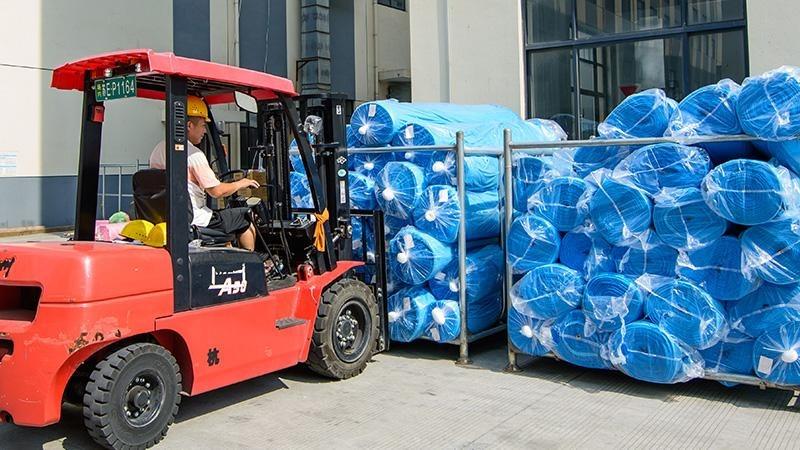
Lastly, you want to partner with a trustworthy microfiber towel manufacturer. Here are six factors that make a microfiber towel manufacturer reliable.
- Clear Communication from Supplier
- Factories with International Certifications
- Samples Before Purchase Policy
- Customization & OEM Service Options
- Options for In-Person or Digital Factory Tours
- Openness to Collaboration
It’s also important to note that many global businesses choose Chinese towel manufacturers for customization and cost-effectiveness.
Conclusion
Both overlock and edgeless microfiber towels are exceptional cleaning tools. The key differences between the two designs come down to applications. Edgeless towels are softer and ideal cleaning scratch free cleaning. In comparison, overlock towels are more durable and usable for all types of cleaning tasks. Most businesses need both types of cleaning towels.
Get Overlocked & Edgeless Microfiber Towels from Manywell!
Manywell is a microfiber towel specialist. We manufacture all types of microfiber products in our massive 13,000 sq. m. factory in China. Our catalogue includes overlocked towels, edgeless towels, cleaning mitts, flat mops, and more.
We offer considerable discounts on bulk orders and are willing to work directly with brands on OEM & ODM designs. Contact us today for a FREE Quote!