
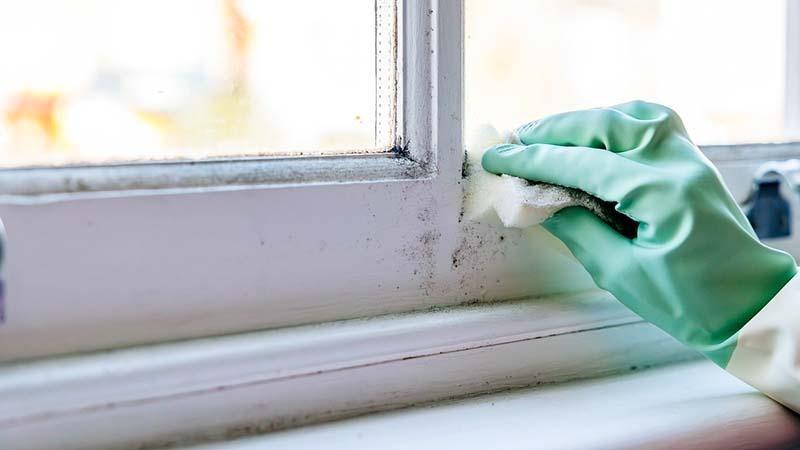
Mold on window sills is a common problem. Whether it’s caused by a leaking window or poor ventilation, the risks are clear. Untreated mold stains can result in serious health issues. Luckily, there are several easy ways to remove mold from your window sills.
In this article, we discuss the causes of mold growth, its effect on your health, and practical ways to remove mold from window sills.
What Causes Mold Growth on Window Sills?
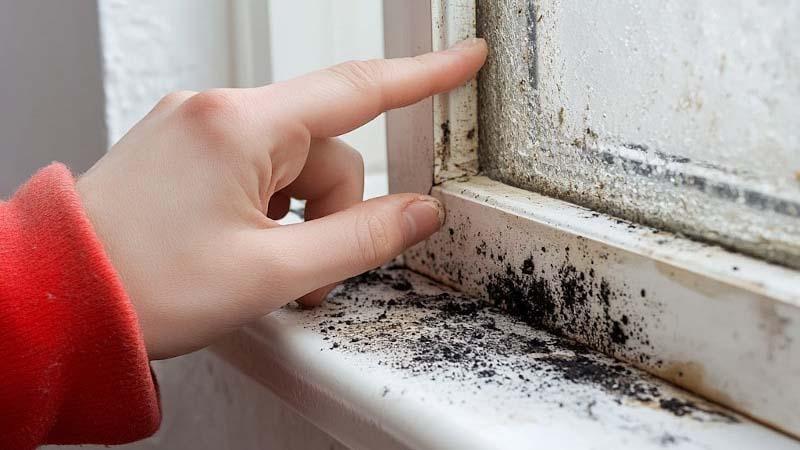
Mold is a type of fungus. And like all fungi, it grows in high-moisture areas and humid climates. When it comes to window sills, there are three factors that result in mold growth.
- Condensation: In winter, your windows experience cold air from the outside and warm air from the inside. This difference in temperature results in water vapor collecting on the edges of the window.
- Poor Ventilation: The best way to remove moisture accumulation is through good air flow. Homes with poor ventilation have higher humidity, which promotes mold growth.
- Leaks in Window Seals: Your window sills are sealed with caulk, a waterproof polymer. Over time, small gaps appear in the seals, which become a point of moisture entry. These gaps are more noticeable during heavy rains.
The same factors also result in mold growth on bathroom tile grout, caulking on window frames, washing machine gaskets, and bath towels.
Is Mold on Window Sills Dangerous?
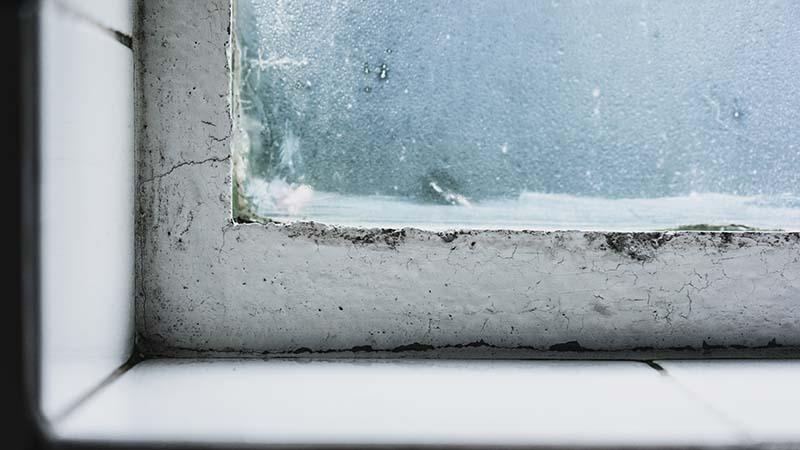
In the best-case scenario, mold introduces an unsightly appearance to your windows. But in the worst-case scenario, it can cause serious health issues for you and your family.
Here are three reasons why you should be dealing with mold as quickly as possible.
1. Black Mold is Dangerous
Several fungi can appear as black mold. The most common variant is called “Stachybotrys Chartarum”. Once black mold spores become airborne, they can cause breathing problems and irritate your eyes and skin.
As per the Centers for Disease Control (CDC) guidelines, all mold should be treated seriously. Homeowners and businesses should focus less on the mold color and more on mold clean-up.
2. You Could Have Mold Allergies
Some people can develop an allergic reaction to mold. Their immune system is hypersensitive to mold spores and sends the body into self-defense mode. This causes coughing, sneezing, a runny nose, and watery eyes as a way for you to expel the mold from your body.
3. Increased Risk of Asthma
Studies show that long-term exposure to mold spores can increase the risk of asthma. Older adults and newborns are at a greater risk of asthma than young adults. So even if you see small amounts of mold buildup, it’s best to get rid of it as soon as possible.
How to Clean Mold from a Window Sill?
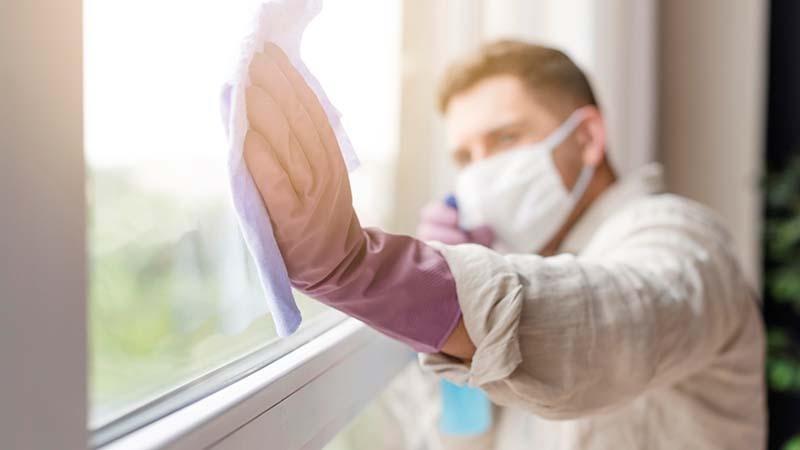
The good news is that it’s pretty easy to clean mold. You can use simple cleaning supplies to clean light mold on window sills. For anything more serious, there are several commercial mold removers available.
Materials Needed
Here is a quick list of the cleaning materials you will need.
| Cleaning Tools | Mold Remover | Safety Equipment |
|---|---|---|
| Spray BottleSmall BrushPaper TowelsMicrofiber Cloth | Bleach SolutionORBiocide Spray | Safety GogglesRespiratory MaskGloves |
Step 0: Pre-Cleaning Precautions
- Open your windows and ensure proper ventilation during cleaning. The bleach fumes can irritate your senses and even cause dizziness.
- Wear gloves so you don’t directly touch the mold.
- Put on a face mask so you don’t breathe in mold spores.
- Individuals with mold allergies can wear safety goggles to keep their eyes safe.
Step 1: Spray Bleach on the Mold Area
Start by spraying your bleach solution on the mold-affected area. The liquid will limit the amount of mold spores released during the cleaning process. To ensure good coverage, spray around the window frame as well.
Step 2: Wait 10-15 minutes
Now wait and let the bleach do its job. At this point, you can even see the mold color change to a light yellow. This means the bleach solution is working.
Step 3: Scrub Edges with Brush
Some window sills have grooves and cavities that are harder to clean. Use a small scrubbing brush (or an old toothbrush) to scrub the edges of the window frame.
Step 4: Remove Mold with Paper Towel
Next, use a paper towel or a disposable cleaning cloth to wipe the window sills. Be sure to properly throw away the used paper towels and prevent cross-contamination.
Step 5: Spray Bleach Again
Give your window sills another quick spray of bleach. This will prevent mold growth and kill any remaining spores. Mold doesn’t grow on glass, but it can grow on the dirty buildup on glass surfaces. So give a light spray to the glass window itself.
Step 6: Dry with a Clean Microfiber Cloth
This time, you can wipe everything with a durable and highly absorbent microfiber cleaning cloth. The goal is to remove the excess bleach and lingering moisture. Use a dry cloth and wipe until the window sills are completely dry to the touch.
Which Cleaning Solution is Best for Removing Mold?
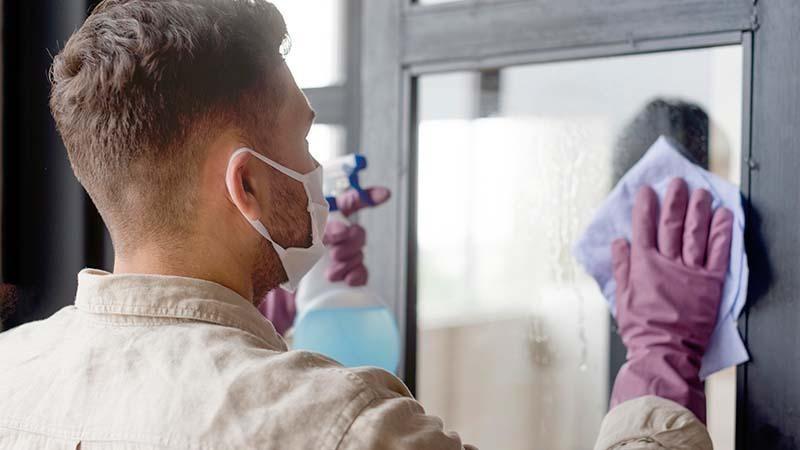
We have already discussed cleaning mold with bleach. But the US Environmental Protection Agency EPA advises against bleach use. That’s because bleach is a dangerous chemical. It can cause skin irritation, itchy eyes, and even respiratory issues.
Let’s look at some bleach alternatives.
| Mold Scenario | Recommended Cleaning Solution |
|---|---|
| Basic Mold Cleaning | Hot Water & Dish Soap |
| Homemade Mold Remover | White Vinegar in Spray Bottle |
| Mold on Hard Surfaces | Bleach & Clean Water Solution |
| Porous Window Sills | EPA Approved Non-Bleach Biocide |
1. Dish Soap
According to the CDC, you can use household products to remove mold from hard surfaces. Clean mold using a mixture of dish soap and warm water. Use a soft brush or a scrubbing mitt to clean up the mold spots.
2. Bleach Solution
Bleach is a good option when cleaning non-porous surfaces such as plastic or stone. A standard bleach solution contains lots of water. It kills surface-level mold, but the excess water can seep into porous surfaces like particle board, drywall, and unpainted wood.
To prevent water damage, use a commercial biocide that has a lower water content.
3. Vinegar or Baking Soda
Vinegar is a light acid, and baking soda is alkaline. Both of these kitchen ingredients can kill light surface-level mold. Remember, acids and alkalines are opposites, so mixing them doesn’t help. You can also use hydrogen peroxide, which is a stronger alternative to baking soda.
4. Commercial Biocide Sprays
Commercial biocides are designed to take care of all mold issues. They do not contain harmful chemicals like bleach, so they are perfect for home use. The EPA has a list of approved disinfectants and biocides that are safe to use.
6 Ways to Prevent Mold from Coming Back
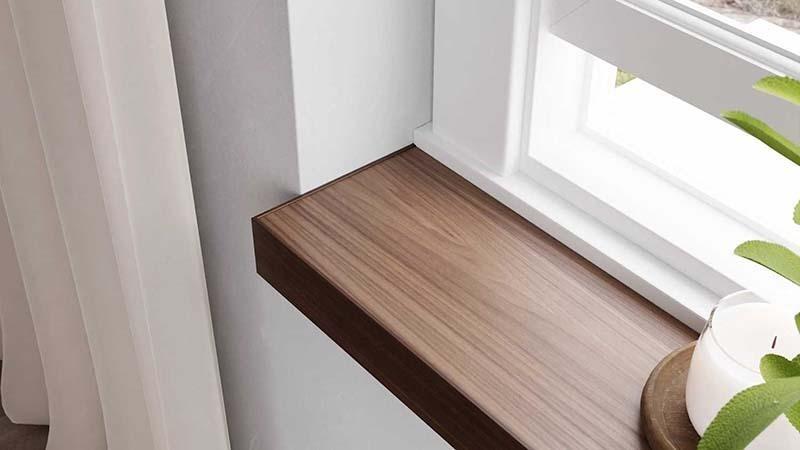
Cleaning is only one part of mold removal. Next, we have to take precautionary steps to prevent mold from growing back. Here are six ways to prevent mold growth.
- Improve ventilation by occasionally opening windows to let fresh air inside the house. Alternatively, you can use exhaust fans to stimulate air flow.
- Mold is a common problem for houses and hotels in tropical areas. So you should invest in dehumidifiers that reduce the interior humidity.
- Look for leaks around the windows. Spray your windows with water from the outside. Then go inside to check for wet spots.
- Prevent condensation moisture buildup in the winter by turning on the heating for the whole house. The extra heat will fix your humidity issue.
- Every two months, check for moldy areas around your window sills.
- Protect your window sills with mold-resistant paints.
Conclusion
Mold is a natural consequence of indoor humidity. Long-term exposure can result in serious health issues. Children and the elderly are at a greater risk. We recommend dealing with mold as soon as you spot it on your window sills. Use soap or vinegar for light mold buildup. Bleach will quickly kill all mold on hard surfaces. Lastly, you will need commercial biocides for porous surfaces.
Get Mold Removal Supplies from Manywell!
Manywell is your source for all types of cleaning supplies. Our microfiber towels, cleaning cloths, and disposable towels are ideal for mold removal applications. Businesses may also want to check out our professional cleaning equipment.
All our products are made from ethically sourced materials and manufactured to be long-lasting. Hotels, resorts, and spas can get fully customized cleaning supplies in their brand color and with their logo. Get a FREE Quote Today!