
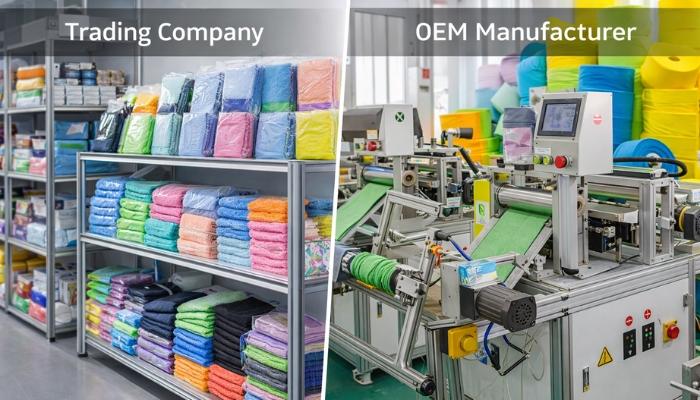
Choosing a supplier is key to smooth procurement operations. The right supplier sets the stage for a company’s profitability. It determines the base cost, which affects margins. When finding a supplier, every business is bound to face a question: should you select a manufacturer (factory) or a trading company?
Both models are effective in their respective domains. The final choice depends on suitability. Pick a supplier that fits your procurement needs. In this article, we’ll break down the pros and cons of each option. After this article, you’ll be able to identify which one is right for you.
Overview Of Microfiber Towels Sourcing Options
A supplier forms the foundation of your supply chain. A solid foundation leads to smoother operations and an improved reputation. If your supplier can’t maintain a consistent GSM in microfiber towels, it may lead to customer complaints and hurt your brand image.
This matters even more for wholesalers, importers, and cross-border buyers. It is because they distribute the products further to a wider market. So, whether you are a business considering bulk procurement of microfiber towels for operations or a wholesaler, you must know your potential sourcing routes.
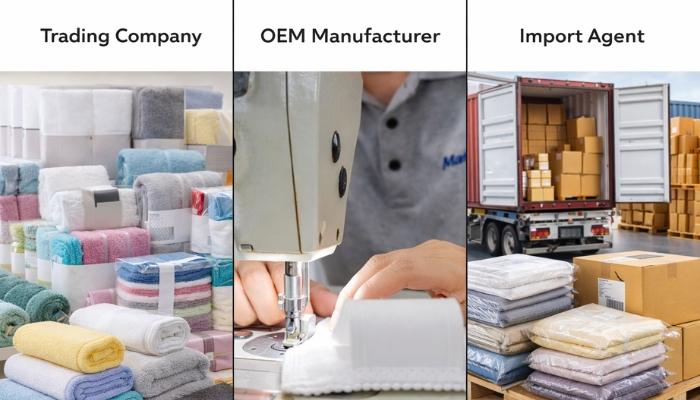
Here are the primary microfiber towel suppliers you can choose from for bulk purchase;
- OEM Manufacturer: OEM manufacturers are actually the factories that produce the microfiber products on the ground. They produce goods for other businesses without using middlemen.
- Trading Company: It is a go-between among the manufacturers and businesses. Trading companies don’t produce any product. Instead, they buy from multiple manufacturers and resell the products.
- Import Agent: An import agent serves as the buyer’s representative. It finds the right factory or product for buyers in the foreign markets.
Manufacturer Vs Trading Companies: A Side-by-Side Analysis
Manufacturers and trading companies operate differently. So, you might naturally think it’s easy to tell them apart. However, it is not the truth. Most trading companies advertise themselves as factories. It is because they serve the same clients as the other factories.
Knowing the difference between the two is key to making the right choice. Below, we’ll break down the differences between the two in detail across five key dimensions.
1. Price & Cost
In sourcing bulk microfiber towels, cost is of prime importance. It decides the profit margins by influencing the total cost of ownership. So, a business must choose a supplier that fits its budget.
Manufacturers
- Pros: They have their own production plants, so they can offer a lower per-unit cost. It is because there is no middleman involved. With large-volume orders, the fixed cost is also spread out. This dispersion makes room for further cost negotiation.
- For example, a factory costs $10,000/month to run. If you order 100,000 towels, the rent will add only $0.10 per unit. Moreover, a long-term deal can also lock in raw materials costs. This can further drop the per-unit costs.
- Cons: Factories typically have a high minimum order quantity (MOQ) requirement. Their MOQ can range from 3,000 to 10,000 units to create standard items. It is because large orders give them a massive profit margin to work with. Small orders cannot attain economies of scale. As a result, the per-unit costs increase.
Trading Companies
- Pros: They have established relations with multiple manufacturers. These manufacturers often require a minimum order quantity before accepting an order. However, these intermediaries can negotiate the MOQ limits to meet your needs.
- Lower rental costs in China also keep a trading company’s overhead significantly below that of a factory. This allows them to work with lower margins. Moreover, these companies offer all-inclusive quotes. These often cover all landed-cost expenses.
- Cons: The biggest disadvantage of working directly with trading companies is the cost. They charge a 5-10% commission on top of the manufacturer’s price.
- Moreover, their all-inclusive quotes may also include hidden markups. They can inflate the different costs to pad their profit margins. This makes the final all-inclusive quotation higher.
- This model may work for small businesses or startups with low MOQ. However, when a large order is placed, the price advantage disappears.

2. Microfiber Towel Customization Capabilities
In bulk procurement, customization is highly important. A business sourcing products from abroad may also want them to fit its needs.It is because settling for generic microfiber defeats the purpose of importing. Let’s examine whether a manufacturer or a trading company better meets this need.
Manufacturers
- Pros: Manufacturers operate their own facilities with efficient production lines. They are product designers. They have their own machinery and blueprints. They can customize every stage of the manufacturing process. From yarn selection and knitting to dyeing and finishing, each step is controlled.
- With OEM/ODM capabilities, they can produce the highest-quality products. You can request colors that complement your brand. You can also ask for special microfiber towels made from a 75/25 polyester-polyamide blend.
- Cons: The only downside is that custom products are expensive. That’s because it needs dedicated machines and specialized labor.
- For example, you ask for high-quality microfiber towels. These towels have a 70/30 AA-Grade split, making them softer. This will require the sourcing of superior raw materials.
- Then the main assembly line must be stopped to add new raw materials. Hence, the per-unit cost will increase. Also, the custom sample production cycle takes longer.
Trading Companies
- Pros: Trading companies can offer free samples of standard products. They provide quick turnaround for simple changes. So, they work well for businesses with minor tailoring needs.
- Cons: Trading companies only sell products made by other manufacturers. Thus, they don’t have access to customization options. These companies make only small changes to design elements.
- They can help create custom microfiber towels. For instance, towels can be customized to display high-resolution logos. They can reflect personal style or brand identity.
- Trading companies cannot alter core parameters. These parameters include grams per square meter, weave pattern, polyester-polyamide blend, and splitting.
3. Quality & Quality Control
Quality control is key in making microfiber towels. It ensures the final product meets specific standards. The quality of microfiber towels also impacts reviews and future buys.
Manufacturers
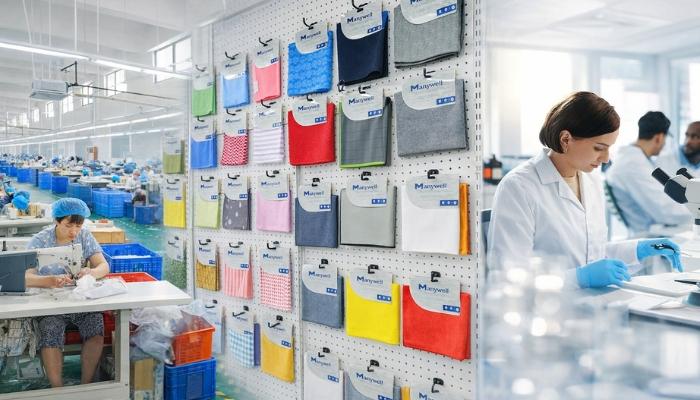
- Pros: They can control quality right from the raw material. Full-scale manufacturers own OEKO-TEX and ISO 9001 certificates. They are key to managing quality and safety in microfiber towels.
- They show that the factory follows strict safety practices. These quality control systems set manufacturers apart from trading companies.
- Cons: You need to be on the ground to inspect these factories. For importers or cross-border buyers, this means travelling from another country. They will also have to cover travel expenses and time costs.
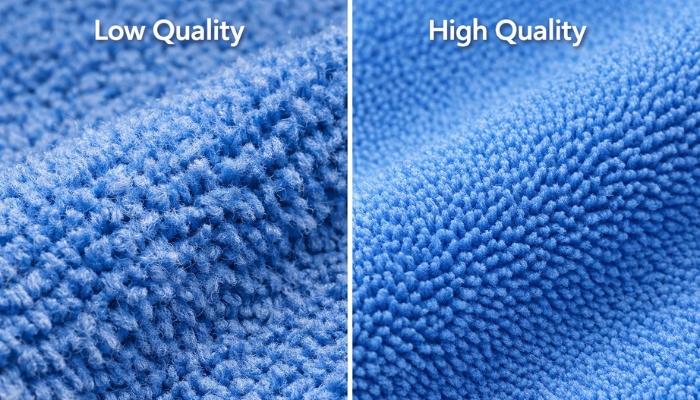
- There is a chance that a factory may not meet your standards. In that case, expect the travel expense to become your dead cost. You also need to have a good understanding of the production process. This knowledge will help you assess parameters such as fiber opening, absorbency, colorfastness, and loop strength.
Trading Companies
- Pros: These companies vet your potential partner factories on your behalf. It saves you the trouble and cost of traveling from a far-off part of the world. They conduct preliminary quality inspections to address your concerns.
- This way, the onus of quality assurance lies on the trading company. So, if any quality issues arise, you will not have to deal with the factory.
- Cons: With a third-party inspection, there can be a lack of transparency. The factory could be using cheap materials to save costs. You can’t control production details if you lack knowledge.
- So, relying on a trading company can also mean you are “buying blind”. Also, some firms may lack the expertise to connect businesses with the best factory for their specific needs.
4. Service & Efficiency
Both suppliers offer a different type of service. A trading company can save you time and resources. While a manufacturer can deliver precise attention to detail. Here’s how they both differ in terms of service;
Manufacturers
- Pros: When you work with a factory, there’s no middleman for the communication job. Thus, you can talk about the details with the production team directly. Manufacturers can also help you with the technical issues.
- For instance, your towels have poor absorbency. Now, a higher GSM means better absorption and longevity. So, the experts recommend adjusting the GSM or blend. Without the intermediaries, the response time shortens.
- Cons: Factories typically don’t want to manage business operations. They focus more on the production side. Manufacturers are strict about payments.
- They also limit order changes. Manufacturers often lack export or import licenses. This complicates things for buyers across borders.
Trade Companies
- Pros: They handle the procurement process from start to shipping. To stay ahead in a competitive market, trading companies handle each step. Through these firms, you also get the benefit of ordering mixed-category products. Because they partner with many manufacturers.
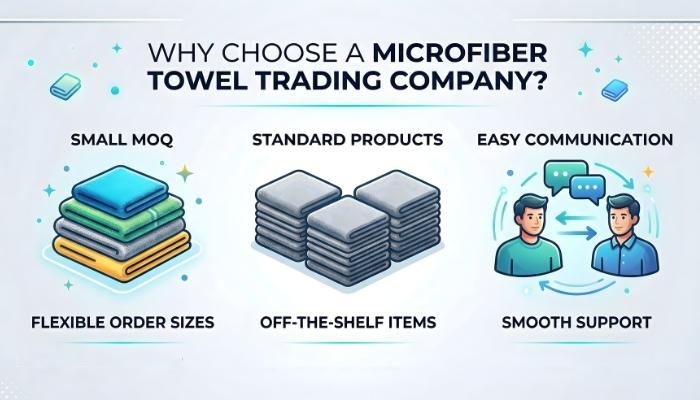
- They are a one-stop shop for businesses. This helps them avoid hiring several suppliers. In foreign supplier options, not all factory owners and employees can speak English. With a trading company, you can convey all complicated information without the language barrier.
- Cons: The communication pathway is too long. It is;
- You → Trading Company → Factory → Production Line
- Details can get lost along the way before reaching the end. This can result in miscommunication and delays. In the event of quality issues, there is also a risk of “passing the buck”.
5. Risks & Barriers to Entry
Every supplier has its own risks and entry barriers. Choosing a supplier depends on your business’s needs. Let’s take a look at the risks and entry barriers of each.
Manufactures
- Risks: In B2B microfiber towel procurement, manufacturers require a 30%-50% upfront payment. This creates a high-risk of non-payment.
- There can be two scenarios. A factory can take the initial deposit and disappear. There can also be quality problems.Moreover, the expenses of trips you might have to take for audits will be paid out of your pocket.
- Entry Barriers: You need to be well-versed in the manufacturing process. You will also need to know the product specifications. This info can help assess batch quality.

Trading Companies
- Risks: Price inflation is a major risk. The intermediary might raise its share, claiming it’s due to inflation. Also, the sale of inferior products is another threat.
- Entry Barriers: These barriers are low for a trading company. You may not know much about the product. But you can still partner with an intermediary. This makes them ideal for trial orders and small batches.
| Criteria | Manufacturer | Trading Company |
|---|---|---|
| Pricing | Low per-unit cost because no middleman | High per-unit cost because of a 10-20% markup |
| Quality Control | Own international certifications. Exercise strict quality control | Low control over quality |
| OEM Customization | Offer complete customization of all features | Offer limited customization. Usually provides standard products |
| Production Capabilities | Produces at large-scale | Limited capacity for bulk orders. Best for low MOQ |
| Product Range | Specialize in specific products | Wide product range from different manufacturers |
| Lead Time | Long lead times for custom orders | Shorter lead time for standard products |
| Technical Support | In-house support for technical issues | Cannot resolve technical issues |
| Stability | Controlled production and supply chain | Volatile supply chain. They depend on the suppliers |
| Communication | Can directly deal with the production team. There can be a language barrier | The information can get lost in translation |
When To Choose a Microfiber Towel Manufacturer
OEM microfiber towel producers aren’t right for every type of business. This section outlines when to hire a manufacturer.
- When very precise product specifications are required
- When a bulk order has to be placed
- When there are tight quality tolerances
- When you are well-versed in the production line
- When you want to have more control over the production
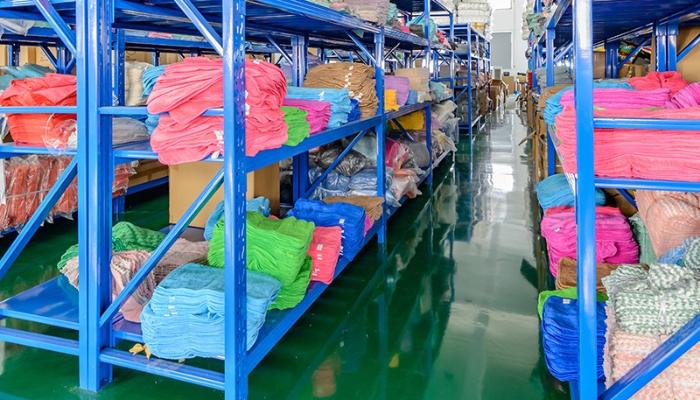
When To Choose a Trading Company Specializing in Microfiber
Trading companies have their own benefits. They are suitable for certain businesses and use cases.
- Trading companies are better for small orders. Also, for products that don’t need customization.
- When you speak a foreign language. A trading company can help connect importers and foreign factory owners who might not speak English.
- If you want to order small amounts of standard items, a trading company is a good option.
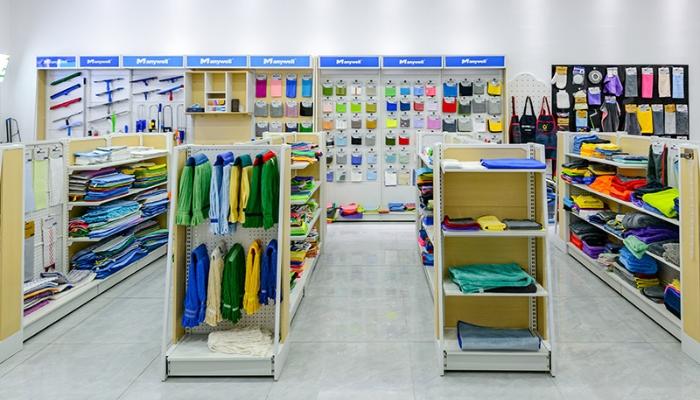
Next Steps To Start Your Microfiber Towel Supplier Search
Now, you know which supplier is suitable for what needs. It is time to begin looking for options. Here’s how to begin your search:
- Prepare a concise product specification sheet. It should necessarily include all the details
- Shortlist at least five candidate suppliers. Carefully vet each option
- Request samples to test the quality
- Compare each option based on quotes and what it includes
Conclusion
In the pool of suppliers, finding an ideal match is difficult. It is because many trading companies show themselves as factories. So, it is important to first know the differences between the two. Then, the key is to conduct thorough research.
ManyWell: A Premium All-in-One B2B Supplier
With ManyWell, you won’t have to look through endless choices. We are a factory that integrates manufacturing and trading. We have a skilled international trade team. They handle all export tasks. We have our own manufacturing facilities that manage the entire process.
With this dual model, we offer the best prices and services. From spinning, weaving, and dyeing to fiber opening, we don’t outsource any of it. So, if you are looking for a supplier, contact us. We’ll guide you through the technical trade-offs to help you make your choice.