
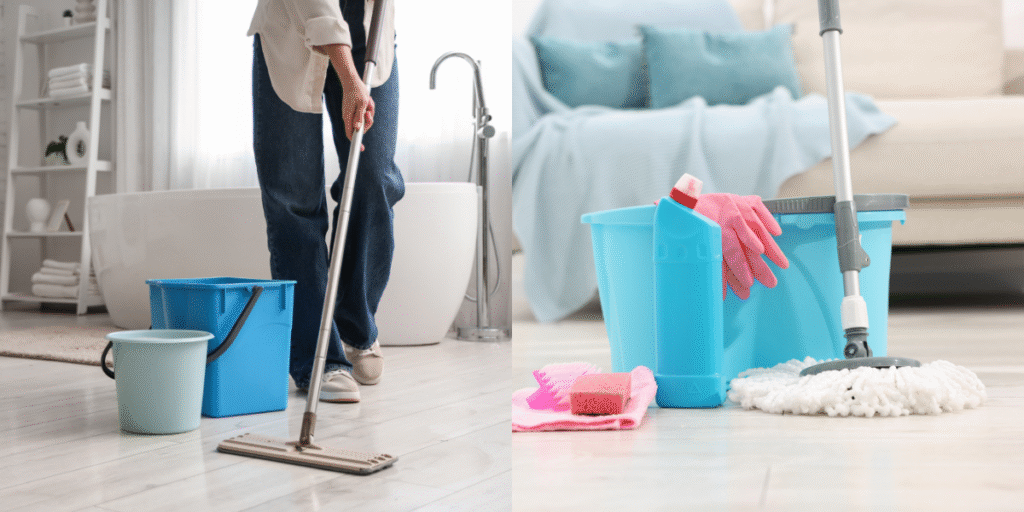
The selection of a mop affects hygiene, speed, and cost in your business. The guide divides the string mop vs flat mop decision into real cleaning situations. It specializes in commercial floor-cleaning mops for hotels, hospitals, and large facilities.
Our team has also tested both systems in busy environments. These observations are based on practical experience with the mop system, including comparisons and daily use.
Let us compare a flat mop to a traditional mop and discuss the benefits of a microfiber flat mop. Also, find out the best mop for hotels and such facilities.
Understanding The Mechanics Of A String Mop
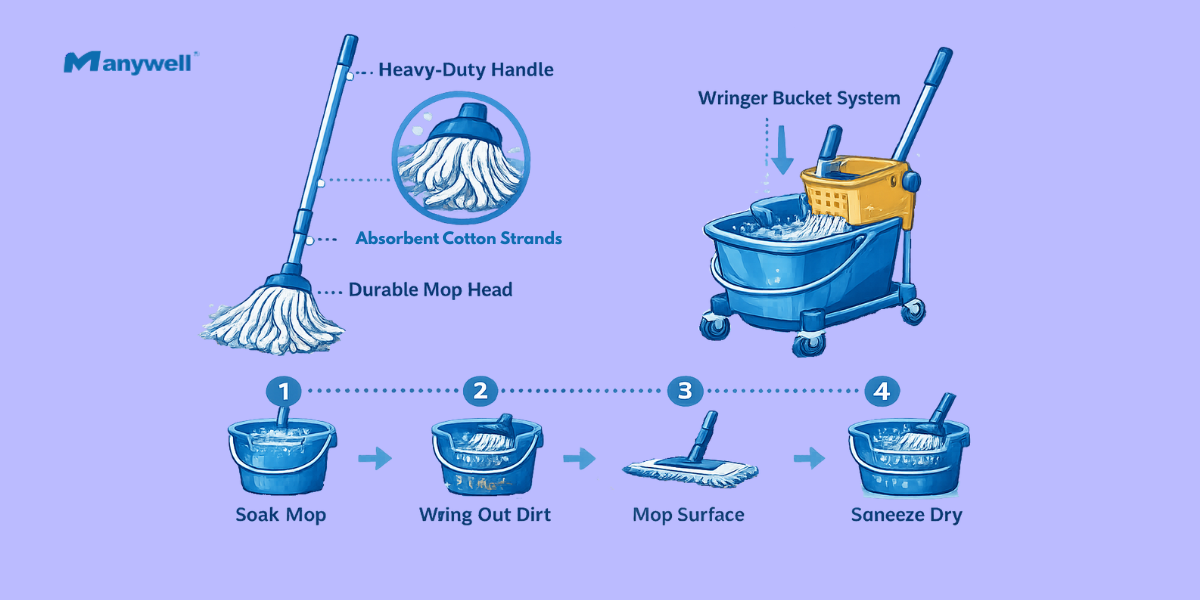
The cleaning industry has a workhorse, a string mop. It has a heavy-duty handle and head composed of strands of looped or cut ends. It can handle a wide range of cleaning tasks.
- Mostly strands of cotton, rayon, or synthetic materials are used. It helps trap dust during movement across floors.
- You normally use it in the wringer bucket system, which helps you choose the right mop for demanding environments. This is designed to accommodate a huge amount of liquid and perform well on textured surfaces. This makes it a robust choice for general cleaning, flood mopping, and large spills.
- Cotton string mops tend to be the best choice for rough surfaces. The loose strands extend into large grout lines and rough tile.
- This is a strong, traditional mop for the cleaning process of old stone or masonry floors. Making it a familiar option in a flat mop vs traditional mop discussion.
Exploring The Design Of A Flat Mop
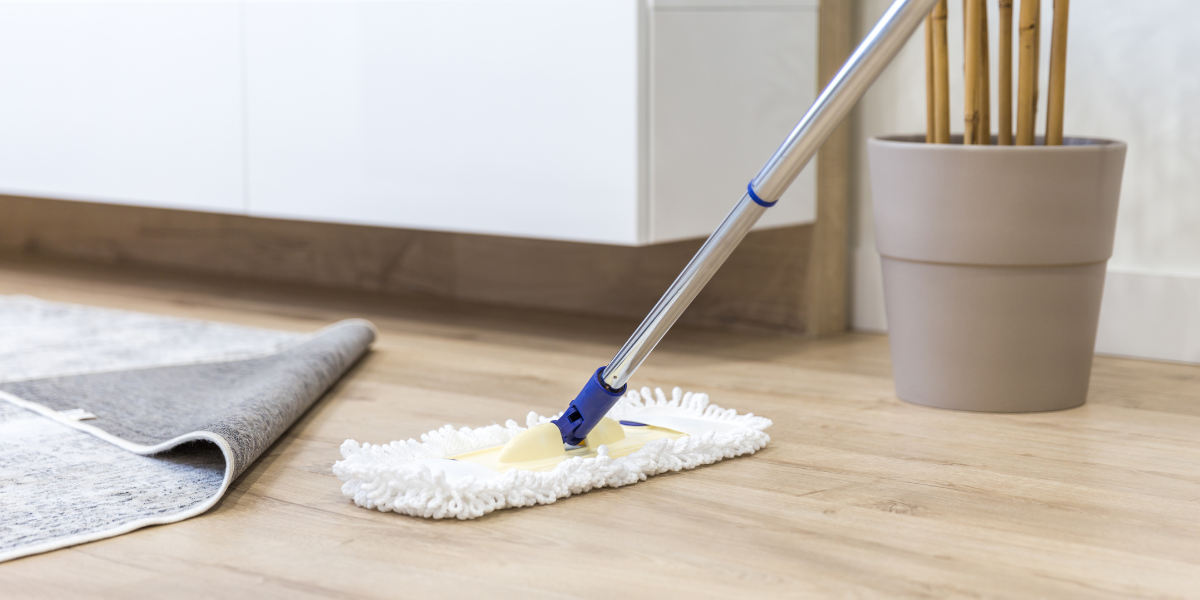
A flat mop has a wide, rectangular plate with a removable pad. Most modern systems, such as Manywell, employ microfiber material technology, highlighting key microfiber mop benefits. The pads are secured to a lightweight frame using Velcro or pockets.
This design focuses on complete surface contact, which helps clean commercial hard floors effectively. The uniform appearance of the surface results in uniform floor pressure. This improves consistency when cleaning floors.
A heavy wringer bucket is not needed in this system either. This also helps control excess moisture.
You may, however, employ the spray technique or wet pads depending on the floor type. Microfibre flat mops have the same feel as precision instruments because they are light and easy to handle. They also reduce fatigue in the long shifts.
Flat mops excel in cleaning under low furniture and in narrow spaces. Large string mops do not work well in such places. That helps teams clean faster without additional bending or lifting, which is useful when selecting the best mop for hotels.
Side-By-Side Performance Comparison
| Feature | String Mop | Flat Mop (Microfiber) |
|---|---|---|
| Best For | Heavy spills, uneven floors | Daily cleaning, sanitizing |
| Water Usage | High | Low |
| Drying Time | Slow (5–10 minutes) | Fast (1–2 minutes) |
| Hygiene | Low (higher bacteria risk) | High (washable pads) |
| Ergonomics | Heavy and strenuous | Lightweight and easy to use |
| Lifespan | Short (needs frequent replacement) | Long (500+ wash cycles) |
Cleaning Efficiency And Soil Removal
String mops are based on mechanical cleaning and gravity. The industry often considers these the oldest mop designs still used today. They are circulated in a figure eight motion to trap dirt, making them suitable for regular cleaning in large areas.
However, they tend to mix dirty water rather than move it. Leaving excess moisture on the floor.
The tendency may create a whitish discoloration on the white floors. The output might appear to be uneven when using powerful or bright lighting. Additional passes are usually necessary to complete satisfactorily.
The flat mop uses microfiber for micro-scrubbing. The fibers are finer than a human hair. They can enter very small crevices and trap bacteria and fine dust.
They wash well on the first attempt and consume less water. Mop the floors fast to minimize the risk of slipping.
Helpful Resource: The Ultimate Guide to Facilities Cleaning: Techniques and Tips
Hygiene Standards and Cross-Contamination
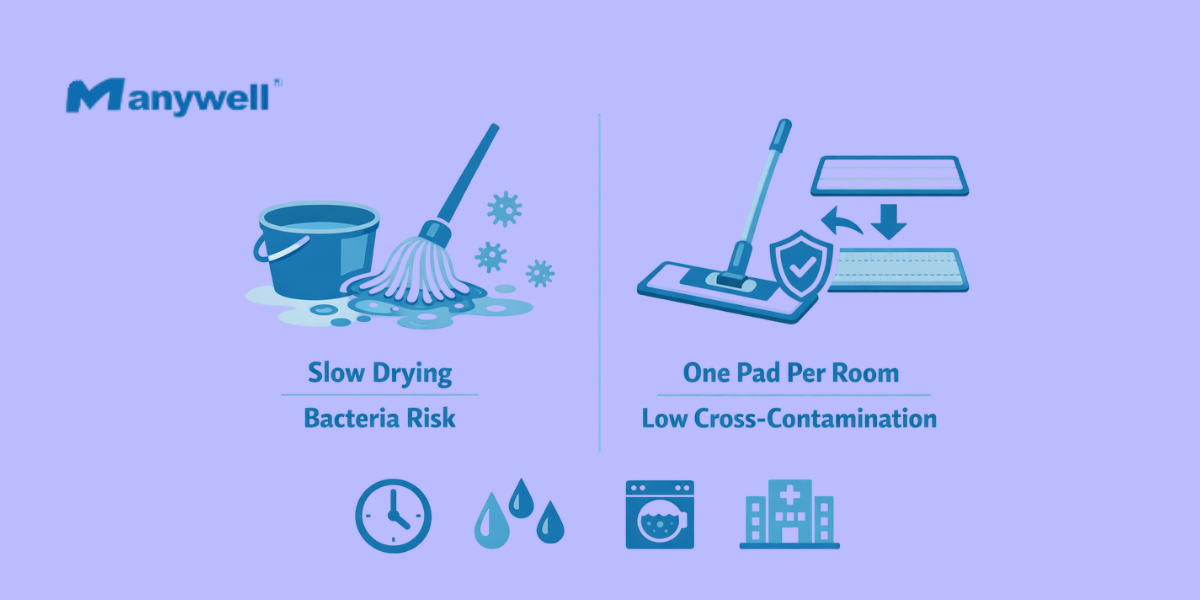
The two systems have the most divergence in hygiene, especially when dealing with dirty floors. Cleaning professionals know that traditional cotton string mops act as bacterial hosts. Strands of cotton take a long time to dry.
That dampness provides a breeding ground for moulds and odours, often worsened by improper storage in a mop bucket. It also increases the risk of contamination between rooms. Janitor closets may worsen storage conditions.
- Flat mops provide a workflow of one pad per room, making thorough cleaning easier to enforce.
- Staff can replace a dirty pad with a clean pad in a second.
- This becomes essential in clinics and hospitals.
- It helps prevent the spread of germs between restrooms and patient rooms, where commercial spaces require strict hygiene controls.
- It also facilitates cleaning routines, enabling easier auditing and standardization.
- Teams can monitor pad utilization by location.
Microfiber pads are also not chemically sensitive and work well with most cleaning solution types. They are compatible with disinfectant and do not degrade. Teams can wash old pads in hot water to sterilize them.
This performance difference explains why string mops excel less on sensitive surfaces like laminate floors.
Helpful Resource: Best Practices for Maintaining Hygiene Standards in Commercial Facilities
Durability And Long-Term Maintenance
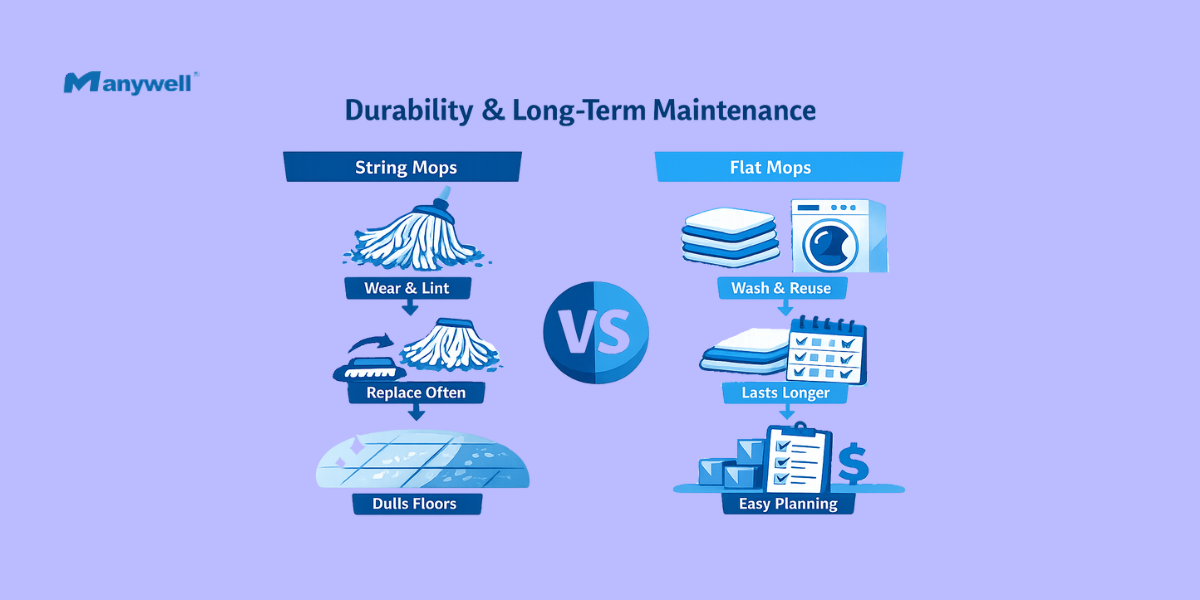
String mops also require proper, frequent maintenance as part of standard cleaning procedures. They should be cleaned after use. Despite excellent treatment, the fibers gradually wear away and become non-absorbent.
String mops also start shedding lint with time, especially during heavy-duty cleaning tasks. They make shiny floors lose their finish. Consequently, mop heads require replacement.
Facilities use flat mop pads in industrial washing conditions alongside other cleaning supplies. High-quality microfiber pads can withstand hundreds of wash cycles. They are more efficient in terms of their shape, structure, and cleaning time, even across uneven surfaces.
This is due to the sustainability of many flat mops in large operations due to their durability. Scheduling of replacement becomes simpler, and the expenses remain predictable. They reduce downtime and simplify inventory management.
Helpful Resource: How Durable Are Cotton Mops? A Complete Durability Guide
Best Use Scenarios For Each System
Commercial Kitchens And Garages
Select a string mop for these areas. You have to work with large amounts of liquid or grease during intensive floor cleaning. Cotton strands have high absorbency, making them better than a thin pad for deck scrubbing and raw scrubbing power.
Hotels And Hospitality
Cleaning teams should use flat mops in guest rooms and hallways, where they excel at quiet operation. They are quiet and discreet. The quick-drying process allows guests to walk on the floors nearly instantly. They are also more professional in the luxury environment.
Helpful Resource: What Mop System Should Hotels Use for Optimal Cleaning Efficiency?
Hospitals And Healthcare
The industry standard here is flat mops paired with a microfibre mop system. Facilities should not compromise cross-contamination prevention. Color-coded microfiber pads assist the staff in moving across cleaning areas in a strictly regulated manner.
Why Microfiber Flat Mops Are Gaining Popularity
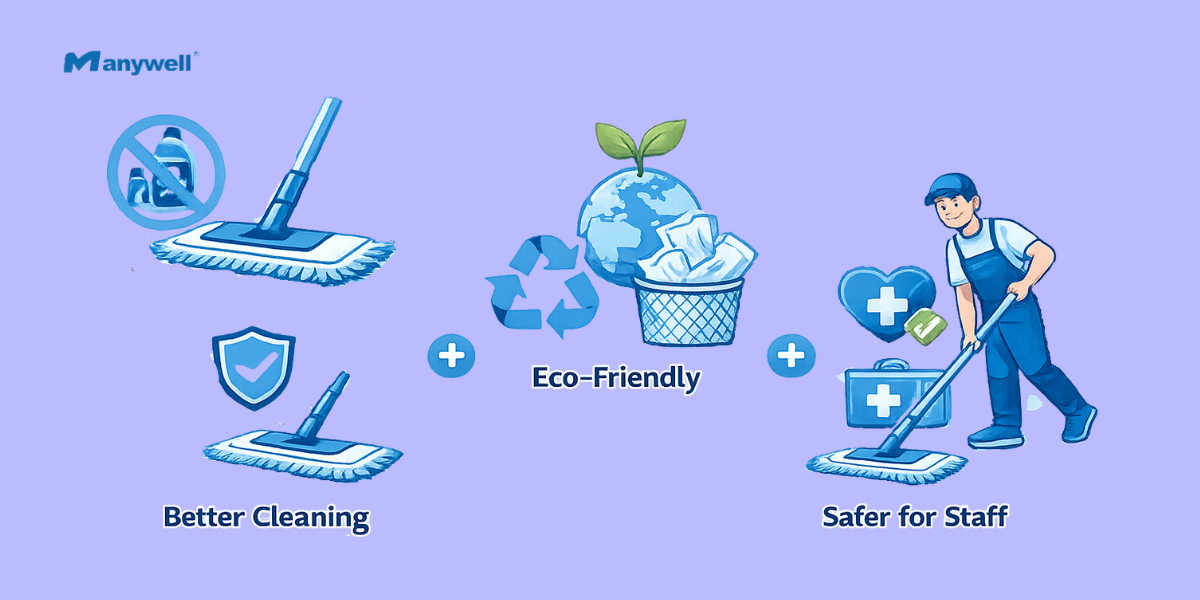
A single reason drives the industry’s conversion to microfiber: outcomes. Conventional mops usually use harsh chemicals to dissolve dirt. Microfiber uses a physical mechanism to hook and lift grime off surfaces.
Environmental standards also cause this change. The microfiber solutions provided by Manywell are recyclable and environmentally friendly. They reduce waste from disposable cleaning products. This would be attractive to modern and green-certified companies.
Last but not least, there is the ergonomics. Injuries to the workforce from heavy lifting and repetitive movements are costly. A thin, flat mop keeps your employees safe. Happy and healthy workers are more productive and stay longer.
Conclusion
The most suitable mop is dependent on the environment, especially in commercial cleaning settings. When cleaning a rough warehouse with many floors, include a cotton string mop in your bag. It is still the king of heavy-duty liquid recovery.
In 90% of cleaning jobs, the flat mop is a better choice than others. It provides better hygiene and is cost-friendly. This clearly highlights the benefits of the microfiber flat mop. That is because it is the professional standard.
Recommended Mop Solutions for Commercial Use
Choosing the right mop only works when quality is consistent. Manywell designs microfiber mop systems for commercial cleaning environments. They focus on hygiene, durability, and daily efficiency.
Manywell has over 17 years of manufacturing experience. It supplies hotels, hospitals, and facility management teams worldwide. Factory-direct production ensures stable quality.
Why Manywell works well:
- ISO-level quality control
- Durable microfiber flat mop pads
- OEM and ODM customization options
These products support long-term, large-scale cleaning operations.
FAQs
Which Mop Is Better For Hardwood Floors?
Hardwood is much better with the flat mop. A lot of water may distort wood or destroy the finish. A microfiber flat mop consumes little moisture and leaves the floor dry and safe.
How Often Should I Replace A String Mop Head?
To use commercially, you must replace the string mop heads every 2-4 weeks. When the cotton turns grey or starts to smell, it’s not cleaning properly. It’s basically spreading germs around.
Can I Wash Flat Mop Pads In A Regular Machine?
Yes. You can wash flat mop pads in a regular machine. Skip bleach and fabric softener. Industrial laundries often dry them on high heat.