

Wholesale buyers mostly focus on the price. They often miss other important details. They only find out about serious problems when a shipment arrives. These issues go beyond just the per-unit cost. Issues like wrong GSM, packaging problems, low grade, and late delivery can raise your costs.
So, it is also important to put effort into other details beforehand. In this guide, we’ve compiled 10 key questions to ask a wholesale microfiber towels supplier.
Fabric and Product Quality
The North American microfiber towel market is projected to grow from $1.3 billion in 2024 to $2.5 billion by 2033. In this competition, firms cannot risk opting for cheaper products. Quality towels improve cleaning efficiency by removing up to 99% of bacteria without harsh chemicals.
So, quality is the prime determinant of the cleaning performance of microfiber towels. However, the grade itself is verified through different technical specifications. In this section, we’ll show you how to check the quality of your microfiber towels.
1. What is the towel’s material and polyester/nylon ratio?
Most high-performance towels use a mix of polyester and polyamide. In this blend, polyester provides strength, and polyamide adds water absorbency.
Most B2B use cases work well with the following ratios:
- The 80/20 blend has 80% polyester and 20% polyamide filaments. This ratio offers balanced absorbency and durability. It is used for specific needs. These may include paint polishing, car detailing, gym glass cleaning, and wiping off other dirt and dust.
- The 70/30 blend has 70% polyester and 30% polyamide fibers. The higher polyamide content makes these towels softer and more absorbent. 70/30 works well for washing delicate surfaces and higher liquid pickup uses.
For blends with a high polyester ratio, like 90/10 or cotton blends, be more cautious. Higher polyester towels work for tough jobs, but they don’t absorb moisture well.
Cotton towels can grow mould, so they aren’t great for long-term use. Also, studies show that high-grade microfiber outperforms cotton. It holds up to 99.54% of contaminants, while cotton only holds 67%. Unlike cotton towels, which wear out sooner, quality microfiber towels can endure more than 300 wash cycles.
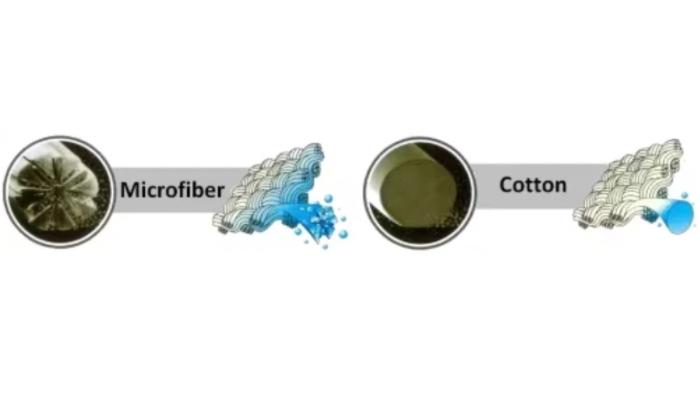
Before you place an order, verify the ratio through test reports instead of relying on claims. You must also ask the supplier for certifications or test reports, such as OEKO-TEX or REACH. These certificates ensure that the microfiber towels are free of chemicals.
2: What is the GSM, and can it be changed to specific needs?
GSM, or grams per square meter, shows how dense and thick microfiber towels are. Thus, it affects key features like absorbency, softness, thickness, and cleaning efficiency. Balanced GSM microfiber towels can absorb up to seven times their weight in water.
Common GSM for microfiber towels generally ranges from 200 g/m² to 400 g/m²:
| GSM Range | Attributes | Use Case for Microfiber Towels |
|---|---|---|
| 200 - 250 g/m² | Light in weight & thin | Suitable for window wiping and streak removal. These microfiber towels are safe for most surfaces, including glass, stainless steel, and painted surfaces. |
| 300 - 350 g/m² | Thick & durable | Works for normal glass cleaning, dirt and dust washing. Also functions for removing streaks from windows and surfaces. |
| 350 - 400 g/m² | Heavy, absorbent, & fluffy | Higher GSM towels are thicker and more absorbent, making them suitable for heavy-duty cleaning tasks. These may include wiping grease from surfaces, equipment surface cleaning, floor drying, and gym cleaning. In short, work for commercial use. |
Inquire if your supplier can offer flexible customisation for GSM and size. It is because international shipping rates depend on weight. So, GSM can impact the landed cost for large-scale orders.
GSM customization matters, too. A container that fits 50,000 units of 200 GSM towels may only hold 40,000 units of 250 GSM towels. Thus, your logistics cost-per-unit can increase.
Manywell offers flexible OEM/ODM customisation. This option helps international companies personalise the towel size and GSM as per their use case.
3: Do the quality towels shed lint or fade after washing?
For export orders, remember that a nice look doesn’t mean high grade. A high-performance towel shouldn’t shed, fade, or fray when used on surfaces. If it does, it can damage your brand image.
Pick a supplierthat offers tests and verified results. We suggest these tests to ensure the product meets global market standards.
| Properties | Tests to demand | Attributes |
|---|---|---|
| Fiber Fragment Release Report | ISO 4484-1 or AATCC TM212 | These tests analyze the amount of residue a towel sheds during washing. |
| Crocking tests | ISO 105-X12 or AATCC 8 | These standards test how well a towel maintains its color upon cleaning surfaces. |
| Colorastness upon washing | ISO 105-C06 | This standard determines whether a cloth retains its color upon washing. |
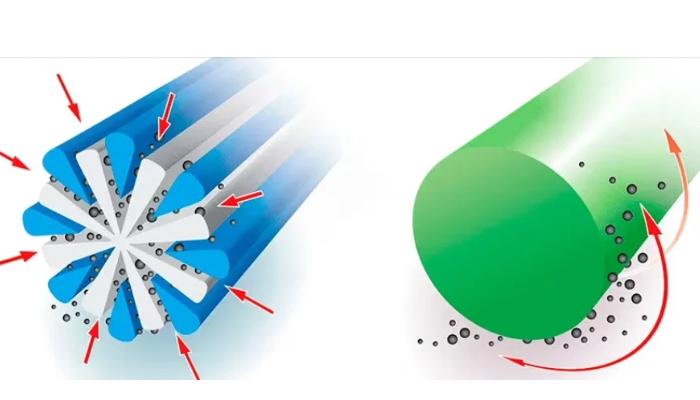
| Split fiber consistency | Microscopic cross-section report | This report ensures every fiber resembles the unique structure of an asterisk. |
High-grade microfiber towels also have reinforced stitching on the edges. They are designed to withstand hundreds of wash cycles without losing their effectiveness.
Suppliers should provide quality certifications such as ISO 9001 to ensure reliability and material quality. Manufacturers that can present such reports usually maintain better quality control. Manywell also supports this approach by offering performance certificates and test data.
Customization and Sample Confirmation
Customization plays a key role in B2B procurement. It is because every cleaning use case needs a different type of towel. So, companies should only hire suppliers that offer reliable OEM/ODM services.
4: What customization options do you offer? What is the MOQ?
When selecting your supplier, it is not enough to know if they offer customization or not. You must also clarify the kinds of customization they offer.
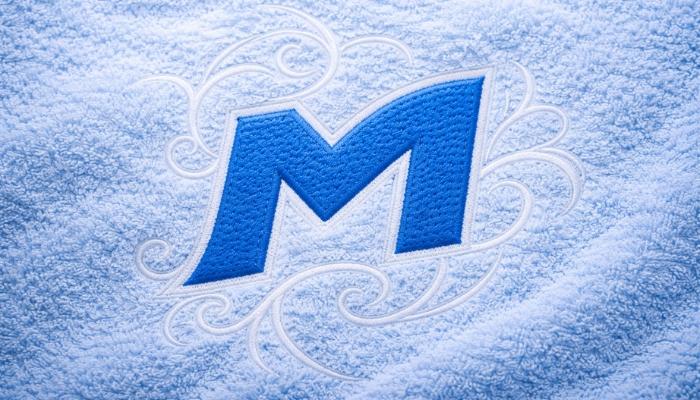
For example, you can choose a supplier that offers logo customization. You might find out later that it only prints, but you need embroidered logos. As a business that buys microfiber towels in bulk, you need flexible customization options.This is because your customers may have variable requirements.
Important customization details to inquire:
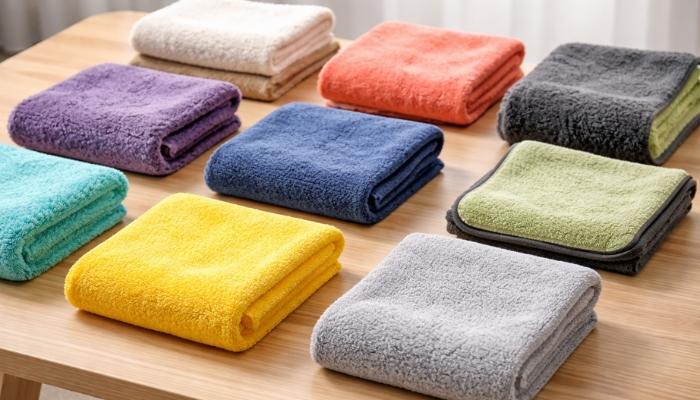
- In how many different colors can you customize the microfiber cloth? Colour customisation matters for companies that offer towels to industries that focus on hygiene. Color coding can help avoid cross-contamination, such as using blue towels for glass and yellow for interiors.
- How many types of logo customization can you fulfill? Ask about printing, labelling, embossing, and embroidery.
- How many different edging styles do you offer?
- Can you produce towels in multiple sizes, including custom dimensions?
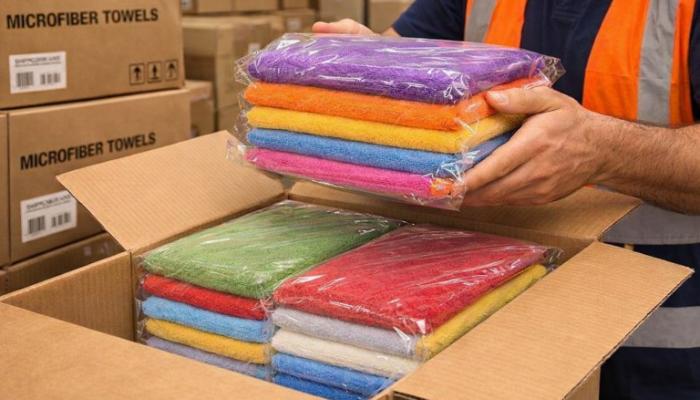
- Which elements can you customize in packaging? Ask for including labels and COO details.
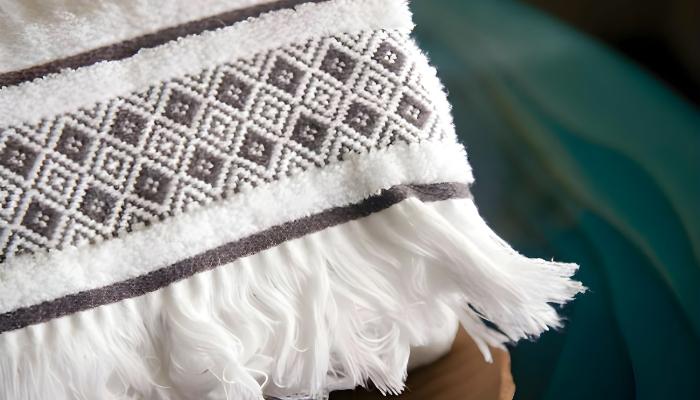
Also, ask about the weave options they have. The way a towel is woven affects its performance in different use cases. Waffle weave works well for glass and absorbs a lot of moisture. Flat weave is best for polishing without streaks.
Besides, confirm what their MOQ is for each type of customization. Reviewing these details early on can help you dodge issues later.
5: What is your sampling time? Is the sample fee refundable?
Before making a high-volume purchase, it is important to first request samples. The samples will help you test the absorbency, softness, and structural integrity.
In B2B settings, how long a supplier takes to produce samples matters just as much as their standard. The sampling time can give you an insight into the responsiveness of the supplier.
Inquiring about sampling timelines beforehand also lets you assess whether the manufacturer adheres to delivery schedules. Quick sampling times and timely delivery show professionalism.
Generally speaking,
- Standard sample production should take approximately 1–3 days.
- Complex custom samples should take approximately 3–5 days.
The sample production fee changes based on how complex the customization is. So, we also suggest asking the following questions;
- Is the sample fee refundable after I place a high-volume microfiber towel production order?
Asking about the sample fee refund is important for two reasons. A refundable fee shows that the supplier trusts its production system. In case the fee is non-refundable, you will be able to factor it into your cost evaluation when comparing suppliers.
Production and Delivery of Quality Microfiber
For overseas procurements, every second matters. International logistics inherently take time. So, any delays in factory production can further increase the delivery times.
6: What is your lead time and rush orders capacity?
In the process of assessing a high-quality towels supplier, the lead time is a key factor. Time is a form of capital. So, you cannot settle for “will be shipped when made.”
Ask the following questions to evaluate your potential vendor
- What is the standard lead time for regular products?
- What is the lead time for custom products?
- Will lead times be extended during peak seasons?
- Can you accommodate rush orders?
- Is there a clear procedure for handling delays?
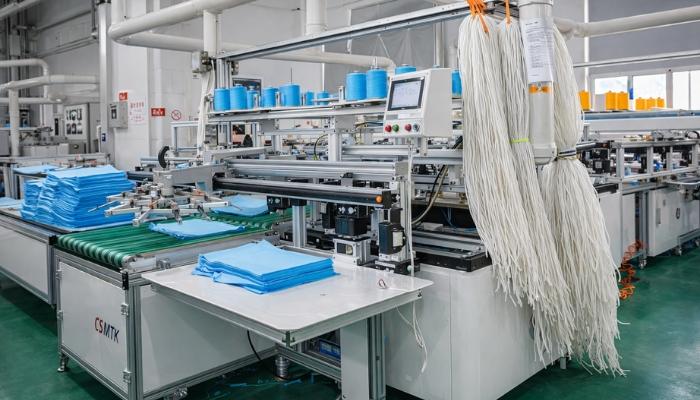
A supplier with a clear timeline also likely has an efficient production. Shorter lead times show that a manufacturer can meet tight deadlines.
For rush orders, choose a supplier who already has a formal process to handle them. This is important for the times your client places a sudden, large order. You need to know if your supplier will be able to manage the extra volume without compromising the grade.
7: What is your monthly production capacity and QC process?
In business, supplier partnerships are usually long-term. So, you must choose a partner that can grow with your company in the future.
You can evaluate this scalability by looking at the monthly production capacity. Choose a supplier whose monthly output is greater than your current needs. So, we recommend to ask your potential supplier the following;
- What is your approximate monthly production capacity?
- Can you handle increased order volumes in the future?
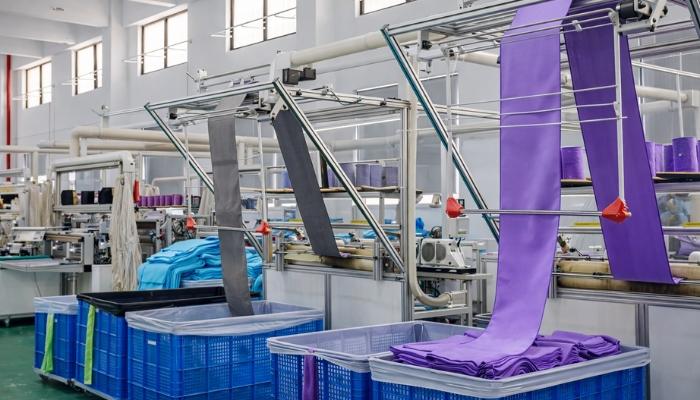
In addition to production, grade maintenance is also important. For cross-border buyers, even a small defect can cost them hundreds of thousands of dollars.
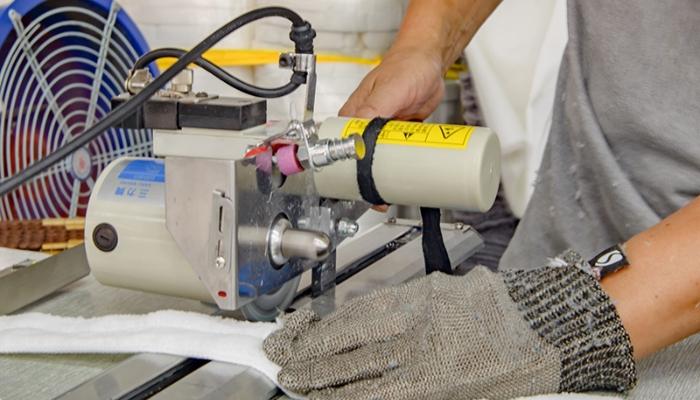
So, it is not enough for a custom microfiber towel manufacturer to say we check every towel. You must inquire if they have the following QC system in place;
| QC System | Process |
|---|---|
| In-Coming Quality Control | Inspect the raw textile |
| In-Process Quality Control | Check for defects, such as dye bleeding or clumps, while processing. |
| Final Quality Control | Confirm dimensions, GSM, and look for loose edges |
Pricing, Payment, and After-Sales
Cost is the main concern for high-volume buyers, especially international ones. To avoid disputes later, clarify terms with your supplier early on. Here are the 3 questions you must ask them before placing the order.
8: What exactly is included in the quotation?
In bulk microfiber towel purchases, don’t just look at the unit price. You have to factor in all the possible expenses to calculate the total cost. For this, you need to know what’s included in the supplier’s quotation.
Don’t confuse a low price with being cost-effective. It may not cover key costs, such as packaging or customization fees. Select a supplier that provides a clear breakdown of their quote. This helps reduce future ambiguity.
We recommend confirming the following:
- Does it include packaging costs?
- Does it include logo customization fees?
- Does it include customs clearance fees?
- Are the terms of trade EXW, FOB, or CIF?
9: What is your accepted payment method & protection terms?
In international trade, paying 100% upfront is a major risk. To keep the supplier motivated, negotiate a 30/70 split of payment. You will pay the final 70% after you get the consignment.

Also, confirm the accepted payment method of the supplier to see if it is suitable for you or not. Common payment methods include:
- TT (Wire Transfer)
- L/C (Letter of Credit)
- PayPal
- Platform-guaranteed transactions or trade credit insurance
In addition to the payment method, it is also recommended to confirm:
- The percentage of down payment acceptable for them
- If the payment protection service is offered
10: What happens if the order does not match the sample?
For cross-border B2B buyers, any problem with the grade of bulk shipment can lead to huge losses. Returning a shipment can cost more than the product itself.
So, you must discuss the matter of grade claims beforehand. A supplier that clearly explains what to do if there’s a non-conformance can be trusted.
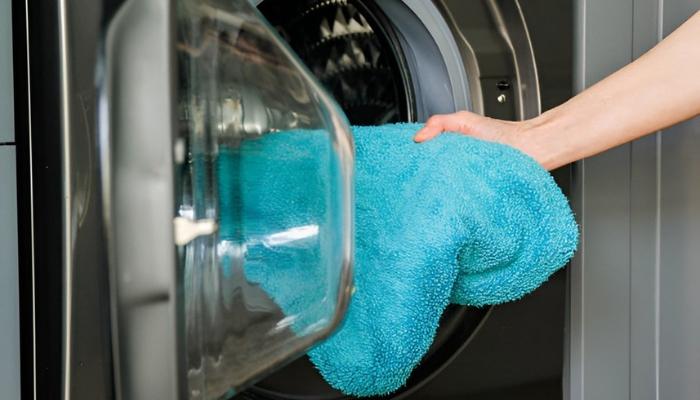
We recommend confirming the following in advance:
- How will you handle situations where the shipment does not match the approved sample?
- How will compensation be handled for issues such as pilling, colour fading, or damaged edges?
- Whether restocking, refunds, or discount compensation is supported?
A clear after-sales system shows whether a microfiber towel manufacturer is a good long-term partner.
Quick Recap: What to Ask Before Ordering Microfiber Cloths
Here’s a quick overview of key questions to ask your potential supplier.
| What to Ask | Why it Matters |
|---|---|
| Composition & Blend | Influences the durability, soft feel & longevity of the fabric. Also decides whether it will be highly absorbent or quick-drying |
| GSM | Affects shipping load, shipping cost, and cleaning ability |
| Lint & Wash Performance | To make sure the towels are lint-free and stay strong after washing |
| Sample Approval Process | Matches the product to your requirements |
| Production Lead Time | Speeds up the project confirmation |
| Monthly Capacity | Helps in assessing the future scalability potential |
| Quote Terms | Avoids surprise costs when the final bill comes. |
| Payment Methods | Improves transaction security and reduces the hassle |
| After-sales Responsibility | Lowers the risk of dead inventory |
Tips for Maintaining Microfiber Towels’ Performance
A smart wholesale buying plan works better with good towel care. These protocols cut down restocking frequency and total cost of ownership. This matters for cleaning businesses, salons, and car detailing shops that have high usage.
Microfiber towels can smear dirt instead of cleaning it if they are not properly maintained. Microfiber towels can also lose their effectiveness after around 500 washes if they are not properly maintained. With the following tips, you can extend the lifespan of your towels.
- Wash microfiber towels alone to prevent lint from sticking to other fabrics. Also, it should not be laundered with cotton to prevent lint contamination.
- Don’t use fabric softener on microfiber towels. It can coat and clog the fibers
- Use a mild detergent to wash. This helps keep the fibers effective.
- High heat should be avoided when drying. It may melt the fibers
- Air-dry microfiber towels or tumble-dry them on low heat. This helps prevent damage
Conclusion
The global microfiber cleaning cloth market is projected to grow at a CAGR of 5.27% through 2033, driven by demand for eco-friendly cleaning solutions. Due to this, the market has various microfiber towel manufacturers. Thus, it is hard to find a reliable and experienced supplier.
A business must ask the right questions to find a true vendor instead of a trading company. The suggested questions in this guide cover all the key points. So, you must ask these questions to assess a supplier.
Hire Manywell for Wholesale Microfiber Towels Customization
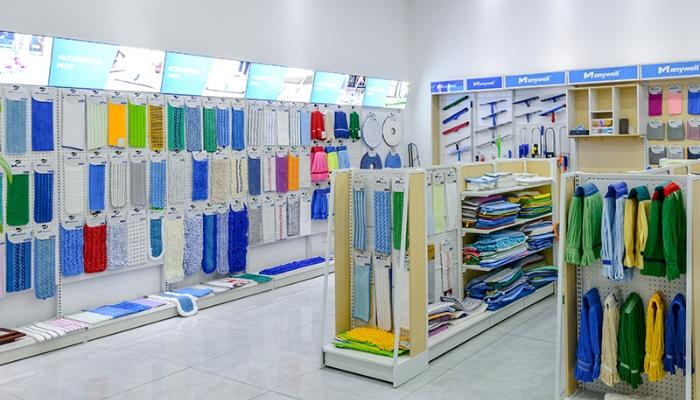
For wholesale microfiber towel buyers, an experienced manufacturer is more valuable than one offering the lowest quote. For this, Manywell can be a preferred choice. We offer various high-performance microfiber products. These include cleaning cloths, car care towels, glass cloths, gym towels, glass cleaning cloths, waffle weave towels, and other customized microfiber solutions.
Our flexible customization allows businesses to match the product to their needs. Our vast experience in export operations sets us apart for cross-border buyers.
Our service can meet the needs of businesses with large OEM/ODM requirements. So, if you are also assessing different suppliers, contact us now, and we will send you our standard sample for evaluation.