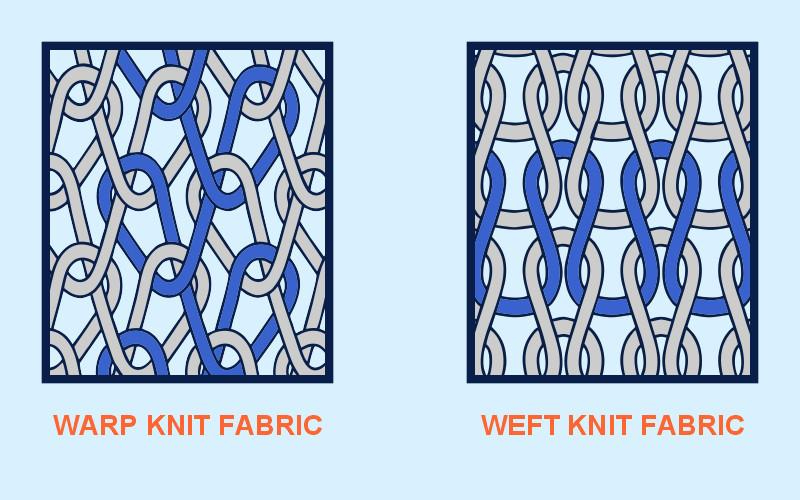
Microfiber towels are manufactured using different knitting techniques. Knitting directly affects the performance, durability, and texture of the towel. In our modern textile industry, warp knitting and weft knitting are the two most popular options.
In this article, we dive into the complex world of fabric knitting and highlight the main difference between warp and weft knitted microfiber towels by comparing their performance factors.
What is Warp Knitting?
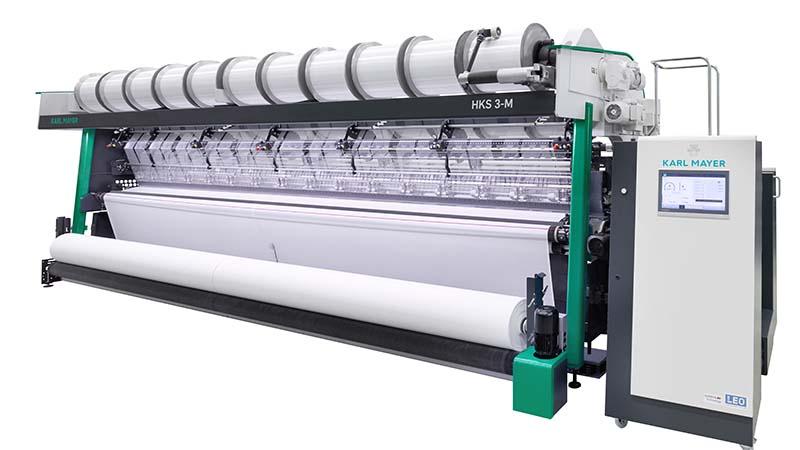
Warp knittingis an industrial fabric knitting that simultaneously uses multiple yarn threads. Each thread has a corresponding needle. These needles punch through the loose threads and form loops in the vertical direction. The knitted fabrics have a similar structure to a crochet fabric.
Tricot machines are special warp knitting machines. The width of the microfiber towel depends on the number of needles on the tricot machine. Each thread requires its own yarn. A thousand needle knitting machine has a maximum capacity of a thousand warp yarns.
Warp knitted fabrics have a very tight knit. Meaning the threads are interlocked with one another in a complex way. This results in a durable fabric with a smooth texture. A tight knit reduces the fabric’s ability to stretch, but it also ensures the fabric will not unravel.
| A Quick Overview of Warp Knitting | ||
| Advantages | Disadvantages | Common Applications |
| Dimensional StabilityUniform SurfaceSuperior DurabilityFray ResistantSafer ProductionFaster Production | Less StretchyHigher CostRequires Stronger YarnRequires Finner Yarn | Microfiber TowelsSports WearSmooth ScarfsLace FabricsAutomotive UpholsteryGloves & MasksTechnical Textiles |
Yarn Requirements for Warp Knitting
Warp knitting has specific requirements for yarn. Finer yarns are required for this process. So the knit stays consistent. The vertical knitting process also puts a lot of tension in the yarn. So you need a stronger yarn that won’t easily snap.
In the rare case that a yarn thread snaps, the damage won’t ruin the entire fabric. The damage stays in place and is only noticeable if you look really hard. This makes warp knitting more suitable for businesses, as their products are still usable.
Raschel knits are a special type of warp knitting technique that embeds complex patterns into the microfiber towel.
What is Weft Knitting?
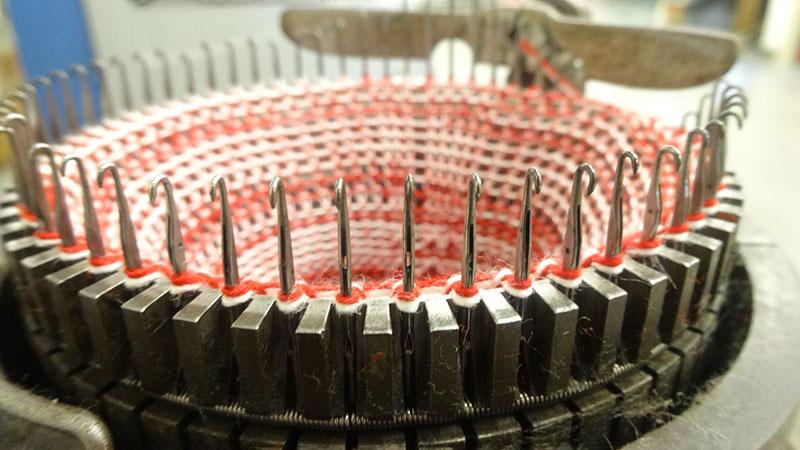
Weft knitting is an older style of machine knitting. It can knit a fabric using a single roll of yarn. But modern machines use more than one yarn thread to achieve higher production efficiency. It results in a fabric with a structure similar to a winter sweater.
There are two main types of machines used for weft knitting.
1. Circular Knitting
Circular knittinguses a tube-like mechanism with needles across the top border. As yarn is fed to the needles, the tube structure rotates. The needles grab onto the yarn and pull it in, creating a horizontal looped structure.
In this process, you can increase or decrease the number of yarn threads as you like. The most basic setup uses a single yarn. However, industrial fabrics use up to two dozen yarn threads. Circular knitting results in tubes of fabric that can be used for double-ply towels.
2. Flat Bed Knitting
Flat-bed knitting uses the same basic knitting process as circular knitting. Except that the needles lie flat in a row. When the yarn is fed to the machine, the needles move one after another in a line, creating stitches.
The main difference here is the shape of the output towel fabric. Flat-bed knitting machines produce a more common rectangular fabric. While circular knitting produces tube-shaped fabric.
Weft Knitting is a Linear Process
Linear knitting means each loop must follow the previous one. This is one loop after another, resulting in a slower knitting process. It also means that if the yarn snaps, it can result in the entire fabric unraveling.
Weft knitted fabrics have a higher stretch along the thread direction. It’s a great way to make one-size-fits-all clothing. But it’s not useful for microfiber towels.
Yarn Requirements for Warp Knitting
Weft knitting machines have very few yarn limitations. Both warp and weft knitting use multiple needles, but only weft knitting is compatible with a single yarn. You can use strong, weak, thick, or thin yarn because the yarn faces less tensile force.
In a special weft knitting machine, you have two separate sets of needles. These needles use two different sets of yarn to create a double-knit fabric. Double-knit fabrics have a similar smooth texture on the front and back.
| A Quick Overview of Weft Knitting | ||
| Advantages | Disadvantages | Common Applications |
| Stretchy FabricCost-EffectiveSofter FeelLightweightNo Yarn Requirements | Can Fray EasilySlower Production | T-ShirtsSweatersJerseysLeggingsBeaniesTextured Textiles |
Microfiber Towels: Warp vs Weft Knitting
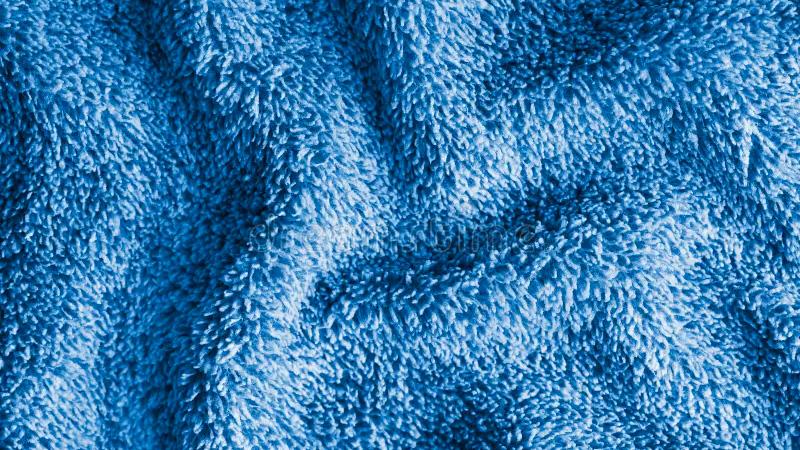
Microfiber towels are very different from other fabrics. Everyday apparel, home textiles, winter clothing, and sportswear are designed to be breathable and water-resistant. In comparison, high-quality microfiber towels are designed to be dense and absorbent.
Let’s take a look at the different properties of microfiber towels. And how microfiber towels benefit from warp or weft knitting techniques.
| Towel Properties | Warp Knitting | Weft Knitting |
| Moisture Management | Higher absorbency | Moderate absorbency |
| Texture | Flat / Terry | Waffle texture |
| Drying Time | Slower | Faster |
| Elasticity | Low stretch | Higher stretch |
| Durability | High durability | Lower durability |
| Fraying Resistance | Strong | Weak |
| Life Span | Long | Short |
| Cost per Towel | Lower at Larger Volumes | Lower at Small Volumes |
1. Moisture Management
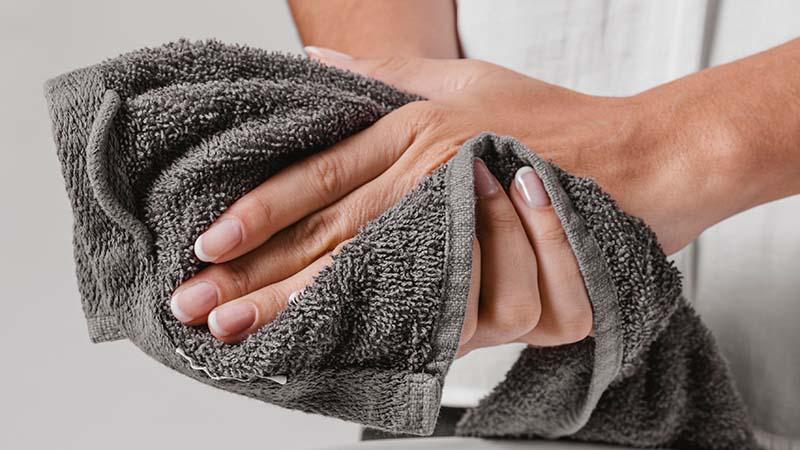
Microfiber towels with warp knitting have better absorption properties. The secret lies in the tight-knit of the towels. The vertical warp direction results in interlocking loops. These loops are closer together than weft loops. Water gets trapped between the tiny gaps in the warp knit.
Studies show that warp-knit fabrics have less moisture permeability. Meaning water doesn’t pass through them. It either slips off or is absorbed into the towel fabric.
However, it should be noted that the surface texture of microfiber towels also impacts water absorbency.
2. Microfiber Towel Texture
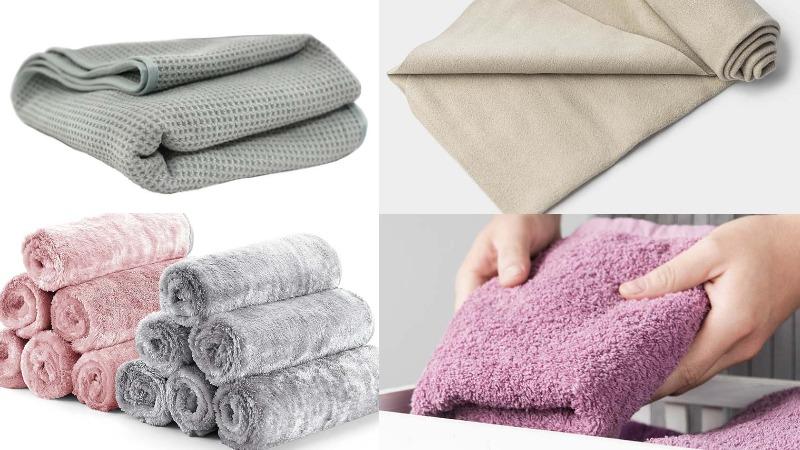
Warp knitting primarily results in a flat weave. This type of microfiber towel has increased softness but reduced absorbency. You can increase the water absorption by changing the texture to a terry loop. Terry cloths are less soft but have better absorbency.
In comparison, weft knitting can also produce a highly absorbent towel. Weft knitting is used to make waffle-textured microfiber towels. These towels have a cross-hatch rib-like design. It increases the surface area of the towel and increases water absorbency.
3. Drying Times
Warp and weft knit microfibers have similar drying times. We cannot make a one-to-one comparison because they have different absorptivity. Warp-knit towels absorb more water, so they take longer to dry.
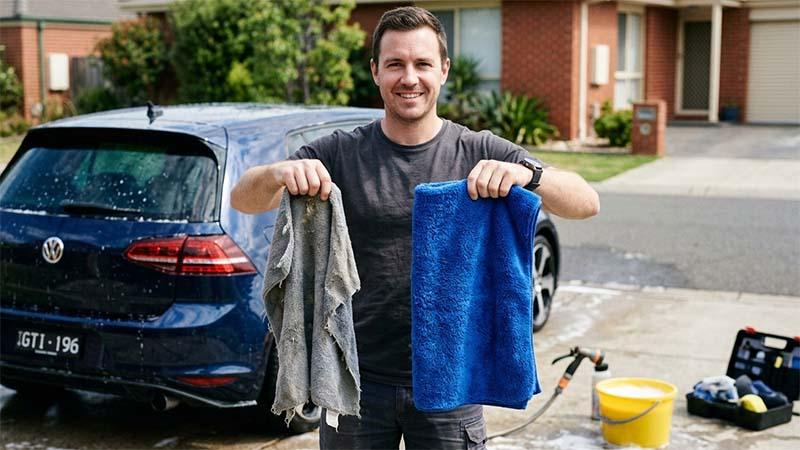
For simple applications like drying a car, textured or warp-knit towels are better as they can absorb more water.
4. Loop Direction & Elasticity
Elasticity is the property of a towel to stretch and then come back to its original shape. Warp-knit towels have lower stretch and better recovery. Meaning the fibers return to their original structure easily. This results in consistent cleaning performance across all applications.
Occasionally, manufacturers will mix polyester and spandex fibers to create a more elastic warp-knit textile. But that material is mostly used for dresses and never for microfiber towels.
5. Towel Durability
Towel durability is a big deal for industrial applications. Businesses want a towel that will perform well and last as long as possible. Industrial use often includes cleaning abrasive surfaces or using harsh chemicals.
When a single thread in the towel weave snaps, it starts to fray. Warp knit fibers are so tightly packed that one or two thread snapping isn’t a concern. However, weft knitting is much weaker and thus results in less durable towels.
6. Fraying & Run Resistance
Fabric run is the phenomenon in which a single loose thread can unravel the entire fabric. With microfiber towels, the edges are the biggest risk areas. Luckily, manufacturers use edge stitching to seal the microfiber towel.
This means a fraying will most likely occur in the middle of the fabric. Weft knitting results in a weaker towel. You cannot use weft towels on rough or abrasive surfaces.
7. Life Span
This loop formation results in more dimensional stability. Dimensional stability means the microfiber towel will keep its shape. It won’t stretch or deform over time. After several washes, warp-knit towels will retain their initial shape. This reduces the risk of fraying and thread damage.
The added stretch of weft knitting means that when you wash your microfiber towels, they will wear faster.
Conclusion
Both warp and weft knitting are incredible textile manufacturing techniques. However, weft knitting is a luxury focus option, providing comfort to you through soft and breathable clothing. In comparison, warp knitting is a practical tool designed for high-performance fabrics like microfiber towels. We recommend you always pick warp-knit microfiber towels for cleaning applications. And weft-knit microfiber towels for body care.
Get Warp and Weft Knitted Microfiber Towels from Manywell!
Manywell is a specialist in the microfiber towel sector. We specialize in high-quality and long-lasting microfiber towels, cleaning cloths, scrubbing mitts, and flat mops. With our 18 years of manufacturing experience, we have perfected the art of making a microfiber towel.
All of our products are 100% customizable and available for OEM branding. Call us now for a FREE Quote.