
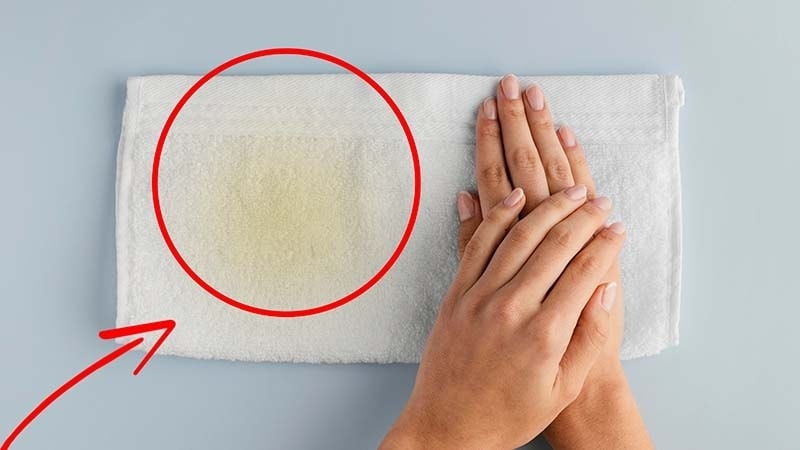
Hand towels often develop a dull yellow hue or get patchy spots. Even after a thorough wash, these spots remain. This is particularly damaging to hospitality businesses.
Discolored towels imply poor hygiene and can significantly harm your business’s reputation. However, this type of towel discoloration is very common and, in some cases, completely reversible.
In this quick guide, we break down the most common causes for hand towel discoloration. And share practical solutions that you can implement in your hotels, spas, and cleaning services.
9 Common Causes of Hand Towel Discoloration
Before addressing discoloration, it’s important to understand its many causes. The following list contains the most common causes of towel discoloration.
1. Body Oils & Sweat

Our sweat contains oily and acidic compounds. These skin secretions can soak into fabrics, appearing as spots on towels. Therefore, gym towels discolor much faster than other body towels.
Compared to microfiber towels, cotton ones are more likely to discolor from sweat.
2. Acne Treatments (Benzoyl Peroxide)
Acne treatments use an acidic chemical called benzoyl peroxide to treat the skin. Acids are particularly dangerous for towels. They can damage the fibers and cause yellowing.
After using any medication, thoroughly wash your hands before drying with a hand towel.
3. Skincare Products
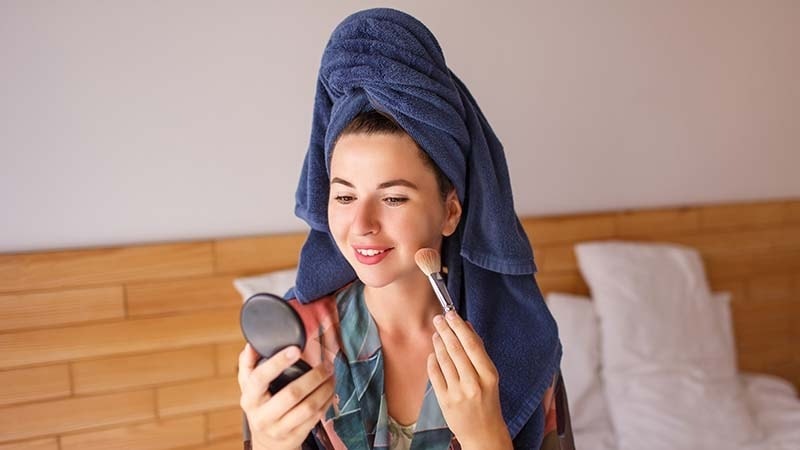
Make-up and skincare products contain dyes, oils, and other compounds that stain towels. You must avoid white towels with skin care products.
Color transfers are easier to notice. But you have to be more careful with oils, foundation, and other chemicals. They are not immediately noticeable. So after a day or two, they absorb into the towel and lead to long-lasting stains.
4. Minerals in the Water
All water sources contain dissolved mineral deposits. A high level of mineral concentration results in hard water formation. Hard water results in those milky white spots on your bathroom’s glass shower doors.
Over time, these mineral deposits (calcium and magnesium) make their way into your hand towels. These stains are not visible on white towels. But on grey or colored towels, they are more noticeable.
You get a similar discoloration from most modern teeth whitening toothpastes. These toothpastes often contain calcium carbonate and bleaching agents, which can seep into the towel fabric.
Customers often drop whitening toothpaste on hand towels. In that case, a quick wash the very next day is important. Hotels should ensure housekeeping staff washes all towels daily to prevent stains from becoming permanent.
5. Contamination from Cleaning Rags
Hand towels are small and often get washed with other cleaning rags. Cleaning rags from your kitchen or garage are full of bacteria and chemicals.
Washing different towels together is a recipe for disaster. Best-case scenario, your white towels turn yellow. Worst-case scenario, your hand towels collect bacteria from the rags.
6. Harsh Cleaning Agents
Not all laundry detergents are made equal. Detergents contain bleach and other chemicals that remove odors and stains. But using too much detergent can cause towel discoloration.
It should be noted that, in moderation, bleach can brighten white towels. But excess bleach use can result in fading and color transfer. For white towels, bleach can cause them to turn yellow.
7. Pool Water (Chlorine)

Chlorine from pool water is a natural disinfectant. But it’s also a natural bleaching agent. Chlorine-soaked towels change color over time. Natural sunlight only boosts the bleaching process. It’s not rare to see bleach spots on towels the next day after use.
It’s important to rinse your pool towels after use. The sooner you do it, the better.
8. Heat & Sunlight
Heat and sunlight have an odd effect on towels. For microfiber hand towels, heat can damage the sensitive fibers. So, high heat drying and prolonged exposure to direct sunlight are out of the question.
Drying towels outdoors has the risk of sun bleaching. It’s a process in which UV radiation from the sun breaks down the color dyes in the towels.
9. Damaged Towel Fibers
Whether it’s cotton or microfiber towels. They all get damaged after repeated use. Once the towel fibers are damaged, they will absorb more stains and become harder to clean.
You cannot repair damaged fibers. The best you can do is give them a deep cleaning and hope the stains come out. Otherwise, it’s time for you to buy some new towels.
How to Revive Discolored or Yellow Towels?
There are so many reasons your towels can discolor or turn yellow. But there are shockingly simple steps for reviving yellow towels.
Here are four tried and true methods for cleaning your discolored hand towels.
| Cleaning Solution | Benefits | Precautions & Warnings |
| Baking Soda | Removing Odors & Acidic Stains | Overuse of Baking Soda Will Damage Flat Weave Microfibers. |
| Vinegar Solution | Removing Hard Water Minerals and Soap Scum | Double-Wash Towels to Remove the Vinegar Smell |
| Oxygen Bleach | Stain Removal & Non-Fading Bleaching | Overuse Will Result in Fading |
| Boiling Water | Stain Removal and Towel Disinfection | ONLY For Small Cotton Towels. NEVER Use on Microfiber Towels |
1. Baking Soda Cleaning
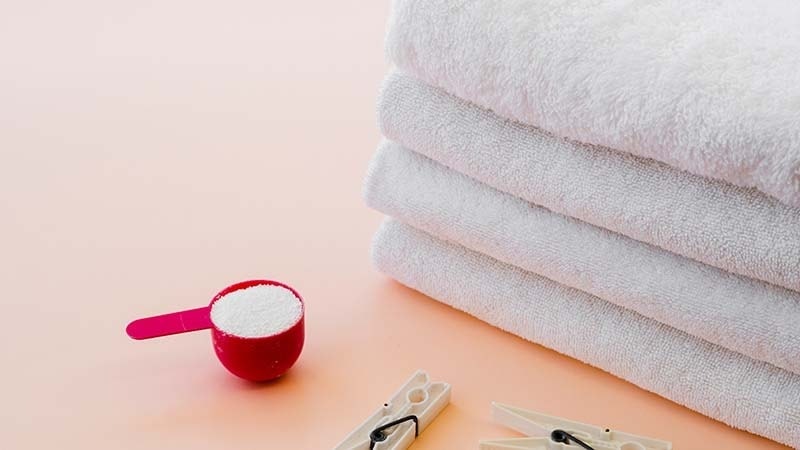
Baking soda is an alkaline substance. Meaning it’s a natural counter to acids. You can use baking soda in two ways.
- Use it in conjunction with your detergent. Mix a quarter cup of baking soda with the laundry detergent before washing the towels. It will boost the natural cleaning properties of the detergent without damaging the towel.
- Make a baking soda paste. Slowly add drops of water to a cup of baking soda until you get a runny paste. Coat stubborn stains with the baking soda paste and wait a few minutes before rinsing them off.
You can also use borax, which is a much stronger alkaline cleaning agent. Avoid using something like hydrogen peroxide. It’s an oxidizing agent that breaks down bacteria. Meaning it will clean your clothes, but also risks turning them yellow.
2. Vinegar Cleaning
Vinegar, also known as acetic acid, is a natural water softener. The acid breaks down the minerals in the water. It does the same for water stains and soap scum stains on your hand towels.
Mix a cup of white vinegar in a bucket of warm water. Let your towels sit in the water for 30 mins. Afterward, rinse with clean water and machine wash the towels.
Here is a quick pH chart to help you identify acids and alkalines (bases).
| Cleaning Agent | pH Level |
| Baking Soda | 8-9 |
| Borax | 9.1-9.5 |
| Hydrogen Peroxide | 4.5 |
| Lemon Juice | 2-2.6 |
| Vinegar | 2-3 |
As you can see from the chart above, white vinegar is the exact opposite of baking soda. So you should NEVER mix the two. They will counter each other and be ineffective against yellow stains.
3. Oxygen-Based Bleach
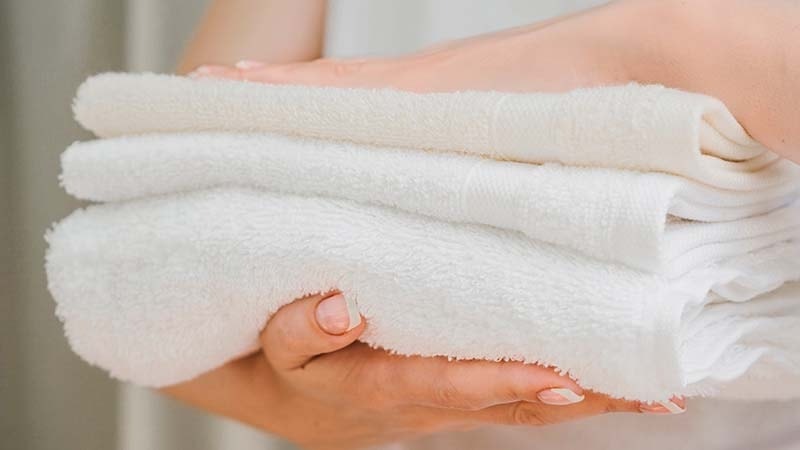
Oxygen bleach is a more gentle cleaning solution than traditional chlorine bleach. It doesn’t cause color fading and is safe for the environment. It is the ideal compound for removing stains and brightening fabrics, including white towels.
You can use oxygen-based bleach in three ways.
- Pre-Cleaning Tool: Wash your towels in oxygen bleach before throwing them in the washing machine. This removes any lingering bleach residue from the towels.
- Post-Cleaning Soak: For dirtier towels, wash them first. Then soak them in a bucket with a cup of oxygen bleach for 5-10 mins. Afterwards, rinse with clean water and dry.
- During the Wash Cycle: Wash your towels in a mixture of laundry detergent and oxygen bleach. Use a gentle wash cycle and hot water for best results.
4. The Boiling Method (Cotton Only)
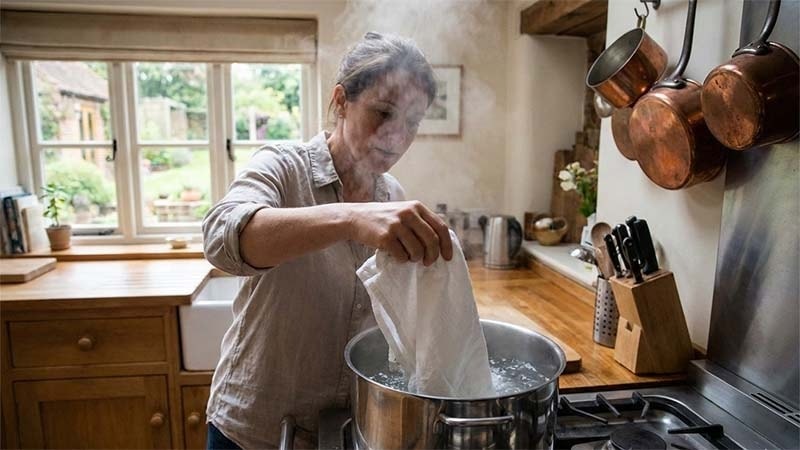
This is a last resort cleaning solution and is ONLY useful for cotton hand towels. Microfiber towels cannot stand hot water, let alone boiling water.
- Take a large pot and fill it 2/3rd of the way with clean water (preferably soft water).
- Optionally, add two teaspoons of your preferred laundry detergent to the water. Careful, it can cause the water to bubble and boil over.
- Then carefully add your stained hand towels to the pot and gently stir for 10 minutes.
- Reduce the heat to a simmer and leave the towels in the water for another 20 minutes.
- Turn the heat off and carefully take out the towels and rinse them in clean water.
- Tumble dry your cotton towels and inspect the stained spots.
Washing towels in boiling water can be dangerous. It is only recommended for a small cotton towel. Using this method on microfiber towels will cause irrepairable damage to the soft fibers.
Why are Yellow Towels Bad for Business?
As we mentioned before, yellow towels don’t always mean unclean. Most of the time, it’s a result of faded colors or bleach spots. However, it can still have a negative effect on your hospitality or cleaning business.
1. Perceived Lack of Hygiene
Yellow towels aren’t always a result of poor hygiene. As we discussed above, over-cleaning with bleach can result in yellow stains on white fabrics. But there is no way for guests at hotels and resorts to know why a white towel is yellow.
Most guests will assume the towels are dirty and the business has a hygiene problem. In the best case, the customers will understand that bleach stains are not unhygienic. But they will then perceive the hotel as cheap and unwilling to replace towels.
2. Negative Reviews
Once the negative perception sets in, the negative reviews will follow. All it takes is one customer to share a negative review on social media. You don’t want your business name or logo attached to photos of discolored towels.
3. Poor Brand Image
Larger businesses and resorts have an established reputation. So one or two negative reviews are less harmful. However, for smaller businesses, these reviews can leave a permanent mark on their reputation.
Once your business becomes known for its poor-quality towels, recovery becomes incredibly hard.
4. Loss of Business
Following the reputational hit, you will start to see a decline in bookings. The exact financial loss is hard to calculate. But you can compare the guest bookings before and after the negative review for reference.
Brightlocal’s 2023 Discovery & Trust Report states that 63% of customers lose trust in a business after seeing negative reviews.
5. Operational vs Replacement Costs
Loss of customers due to negative reviews is considered a natural part of running a business. It can be chalked up to operational costs. It’s important to weigh the cost of towel replacements against the potential client loss.
For most small to medium businesses. The cost of losing potential clients is far greater than the cost of new towels.
9 Tips for Preventing Towel Discoloration
Once the towel colors fade, you can never restore those vibrant colors. Therefore, it’s always better to prevent towel discoloration in the first place.
Here are eight simple yet effective tips to keep your towels safe.
1. Keep Hand & Bath Towels Separate
It’s important to separate your different towels. This prevents cross-contamination of bacteria, dyes, and body oils. This is especially true for washing towels. Keep your kitchen and bath towels away from general-use towels.
2. Rinse Immediately After Use
It’s annoying. Rinsing your towels after use can prevent stains from taking hold. Especially in the case of facial care. Don’t let your skincare products dry and harden on the towels.
3. Use a Water Softener
For areas with a hard water problem, there are two solutions. You can install a dedicated water softener filter or use mineral-dissolving additives. Some towel manufacturers specifically mention not washing their products with hard water.
4. Ensure Regular Maintenance
A lot of towel discoloration takes place over several days. As the oils, stains, and dyes slowly embed into the fabric. Therefore, regular maintenance and timely laundry are essential.
5. Avoid Fabric Softeners
You may not realize it, but sometimes the source of the problem is your laundering technique. Never use fabric softeners with towels. It coats linens and towels in a waxy layer, which makes towels less absorbent.
6. Use Bleach-Resistant Towels
Bleach-resistant towels use special dyes that resist fading. If you cannot find bleach-proof hand towels, then use a safer fabric bleach. Oxygen-based bleach products have a lower risk of fading.
These towels are generally resistant to harsh chemicals and last longer.
7. Air Dry Towels in Shade
Towels get hard and crackly with excessive heat. So always air-dry your towels and keep them away from direct sunlight. Alternatively, you can tumble dry on a low heat setting.
8. Watch Your Water Temperature
Cotton towels should always be washed in hot water. Cold water simply doesn’t get all the stains out of the fabric. For microfiber towels, you want to avoid hot water but still use warm water for washing.
9. Don’t Share Towels
Lastly, avoid sharing towels with others. Even if you use your towels in a responsible manner. Others do not. It’s also a generally good hygiene practice for families to keep separate towels for everyone.
Conclusion
Towel discoloration is a natural part of any towel’s life. There are several factors that cause your towels to turn yellow. With proper care, you can revive these towels to their original vibrant colors. However, the best solution will always be prevention. Use this guide to revitalize your towels at home or at your business.
Get High-Quality Stain-Resistant Towels from Manywell!
Manywell is a leading manufacturer and supplier of high-quality towels. Take a look at our microfiber towels, scrubbing sponges, and flat mops. Every Manywell product goes through strict QA testing before shipping.
We offer quick and reliable shipping all across the globe. B2B customers can take advantage of our extensive customization services and bulk discounts. Contact us now!