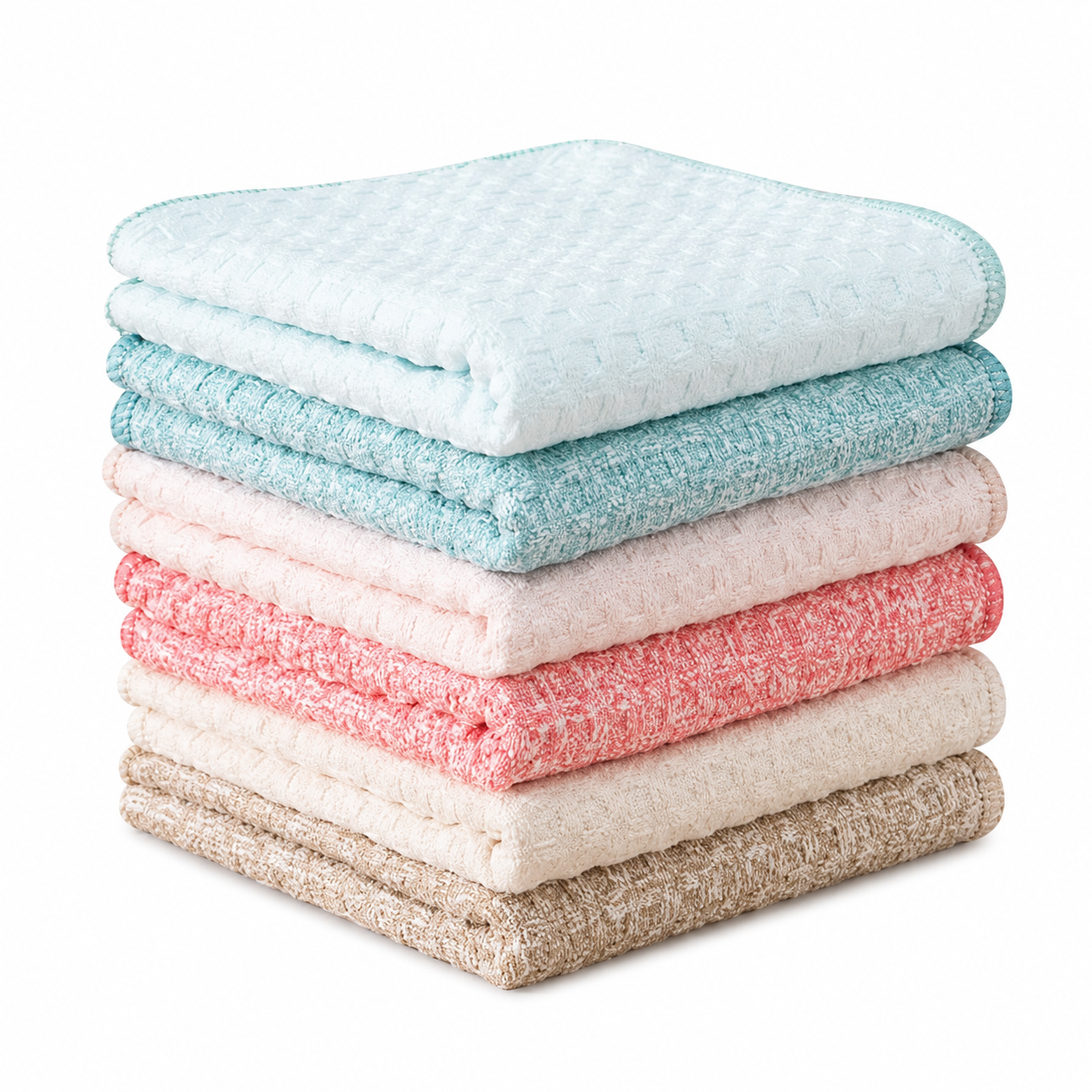
What Are Terry Microfiber Towels?
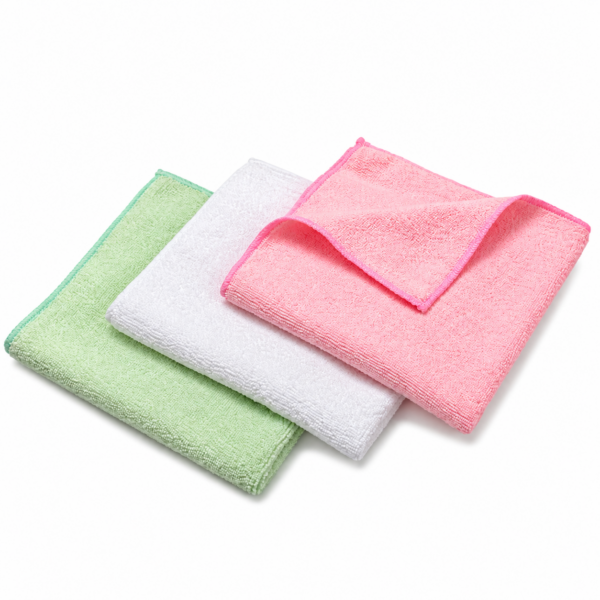
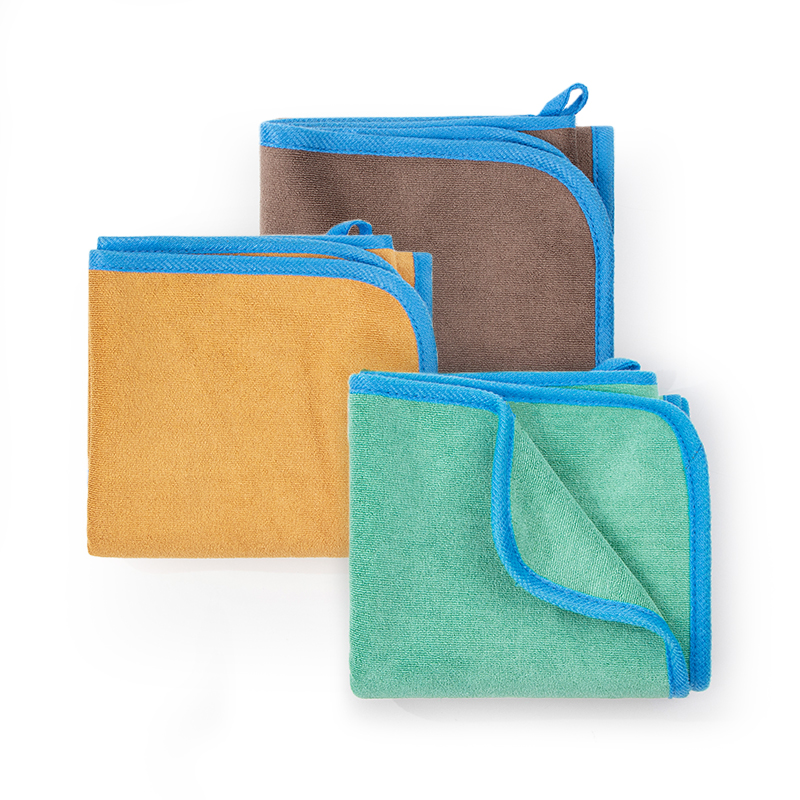
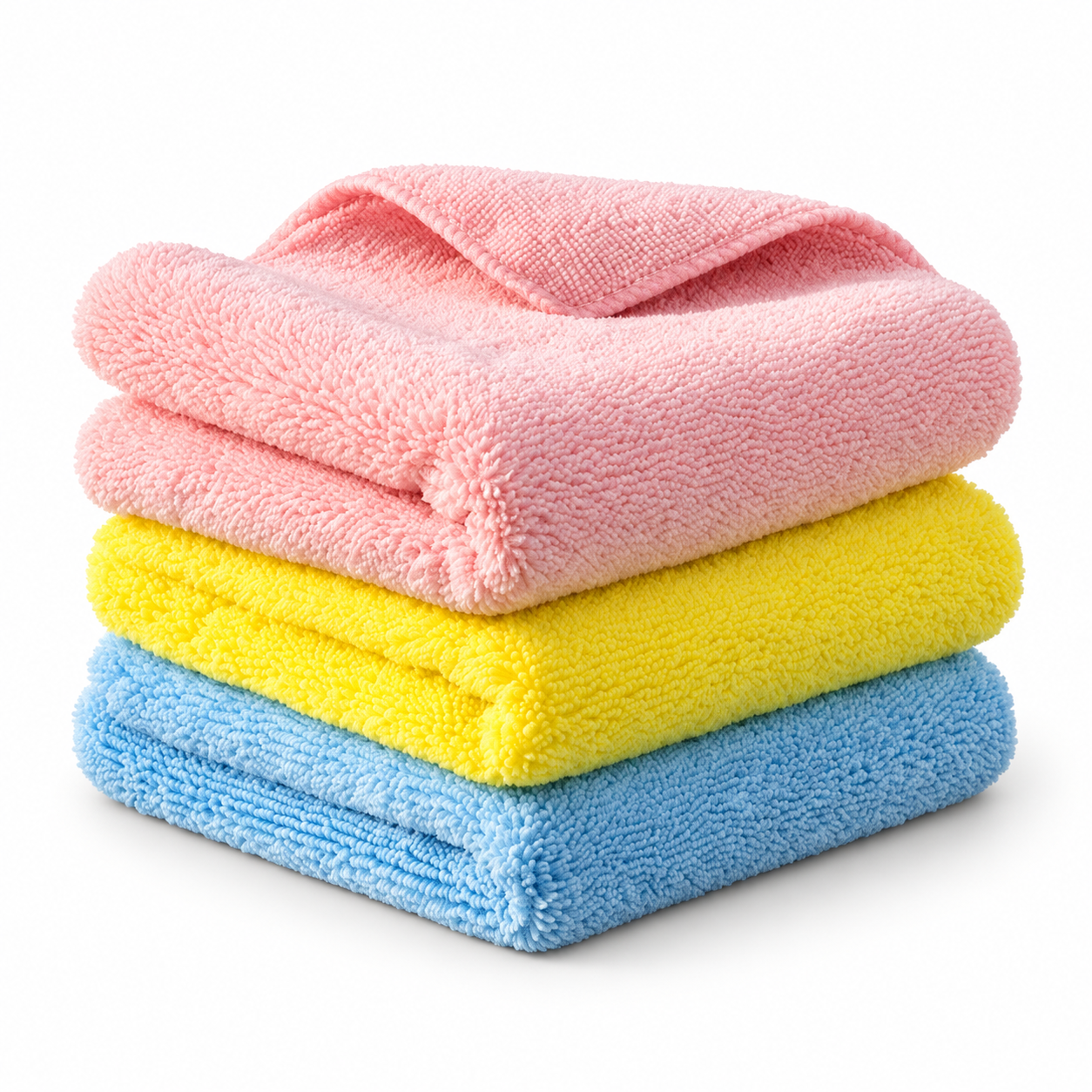
Terry weave microfiber towels are a type of microfiber towel with a 3D terry loop structure. Compared with regular flat weave microfiber towels, their biggest difference is that the raised looped fibers on their surface can help pick up more dust and dirt.
Of course, like other microfiber towels, terry microfiber cloths are also usually made from polyester/polyamide microfiber.
Terry Cleaning Towel Features
3D Terry Loop Structure
3D terry loop structure is the key feature of terry microfiber towels. Simply from the appearance, you can understand it as the raised looped fibers on the surface of the towel. This special structure allows terry microfiber cloths to pick up more water and dust during cleaning, helping you complete your cleaning tasks more efficiently.
Larger Contact Area
If we look closely at the towel surface, we can see the 3D terry loop structure. During wiping, these raised loops can contact the cleaning surface from different angles. Compared with a flat structure, a 3D structure can provide more effective contact points.
Soft Microfiber Surface
Microfiber is made from very fine fibers, so it has a soft touch. However, Terry microfiber towels have many more soft contact areas than other microfiber towels because of the 3D terry loop structure. During the wiping process, the terry loop structure can also help reduce the friction between the towel and the cleaning surface.
Low Lint Performance
Low lint performance is a characteristic that high-quality terry cleaning towels must have. The surface of terry towels has fewer exposed fiber ends. This greatly helps reduce fiber shedding. At the same time, terry microfiber cloths also have strict requirements for the density of the terry loops. A tighter towel structure means the towel is less likely to have lint issues during use.
Microfiber Terry Cloth Benefits
Efficient Water Removal
There are many small spaces between the terry loops of Terry microfiber cloths. They can improve storage space. These spaces provide more room to hold water, allowing your towel to absorb more water during use. Of course, this means that these spaces can also give water more room to evaporate, helping your towel dry faster after use.
Improved Cleaning Efficiency
Terry microfiber towels can be washed and reused many times. Because of the stable terry loop structure, they can maintain more stable cleaning performance. Compared with regular towels, they can handle more washing cycles and be used for a longer time. Looking at the long term, this can reduce the number of replacements and help you save long-term costs.
Long-Term Cost Value
Terry microfiber towels can be washed and reused many times. Because of the stable terry loop structure, they can maintain more stable cleaning performance. Compared with regular towels, they can handle more washing cycles and be used for a longer time. Looking at the long term, this can reduce the number of replacements and help you save long-term costs.
Microfiber Terry Cloth vs Traditional Terry Cloth
Material
Terry cloth microfiber is made from polyester and polyamide microfibers. The fibers are extremely fine, which makes the towels feel softer.
Traditional terry cloth is mainly made from cotton. Cotton is a natural fiber known for its softness and good absorbency. However, compared with microfiber, cotton is more likely to become stiff and turn yellow after repeated washing over time. If you need towels for frequent cleaning and repeated washing, microfiber terry cloth may be a better fit for your needs.
Fiber Structure
Whether it’s a microfiber cleaning terry towel or a traditional terry towel, they both have loops on the surface. The difference is that microfiber loops are tighter and feel softer and smoother, while traditional terry loops are fluffier and feel thicker and fuller. If you prefer a finer surface for detailed cleaning, microfiber terry cloth is worth considering. If you prefer a fuller, fluffier feel for everyday personal use, traditional terry cloth may suit you better.
Water Absorption
The tiny fibers on microfiber terry towels create more space to hold water, so they can absorb moisture quickly. Traditional terry towels also absorb water well. But when dealing with the same amount of water, microfiber cleaning terry towels absorb it faster and hold more water than traditional terry towels. So, if you need towels for drying cars or cleaning large areas, microfiber towels are the better choice. If it's for general cleaning, both towels are good choices.
Lint Performance
Traditional terry towels are made from natural cotton fibers. There are naturally lots of short fibers on the surface, and they tend to shed easily over time with regular use. On the other hand, Microfiber terry cloths have a tighter and more stable loop structure. The fibers are less likely to shed during cleaning. So, if you need to clean surfaces like glass and screens, microfiber terry towels are a better choice.
Durability
Both types of terry towels can be washed and reused. But they perform quite differently after repeated washing. Microfiber terry cloths stay soft and maintain their cleaning performance even after many washes. But cotton terry towels can become stiff and shrink over time. So, if you’re thinking about long-term costs, microfiber towels are the smarter choice.
Applications
Not sure whether to choose Microfiber Terry Cloth or Traditional Terry Cloth? Here’s a simple comparison table to help you make the right choice.
When comparing terry cloth vs microfiber for polishing, microfiber terry weave drying towels are generally a better choice when a soft surface and low-lint finish are important.
Simply put, soft and smooth microfiber terry towels are better for detailed commercial cleaning, while natural cotton towels are a great choice for everyday personal care.
How to Choose the Best Microfiber Terry Cloth for Cleaning?
Step 1: Inspect Appearance & Terry Structure
When we pick up a towel, the first thing we notice is its appearance. A good microfiber terry towel should have neat, even loops across the surface. The loops should be even in height, with no obvious gaps between them. That’s what we consider a good-looking towel.
Step 2: Check Texture & Softness
A good microfiber terry weave drying towel must be soft to avoid scratching the surface. But how do you know if a towel is soft by touch? A good microfiber terry towel should feel smooth and springy. Even if you put it against your cheek, you won’t feel any irritation.
Step 3: Check Fiber Composition
Common microfiber materials come in two types: 80/20 and 70/30. The 80/20 blend balances cleaning performance and cost, while the 70/30 blend delivers a softer feel. If you're sourcing towels for everyday cleaning, you can choose the 80/20 blend because it's more durable. If you're targeting the premium market, we recommend the 70/30 blend because it's softer.
Step 4: Select the Right GSM
GSM can be simply understood as the weight of a towel. Lower GSM towels are lighter and are commonly used for everyday cleaning. Higher GSM towels are more common in car care and commercial cleaning because they feel thicker and fuller. Common GSM ranges for microfiber terry weave drying towels:
280–400 GSM: Household cleaning, kitchen cleaning, and general cleaning.
400–600 GSM: Car drying and premium commercial cleaning.
600+ GSM: Spa use and other premium applications.
Step 5: Test Water Absorption
Absorbency is one of the most important features of microfiber towels. A good microfiber terry towel not only absorbs more water but also holds it in, so it won’t drip even when fully soaked. You must choose towels with these features to ensure they won’t leave water streaks after wiping.
Step 6: Check Lint Control
Low lint means the towel won’t leave visible fibers behind when wiping. It is especially important for cleaning delicate surfaces. There are two ways to test whether a towel sheds lint in everyday use: first, rub the dry towel repeatedly over a dark surface. Second, wash the towel and then wipe a surface to check for lint. But if you want to avoid lint as much as possible, we recommend fish microfiber cloths as your first choice.
Step 7: Check Durability & Colorfastness
Repeated washing is the most common way to test a towel’s durability and colorfastness. A good microfiber terry weave drying towel won’t fade or lose its shape even after repeated washing. Its stable fiber structure helps it maintain its original cleaning performance. Besides, durable towels mean long-term cost savings for your business or brand.
OEM Customization Options for Microfiber Terry Towels
Material & Terry Structure
The first step in customizing microfiber terry towels is to choose the blend ratio. Common microfiber blend ratios are 80/20 and 70/30. Polyester helps improve the towel’s durability, while polyamide makes it softer. So you should choose the blend ratio and structure based on your business needs. For example, for common household cleaning, we recommend an 80/20 blend with a short, dense loop structure. For car cleaning, a 70/30 blend with long loops will be softer and more absorbent.
GSM & Size
You can start by choosing the GSM based on your product positioning.
Once you've decided on the GSM, you can choose the right towel size. For general daily cleaning, you can go with common sizes like 30 × 30 cm or 40 × 40 cm, which are more convenient to use. Larger towels, like 60 × 90 cm, are designed for drying large surfaces. They become thicker and heavier after absorbing water.
Color Matching
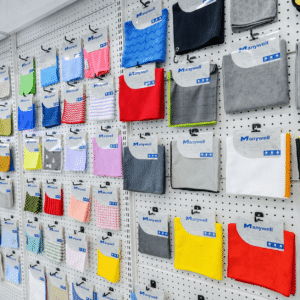
If you have your own brand, choose microfiber terry cloth colors that match your brand’s color scheme and image. For sets with mixed colors, the factory can combine your preferred colors and help determine which combinations work well together, ensuring the final result meets your expectations.
One thing to keep in mind: always confirm the color samples on the actual towel fabric you’ve chosen to avoid color differences between different fabrics.
Custom Logo
The common logo options are printed, embroidered, and jacquard labels. Printing means putting your logo directly onto the surface of the towel. It is better suited for short-pile microfiber towels, but the feel and cleaning performance of the printed area will change.
If you want to highlight your brand logo, you can choose an embroidered label. Embroider your logo on the corner of the towel. A jacquard label can be sewn directly onto the towel, making it more convenient than an embroidered label. But embroidery looks more premium.
Before producing a sample, you need to confirm the logo's size and placement with the factory in advance.
Edge Options
Different edge finishes are suitable for different applications. But no matter which edge finish you choose, we recommend carefully checking all four edges and corners of the sample. Hard edges can scratch the surfaces you're cleaning.
Packaging Solutions
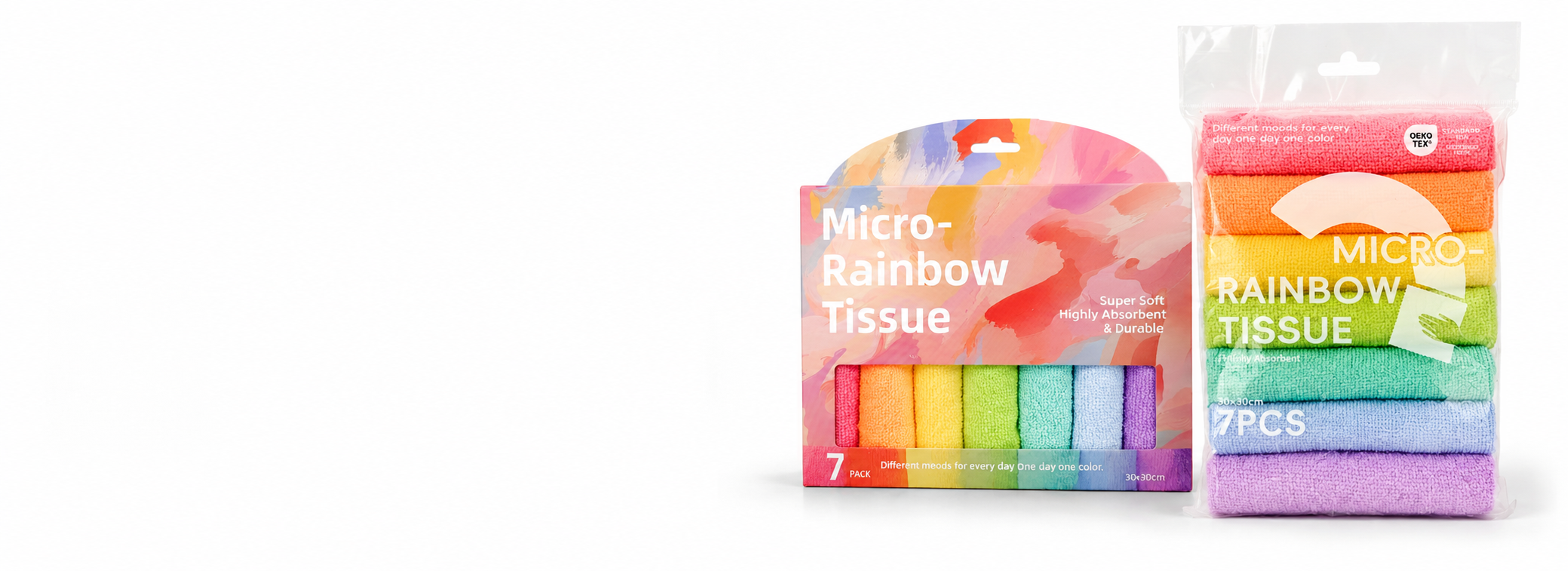
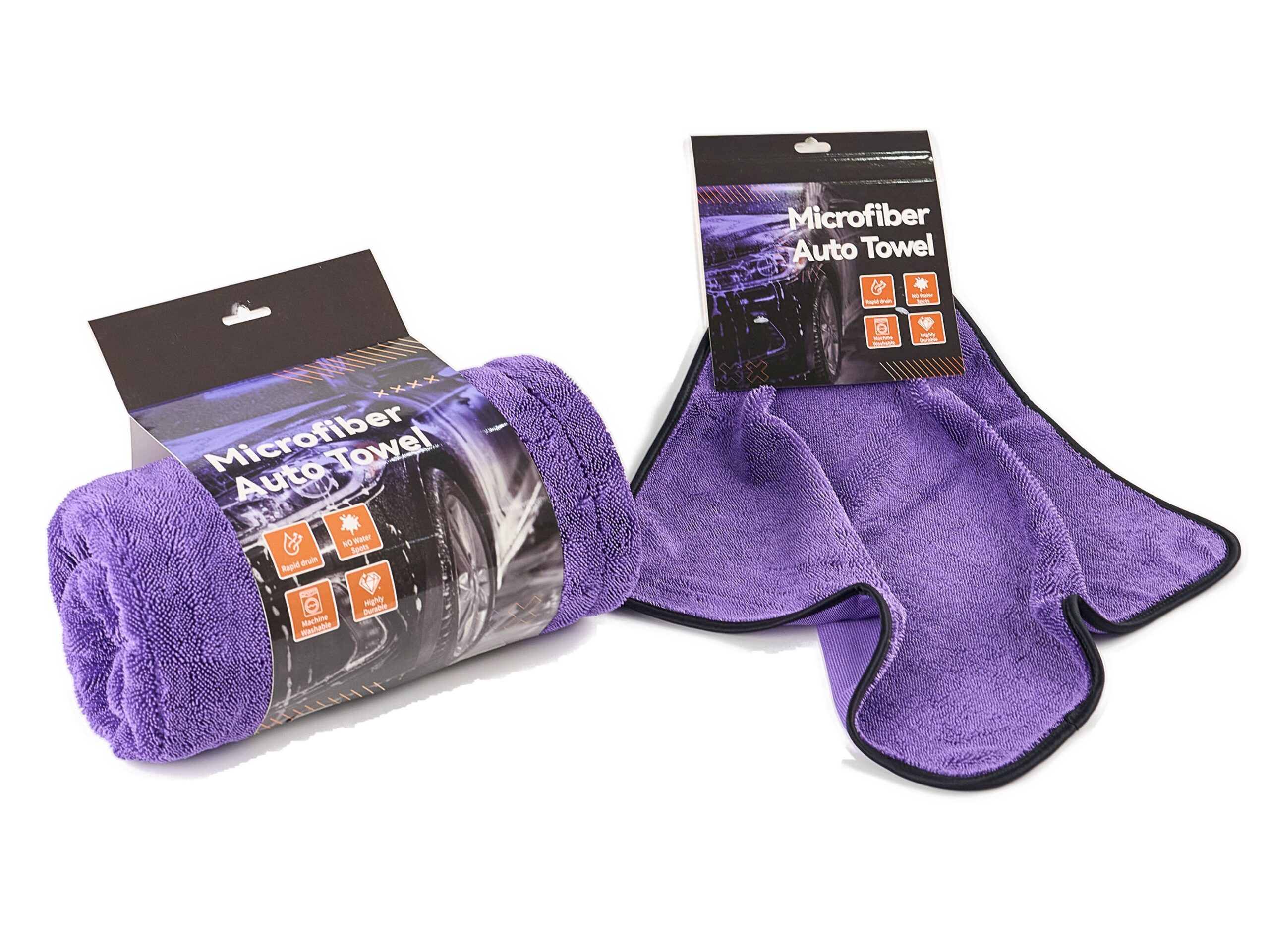
The common packaging options include OPP bags, color boxes, and custom branded packaging. If you mainly focus on terry towels wholesale, you can choose OPP bags. making it easier for customers to count them and split them for resale.
If you have your own brand, you can choose custom branded packaging, such as color boxes or paper cards, to showcase your brand logo. Keep in mind that double-sided or high-GSM terry towels are bulkier, so you need to test the packaging with the finished towels to make sure it isn’t too tight or flattening the loops.
Quality Control for Bulk Terry Microfiber Towels
Fiber Composition Inspection
Whether you choose an 80/20 blend, a 70/30 blend, or 100% polyester, the blend ratio should be clearly stated on the specification sheet. The raw material quality and composition should be checked to make sure the blend ratio matches the production specifications and product labels. If you need to verify the fiber composition, a test report can help confirm the actual blend ratio.
Terry Loop Density Check
Before mass production, the loop density and height should be recorded for later inspections. If you choose double-sided microfiber terry towels, the loop structure on both sides should be carefully checked to make sure the loops are even, rather than checking only whether the GSM meets the requirements.
GSM & Size Accuracy
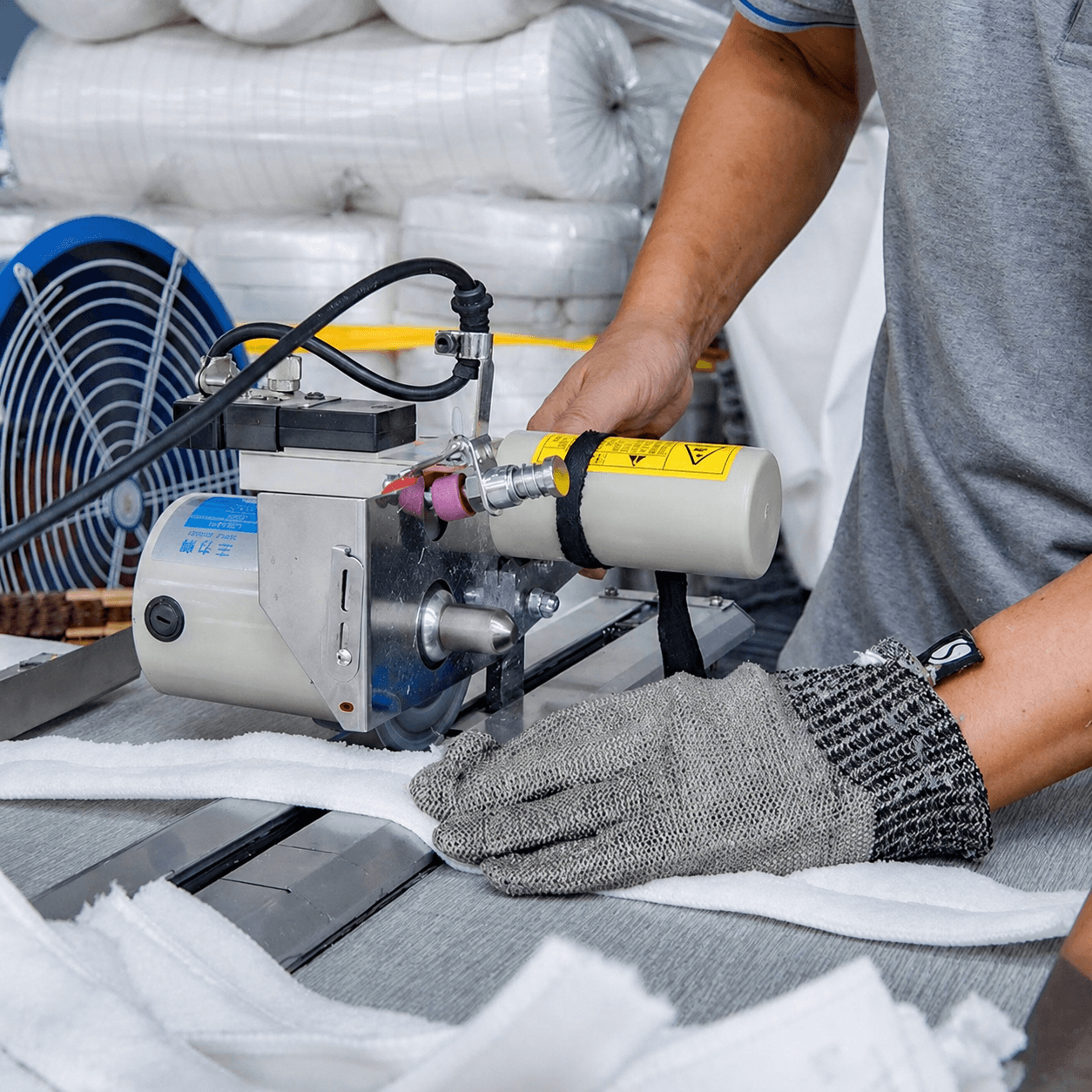
During the towel cutting stage, you can ask the factory to check the product dimensions and use professional equipment to test the GSM. This ensures the finished products meet the agreed requirements. If you have specific requirements for the towel size after washing, the factory provides test results based on strict standards.
Absorbency & Lint Testing
When you test microfiber terry towels for absorbency, you should check how quickly they absorb water and whether they leave any watermarks. During the lint test, you may test them on a dark surface to check for any visible fibers left behind.
Colorfastness Testing
For towels in the same shipment, try to request that the factory use fabric from the same dye. This ensures consistent color across the entire batch from the very beginning. If you have strict colorfastness requirements, you can also ask the factory to arrange professional testing for the microfiber towels based on your needs.
Final Quality Inspection
Besides these tests, you need to check the products before shipping. Before loading, verify the specifications of the towels in each carton. If you find that any terry cloth cleaning towels do not meet the requirements, you can request that the factory rework them and inspect them again.