
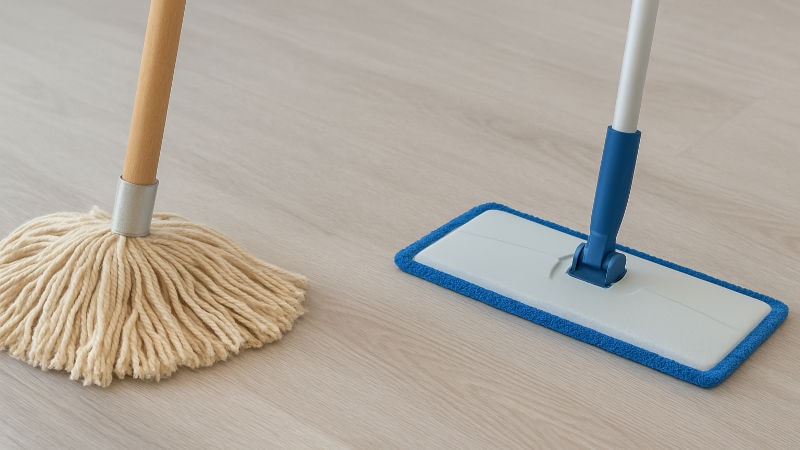
Mops come in many types. You will see cotton string mops and microfiber flat mops as a common option in the cleaning industry. Each mop works in a different way. Cotton comes from organic materials. Microfiber comes from synthetic materials with ultra fine fibers.
Microfiber mops remove up to 99% of dirt and bacteria with only water. These ultra fine fibers trap more soil on smooth floors and hard floors. While cotton mop heads still help with wet mopping and big spills. They use more water, more cleaning chemicals, and need more laundry cycles.
In this article, you will see the difference between cotton mop vs microfibre flat mop. You will also learn which mop heads do a better job with dirt, dust, germs, and cleaning efficiency.
Characteristics of Cotton Mops
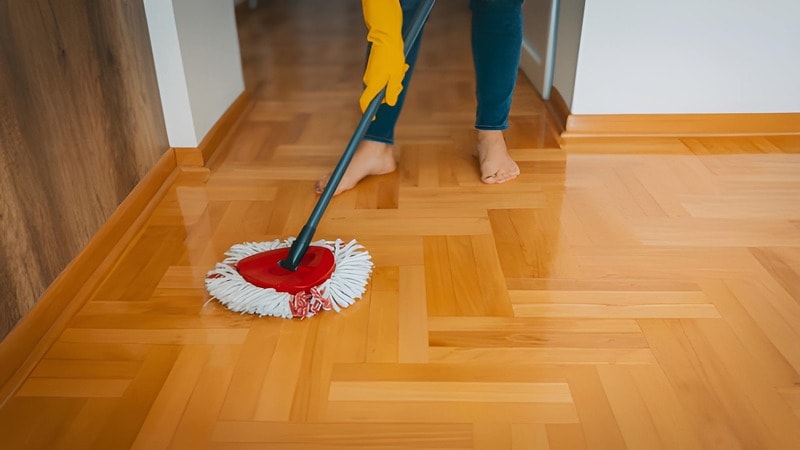
Many facilities still use cotton string mops and the traditional mop for daily work. These mop heads come from organic materials, mainly cotton string. This offers strong absorbency during wet mopping. They also pair well with common cleaning products and basic cleaning tools.
Cotton mop heads use natural fibers. These fibers can shed and leave lint on floors. The cotton material also holds more water. It dries slowly and can turn into a breeding ground for germs if you leave it wet for too long.
This needs more water, more cleaning chemicals, and more laundry cycles. They can push dirt on textured surfaces if the mop head becomes worn. Still, they help with bigger spills and general cleaning in high traffic areas.
Cotton Mops: Advantages vs Disadvantages
| Advantages | Disadvantages |
|---|---|
| Cotton mop heads soak up water fast. Ideal for wet floors, spills, and damp areas. | Needs manual wringing. Dries slowly, which slows down cleaning. |
| Cotton fibers trap dust, dirt, and hair. Works on smooth floors and textured surfaces. | Fibers can break down and leave lint on floors, lowering cleaning efficiency. |
| Costs less than many microfiber products. Good value for homes and commercial cleaning. | Frequent washing weakens cotton string. Mop head loses shape and needs replacement sooner. |
| Compatible with acidic chemicals, bleach, and other cleaning products. | Cotton string mops struggle in tight spaces and edges. |
| Simple dragging motion. Helps elderly users and staff members in busy areas. | Wet cotton mop can hold germs, mold, and more soil. Can lead to cross contamination if not dried properly. |
Cotton mops work well for basic cleaning and heavy spills. However, it is less effective for deep and frequent cleaning needs.
Characteristics of Microfiber Mops
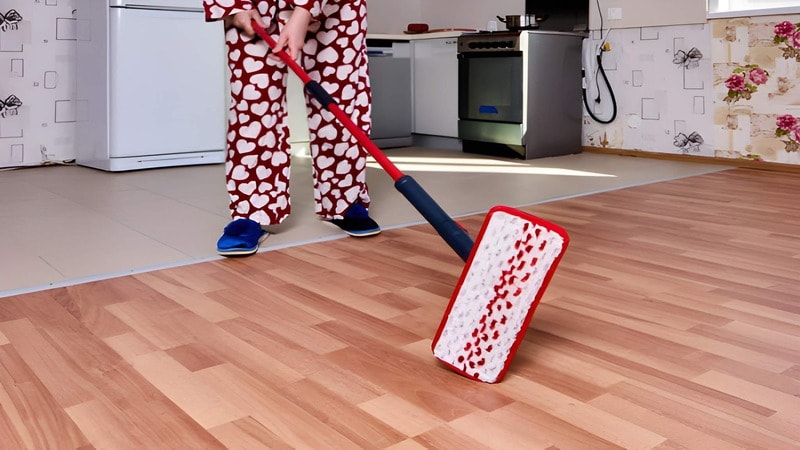
Microfiber mops use ultra fine fibers made from synthetic materials. These fibers are thinner than human hair. Moreover, microfiber pads trap dirt instead of pushing dirt across the floor.
Microfiber flat mops also glide easily. Additionally, it is a strong choice for smooth floors and hardwood floors. Microfiber mops use less water. They also need fewer cleaning chemicals. This makes them cost-effective in the long run microfiber category.
Furthermore, they wash well and dry fast. This lowers the risk of germs and cross contamination. Microfiber string mops and flat mops cover more surface area with one pass.
They reach tight spaces and hard to reach areas better than a traditional mop. Many cleaning tools also come with removable microfiber pads. This helps staff members wash and reuse them many times without damage.
Microfiber Mops: Advantages vs Disadvantages
| Advantages | Disadvantages |
|---|---|
| Ultra fine fibers trap dust, dirt, hair, and germs. Works well on smooth floors and textured surfaces. | Microfiber mops cost more than cotton mops, which may feel expensive initially. |
| Reduces water usage and exposure to cleaning products. Saves time in commercial spaces. | Flat microfiber mops handle daily cleaning well but struggle with very wet areas. |
| Pads dry quickly and can be reused many times. Reduces bacteria growth. | High heat or strong bleach can weaken fibers, shortening mop life. |
| Flat design improves cleaning efficiency in edges and hard-to-reach areas. | Performs best on smooth floors; uneven surfaces reduce efficiency. |
| Durable fibers last through many laundry cycles, offering better value in the long run. | Oil, wax, and grease may block fibers until fully washed. |
Best Use Cases for Each Mop
It’s important to understand where each mop performs best. Choosing the right mop for the right task improve cleaning efficiency.
Cotton Mops
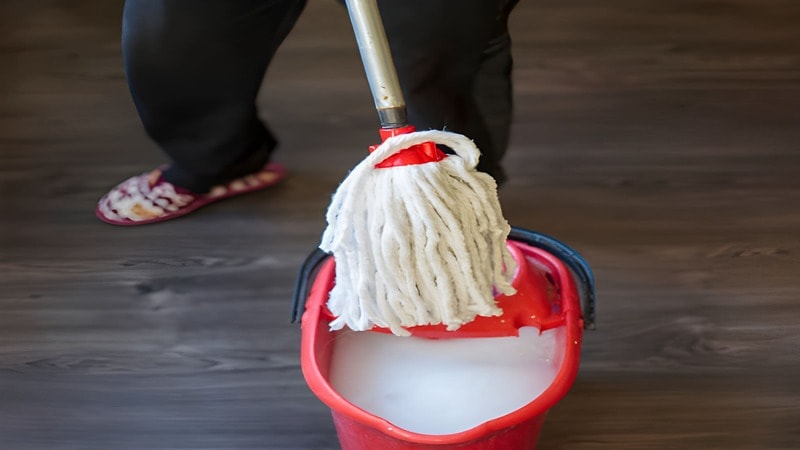
Cotton mops shine in tasks that need heavy absorbency and wet mopping.
- Heavy Spills: Cotton mop heads soak up water and liquids fast. Ideal for kitchens, bathrooms, and damp areas.
- Wet Mopping: Works well for large commercial floors or industrial complexes.
- Rough or Textured Surfaces: Cotton string mops glide over uneven floors better than flat mops.
- Budget-Friendly Cleaning: It doesn’t cost too much making it ideal for home.
- Basic Daily Cleaning: Removes dust, dirt, and human hair efficiently.
These uses highlight why cotton mops are still popular despite the rise of microfiber products.
Microfiber Flat Mops
Microfiber mops perform best when precision, hygiene, and efficiency matter. We all know how to mop a floor, but wrong mop can break the game.
- Daily Cleaning: It traps dirt, dust, and germs on smooth floors and hardwood floors.
- Hygiene-Sensitive Areas: It is ideal for hospitals, commercial spaces, and kitchens. It must be used in areas where bacteria and cross contamination must be minimized.
- Tight Spaces and Corners: Flat mop designs reach edges and hard-to-reach areas easily.
- Water and Chemical Saving: It uses less water and cleaning chemicals.
- Quick Cleaning: Microfiber pads dries fast. This easily allow multiple cleaning cycles per day.
- Smooth Floors and Hardwood: Works best on smooth floors, hard floors, and areas requiring streak-free results.
Analyze your situation then choose accordingly. Both have their unique properties and works best in different cases.
Commercial Cleaning Considerations
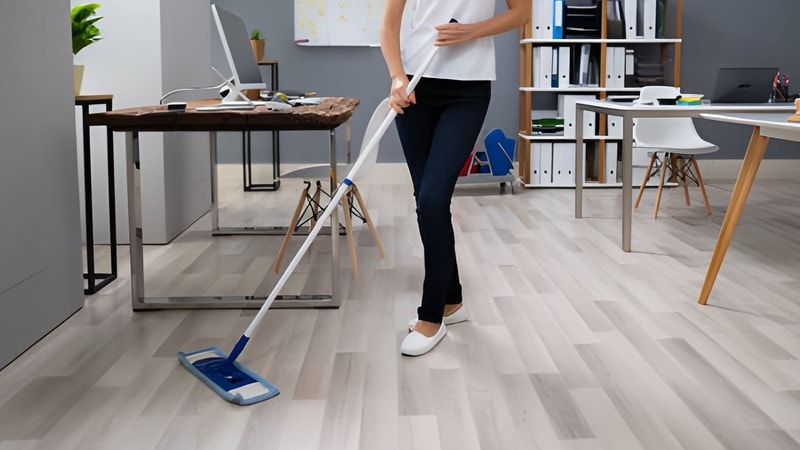
When it comes to commercial cleaning, using the right cleaning tools is essential. Floors in commercial area requires efficient cleaning to maintain hygiene and safety.
Microfiber mops are ideal for commercial spaces. Their ultra fine fibers trap dirt, dust, and bacteria, reducing cross contamination. They help prevent the spread of germs while saving time, water, and cleaning chemicals.
Cotton mops, by contrast, can sometimes push dirt and bacteria around instead of picking it up. If left damp, they can spread bacteria, increasing hygiene risks in high-traffic areas.
Before choosing a mop, consider the specific cleaning needs of your commercial space. Think about floor type, hard floors vs textured surfaces, and cleaning chemicals in use. This ensures you select the right mop for maximum cleaning efficiency and hygiene.
Conclusion
Every mop has a role. Cotton mops work best for heavy spills and wet floors. They handle rough surfaces and basic cleaning with ease. Microfiber flat mops focus on precision. They trap dirt, dust, and bacteria and leave floors cleaner after each pass.
The right mop depends on how and where you clean. Floor type matters. So does hygiene and time. Choose the mop that fits your space, saves water, and keeps your floors fresh every day.
Smarter Cleaning Starts with Manywell
Upgrade your cleaning routine with Manywell. Manywell offers both cotton mops and microfiber mops. Our mops are designed for real cleaning needs. They save time and deliver better results on every floor.
Choose cotton mops for heavy spills and wet mopping. Choose microfiber mops for daily cleaning, better hygiene, and lower water usage. Contact Manywell for reliable cleaning tools that keep your spaces fresh.