

Luxury vinyl flooring is stylish, durable, and long-lasting. But only when cleaned the right way. Whether it’s a large commercial space or your living room floor, proper care ensures your vinyl flooring stays beautiful for many years to come.
In this article, we share simple and effective techniques for cleaning your luxury vinyl floors.
An Overview of Luxury Vinyl Floors (LVP)
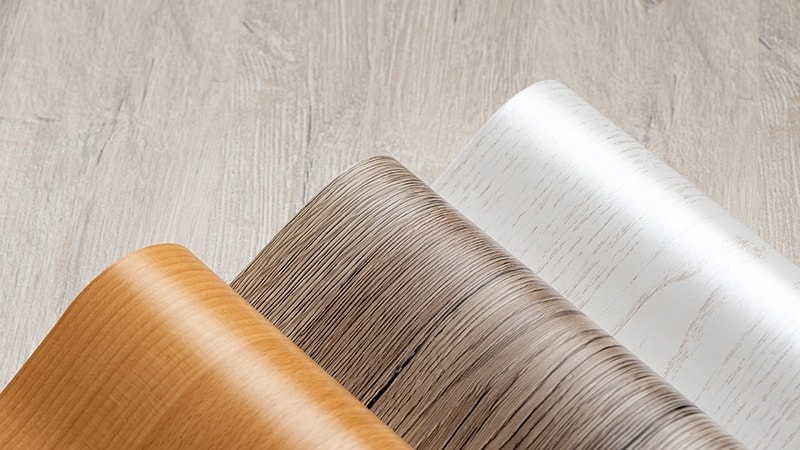
Luxury vinyl plank floors are layers of PVC panels that mimic the look and feel of hardwood flooring. A standard LVP flooring has five layers of materials pressed into 1/4-inch-thick panels. Although wood grain designs are the most common, you can also get a vinyl floor with marble or stone designs.
Without proper cleaning and regular maintenance, vinyl plank floors will scratch and accumulate grime. The wood grain texture of LVP flooring has small grooves that mimic natural wood. Once grime gathers in these grooves, it will be very difficult to remove using traditional cleaning techniques.
Advantages of Vinyl Flooring
There are several reasons for getting vinyl plank floors. Here are our top five advantages of vinyl flooring.
- Affordable Aesthetics: Real wood, marble, and stone flooring is expensive. LVP floors give you the same look and feel, but at a lower cost.
- Design Versatility: Vinyl floors are available in several colors, designs, and styles. You can match your luxury vinyl floors to your furniture style.
- Easy Replacement: You can easily replace your vinyl floor in the future for a different design. It’s a DIY friendly way to upgrade your house.
- Durable & Long-Lasting: Vinyl flooring lasts a very long time. It has excellent moisture resistance, making it compatible with kitchen floors.
- Easy Maintenance: Other flooring and carpet options are difficult and expensive to maintain. Cleaning vinyl floors requires a few basic tools and an hour of your time.
Disadvantages of Vinyl Flooring
Vinyl flooring isn’t perfect. Like any flooring, it has its fair share of drawbacks. Here are two major disadvantages that can be a deal breaker for home and business owners.
- Susceptible to Scratches: Vinyl flooring is long-lasting but susceptible to scratches and dents.
- Poor Heat Resistance: Vinyl floors start to melt at ~150°F. Spilling hot coffee can damage and warp the flooring.
How to Clean Luxury Vinyl Flooring?
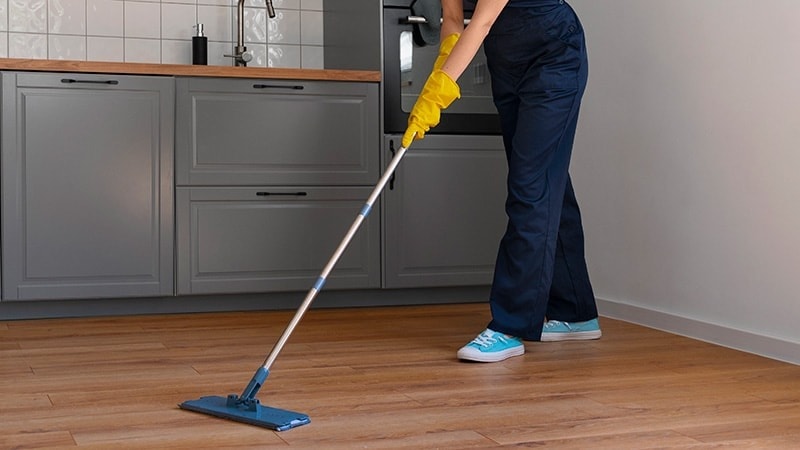
Cleaning a vinyl floor is easy. However, you need to maintain these floors regularly to maximize their longevity.
Let’s talk about the best way to clean LVP flooring.
Step 0 – Pre-Cleaning Preparations
Before you start cleaning, you need to abide by a few simple rules.
- Avoid harsh detergents and abrasive floor cleaners. They can scratch and discolor the vinyl flooring.
- Don’t use a steam mop or steam cleaner. The heat will warp your floors.
- No need to polish your floors with wax or varnish. Varnish can dissolve the UV coating that protects the vinyl flooring.
- Never drag heavy furniture across the floor. Always lift so the furniture legs don’t scuff the luxury vinyl planks.
Step 1 – Equipment and Supplies
You don’t need any expensive tools, equipment, or supplies for effective vinyl floor cleaning.
- Broom or Vacuum
- Dust Mop (Optional)
- Flat Microfiber Mop
- Neutral PH floor cleaner
- Spray Bottle
You can create a homemade floor cleaner by mixing a half cup of vinegar and a few drops of lemon oil in one cup of warm water.
Step 2 – Use a Broom or Vacuum
First, you need to remove loose dirt and hair from the floor. Use a broom to gently sweep across the floor. Using too much will push the dirt into the gaps and grooves in the vinyl plank floor. If there is standing water, thoroughly dry the floor before sweeping.
Vacuum cleaners can be hit or miss. Some models use a hard rubber beater bar that can drag dirt across the vinyl flooring, resulting in scratches. Always use the vacuum on the lowest setting to prevent damage.
Step 3 – Dry Mop the Floor
After a quick brooming, sweep the floor using a microfiber dust mop. These mops are designed to gently pick up small dust and dirt particles that you may have missed.
Microfiber mop pads are super soft. So, there is zero chance of scratching the vinyl planks.
Step 4 – Prepare Your Cleaning Solution
Neutral PH floor cleaners are neither acidic nor basic. So, they dry streak-free and don’t leave a sticky residue on your floor.
Most vinyl floor cleaners are sold as a concentrate. Meaning you have to dilute them with clean water. Manufacturers have detailed mixing instructions on the packaging.
Add 1-2 oz. of floor cleaner to a gallon spray bottle for a light cleaning application. Increase the cleaner concentration for heavy cleaning.
Step 5 – Optimal Cleaning Pattern
Start from one corner of the room. Lightly spray the floor in front of you and wipe it with a flat microfiber mop. Work in sections. Don’t cover the entire surface with the cleaning solution. Otherwise, it will dry up and leave water stains.
The ideal mop pattern is vertical sweeps. Go line by line, top to bottom, and clean your vinyl floor tiles. If you have appliances, like a refrigerator, use a flat mop that can fit under it.
Additionally, instead of moving furniture, carefully clean around the furniture legs. That way, you minimize the risks of scratching your vinyl floors.
Care & Maintenance Tips for Vinyl Plank Floors
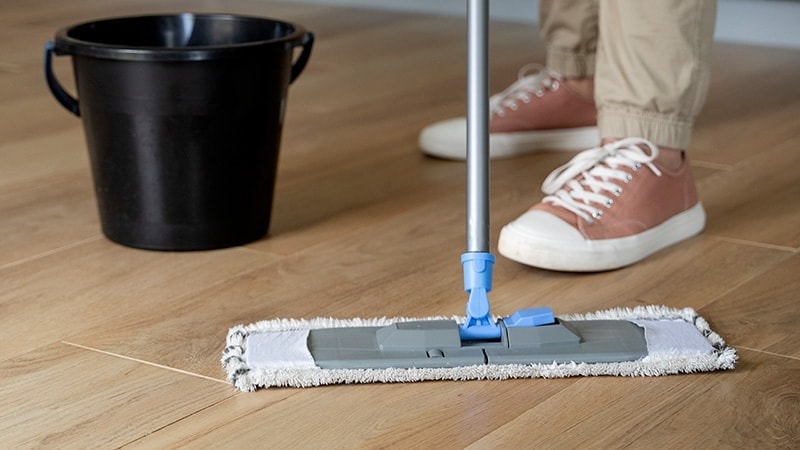
Regular cleaning and maintenance of vinyl floors is necessary, especially in high-traffic areas. The following tips will help you clean LVP flooring quickly and more effectively.
1. Don’t Use Steam Mops
Steam mops output a lot of heat. It can warp your vinyl plank floor. In rare cases, the heat can degrade the floor glue used in vinyl plank installation.
2. Avoid Floor Polish
Wax and other floor polishes are not compatible with luxury vinyl plank floors. The floor polish can dissolve the protective layer and cause serious damage.
3. Use Furniture Sliders
Attach a floor slider to your furniture so they don’t drag across the vinyl floors and leave scuff marks. Alternatively, you can lift the furniture and clean it, but that is not possible with heavy furniture.
4. Wash Your Mop After Use
Always clean your mops. Wet mops are a breeding ground for bacteria and germs. Not to mention dirt and debris can get stuck to the mops. We recommend using microfiber mops that come with easy-to-clean, removable pads.
Tips for Removing Stains from Vinyl Plank
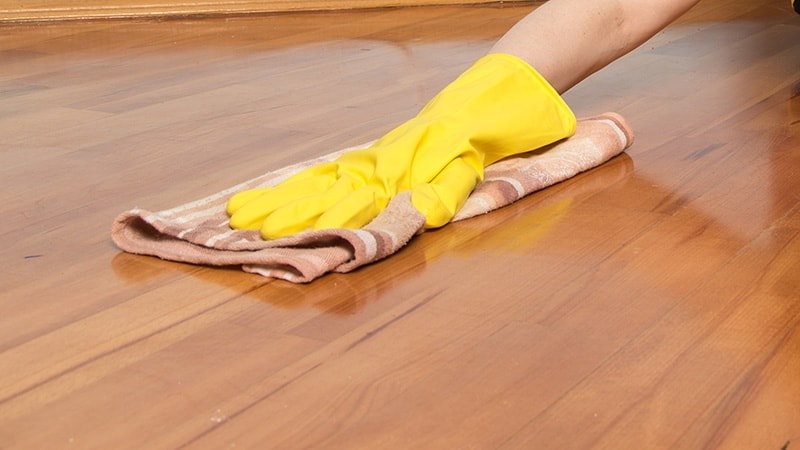
You will often run into stubborn stains. Don’t use abrasive cleaners and harsh chemicals to remove these stains. Instead, try these easy DIY hacks.
- Dampen a cleaning cloth with a little bit of hot water. Then gently rub the affected area until the stain is removed.
- Mix baking soda with some hot water to create a paste. Rub the paste on the floor stains and let it sit for 30 minutes. Gently wipe with a clean microfiber cloth.
- Nail polish remover and mineral spirits can break down tougher stains. Use them sparingly.
- If the above steps don’t work, use oxalic acid to bleach the stain area. This is a drastic step and should be your last resort.
Conclusion
Vinyl plank floors are an excellent and cost-effective way to add a hint of class and warmth to any space. However, without regular cleaning and care, your new floors can become dull and unappealing. Clean your floors using dry mops and avoid harsh chemicals.
Get Vinyl Floor Cleaning Suppliers from Manywell!
Manywell is the number one supplier of cleaning products in China. Our microfiber mops and mop accessories are perfect for vinyl floors. All our products are 100% customizable. So you can get the ideal tools for your business.
Get the best quality floor cleaning products from Manywell. Contact us now!