
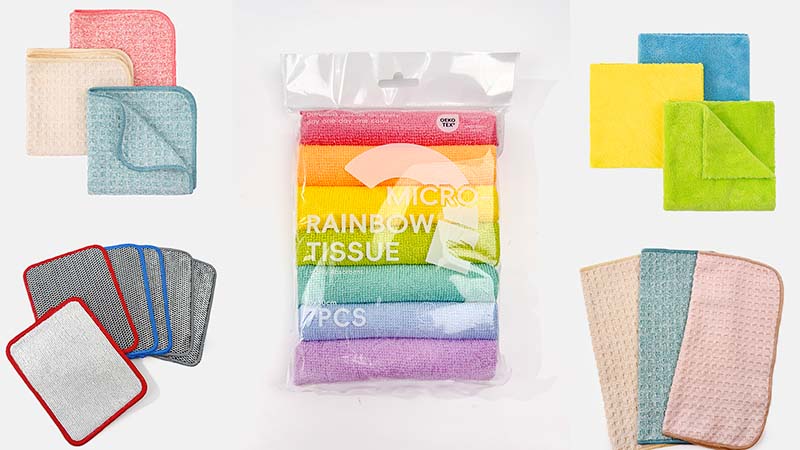
Microfiber cleaning cloths are available in over a hundred variations based on size, GSM, weave, and composition. For microfiber retail businesses and importers, it’s important to understand the different types of microfiber cloth so they can optimize their procurement plans.
In this article, we explore the different types of microfiber cloths, their applications, and their recommended markets.
Types of Microfiber Cloth by Fabric Structure
Most of the microfiber you see in stores is classified based on microfiber fabric structure. To be more specific, it differs based on the weaving technique.
Here are five types of microfiber cloths based on fabric structure.
1. Microfiber Terry Cloths

Microfiber terry cloth refers to microfiber fabrics with protruding loops. These loops increase the surface area of the microfiber cloth. This, in turn, increases the overall absorbency and softness.
However, these loops are also prone to snagging and general wear over time. You will see microfiber terry cloth used in all sorts of cleaning products, including scrubbing sponges, kitchen cloths, and body towels.
2. Twisted Loop Microfiber Towels

Microfiber manufacturers also use longer loops and twist them for a lower pile height. This results in an even higher absorption rate. But also increases towel thickness.
High absorption makes twisted-loop microfiber a great choice for towel manufacturing. You will find this microfiber fabric in bath towels, gym towels, beach towels, and of course car drying towels.
Double-ply twisted-loop towels are made from two sheets. This maximizes absorbency and increases the overall towel GSM weight.
2. Waffle Weave Microfiber Cloths

The waffle weaving technique creates a raised grid on the fabric surface. This does resemble the surface of a waffle. Now, the goal here is the same as a twisted loop. Create more surface area and increase absorption.
You will find that a waffle weave microfiber cloth has slightly less absorbency than a twisted loop towel. However, it more than makes up for it with its higher durability. Waffle weave microfiber cloths have a smoother surface, which is less likely to snag on sharp edges. It also results in a thinner microfiber profile.
The higher durability and longer lifespan of waffle weave microfiber are very beneficial in professional cleaning tasks. You will see a lot of waffle weave microfiber in home and professional kitchens. Because it’s great for cleaning up spills without the risk of lint shedding.
3. Flat or Suede Microfiber Cloths

Suede weave results in a flat and smooth surface microfiber cloth. This type of fabric is very thin, which results in overall lower water absorption. But in turn, flat-weave microfibers have a softer surface and a zero chance of shedding loose fibers and lint.
Because of this, flat weave is a popular option for cleaning delicate surfaces like phone screens and camera lenses.
Waffle and twisted loop microfiber cloths work by absorbing liquid through their uneven surface. This means the towel actually makes less contact with the cleaning surface. So these microfiber cloths work best when there is some liquid present.
Flat waves are the opposite. Its smoother surface makes complete contact with the cleaning surface. So even if there is no liquid, the microfiber cloth will be effective at cleaning.
4. Fish Scale Microfiber Cloths

Fish scale is a hybrid design that sits between waffle and flat weave microfiber cloths. It has a smooth and soft surface, similar to a flat weave microfiber, but has a thickness similar to a waffle weave.
The fish scale name comes from the criss-cross stitching on the surface that resembles fish scales. This slightly increases the rate of absorbency by increasing the surface area.
You can use fish scale microfiber cloths for cleaning delicate surfaces like stainless steel, ceramics, and glass.
5. Coral Fleece Microfiber Cloths

Coral fleece is a fuzzy and super soft fur-like microfiber fabric. It has individual standing threads of microfiber on the surface, which significantly increase the fabric’s softness and absorbency. The threads serve several purposes.
- They act like a broom and trap dirt and debris between the fibers.
- They result in less pressure during cleaning because the fibers naturally attract water and dirt.
- The standing fibers also act like bristles and help you clean between nooks, crannies, and tight corners.
All of this comes at the risk of durability. Coral fleece microfiber cloths are the most delicate. They require careful use and frequent maintenance. The surface fibers also tend to shed more than twisted loop microfiber towels.
What are the Functional Classifications of Microfiber Cloths?

Now there is another way we can classify microfiber cleaning cloths. Because there are several types of microfiber cleaning cloths that fit different applications.
1. All-Purpose Microfiber Cloths
All-purpose microfiber cloths refer to a single cleaning cloth design that serves all your needs. Businesses often market waffle weave or terry loop microfibers as all-purpose cleaning products. This step cuts through the confusion and gives customers an easy microfiber choice for everyday use.
- Microfiber Terry Cloths: For spill clean-up, drying tasks, bathroom use, and more.
- Waffle Weave Microfiber Cloths: Lint-free cleaning for kitchen, restaurant, and commercial use.
2. Microfiber Drying Towels
All microfiber cloths and towels can be used for drying surfaces. However, twist-loop microfiber towels are designed to maximize absorption through their surface area, size, and weight. You can use them for drying water off of surfaces without the risk of water stains and swirl marks.
- Twisted Loop Microfiber Cloths: Use high GSM and a medium or large size microfiber towel for best results.
3. Glass Cleaning Microfiber Cloths
We recommend a dedicated scrubbing or scraping tool to clean stubborn stains off of glass surfaces. For everything else, like removing fingerprints, dust, water stains, or smudges, you will need a low pile microfiber cloth.
Low pile means the surface is smooth and there is a lower chance of lint shedding. So a flat or fish scale weave microfiber cloth is perfect.
- Flat Weave Microfiber Cloth: Use a 70/30 microfiber blend with a low GSM weight for ease of use and best results.
- Fish Scale Microfiber Cloth: A useful option when you need high absorbency.
4. Microfiber Dusting Cloths
All microfiber cloths are generally great for dusting applications. But your best choice is a coral fleece microfiber cloth. Their fur-like texture attracts and holds on to dust and dirt without the need for water.
- Coral Fleece Microfiber Cloth: Use low-GSM microfiber options for cleaning small objects and high-GSM options for cleaning large objects like furniture.
5. Polishing Microfiber Cloths
Polishing requires a durable microfiber cloth that doesn’t lint. You also need a lower GSM towel for even pressure application and control over the polish.
- Low Pile Terry Cloth: Use a medium-sized microfiber cloth with a lower GSM to apply wax, polish, or clear coat to any surface.
- Suede Polishing Cloth: Use a smooth suede microfiber for the final buffing pass.
What Type of Microfiber Cloths Suit Different Markets?

Now let’s talk about the different markets that heavily rely on microfiber cleaning cloths.
1. Hospitality Industry (Spa, Hotel, or Resort)
The hospitality industry uses several different types of microfiber products. We have listed the recommended microfiber cloths based on cleaning locations.
Table 1 – Microfiber cloth recommendations for hospitality industry
| Hotel Cleaning Area | Weave | Size | GSM |
| Guest Bathroom & Pool Area | Twisted Loop Towels | Large | High |
| Furniture Cleaning | Waffle or Suede Weave | Small | Low |
| Bathroom Cleaning | Microfiber Terry Cloth | Small or Medium | Medium |
| Hotel Lobby & Fixtures | Waffle & Terry Weave | Small or Medium | Medium |
| Glass Windows & Doors | Suede or Fish Scale | Small | Low |
2. Automotive Detailing
In automotive detailing, you need to account for the different sections of the car. Each area requires a specialized microfiber cloth for best results.
Table 2 – Microfiber cloth recommendations for the automotive industry
| Car Cleaning Application | Weave | Size | GSM |
| Drying Painted Surfaces | Twisted Loop Towels | Large | High |
| Interior Detailing | Flat Weave | Small | Low |
| Buffing & Polishing | Waffle Weave | Small or Medium | Low |
| Glass Windows & Mirrors | Suede or Flat Weave | Small or Medium | Low |
3. Professional and Janitorial Cleaning
Professional cleaning services need every type of microfiber cloth to ensure excellent service. Here are the most commonly used microfiber cloths in this industry.
Table 3 – Microfiber cloth recommendations for professional cleaning service providers
| Professional Cleaning Application | Weave | Size | GSM |
| Bathroom Cleaning | Twisted Loop Towels | Medium | High |
| Furniture & Upholstery | Flat Weave | Small | Low or Medium |
| Tile & Marble Surfaces | Coral Fleece | Medium | Low |
| Glass Windows & Mirrors | Suede or Flat Weave | Small or Medium | Low |
4. Industrial Cleaning Task
Industrial cleaning tasks have different requirements than other markets. Since this sector deals with grease and harsh chemicals, durability is key. Alternatively, you can also use disposable microfiber cloths.
Table 4 – Microfiber cloth recommendations for industrial cleaning tasks.
| Industrial Cleaning Application | Weave | Size | GSM |
| Grease Clean-up | Microfiber Terry Cloth | Small | Medium |
| Hardware Equipment | Waffle or Flat Weave | Medium | Low |
| Chemical Cleanup | Microfiber Terry Cloth | Medium | Medium |
FAQ
Where Can You Find High-Quality Microfiber Cloths at the Best Price?
China is the biggest supplier of high-quality microfiber cloths and other cleaning products. Businesses can buy in bulk from Chinese microfiber factories for the best price.
How Do You Wash and Care for Microfiber Cloths?
Wash your microfiber cloths using cold water and a mild detergent by hand or in a washing machine. Then air-dry for best results. High-heat tumble drying can damage the delicate microfibers.
Is Microfiber the Same as Polyester?
Microfiber contains 70-80% polyester by weight. However, it’s softer, more absorbent, and better at capturing dirt and water than pure polyester cleaning products.
Which Microfiber Cloths Are Best for Cleaning Delicate Surfaces?
A 70/30 microfiber blend with a flat or suede weave is ideal for cleaning delicate surfaces like digital screens (TVs, laptops, and smartphones), eyewear, and camera lenses.
How Do You Choose the Best Terry Microfiber Cloth for Cleaning?
Use a high GSM microfiber terry cloth for drying applications. But for general cleaning, you want a medium GSM and smaller-sized terry cloth that is easier to handle.
Conclusion
Microfiber cleaning cloths can be customized and optimized according to your cleaning needs. The biggest factor in microfiber cleaning performance is fabric structure (weaving technique). Other microfiber properties like sizing and GSM weight further enhance the cleaning performance of microfiber towels. Use this guide to plan your next microfiber procurement run.
Get All Types of Microfiber Cloths, Towels, and Mops from Manywell!
Manywell is one of the biggest manufacturers of microfiber cleaning cloths in China. We specialize in microfiber cleaning cloths, bath towels, scrubbing mitts, and flat mop heads. You can fully customize all our products to best suit your brand’s needs.
Get a significant discount on all bulk orders. Contact Us Now!