

When choosing a microfiber product, you must have seen the ratio on the packaging. 70/30, 80/20, or even 90/10. These numbers represent the composition of the microfiber product and greatly impact its cleaning performance.
In this article, we explain everything you need to know about microfiber composition and its impact on overall cleaning performance.
What Is Microfiber Composition?

Microfibers are composed of ultra-fine fibers that are thinner than a human hair. The two most commonly used materials for microfibers are polyester and polyamide.
- Polyester (PET): Provides strength and flexibility to the microfiber fabric.
- Polyamide (PA): Provides softness and absorbency to the microfiber fabric. It is also known by its commercial name, Nylon.
The ratio of polyester to polyamide plays a big role in the overall cleaning performance of the microfiber towel or cleaning cloth. Here are some of the most common microfiber blends you will find on the market.
- 70/30 Microfiber: 70% Polyester / 30% Polyamide
- 80/20 Microfiber: 80% Polyester / 20% Polyamide
- 90/10 Microfiber: 90% Polyester / 10% Polyamide
We recommend 80/20 microfiber fabric for general cleaning cloths and 70/30 microfiber for car drying towels and personal care towels. You can learn more about 80/20 vs 70/30 microfiber here.
Table 1 – A quick overview of microfiber fabric composition and its impact on cleaning.
| Material Composition | Polyester (PET) & Polyamide/Nylon (PA) |
| Blend Ratios | 90-70% Polyester & 10-30 Polyamide |
| Impact of Cleaning | Affects Microfiber Absorbency, Softness, Durability, Cleaning Performance, and Overall Cost |
What is the Role of Polyester (PET) in Microfiber Products?
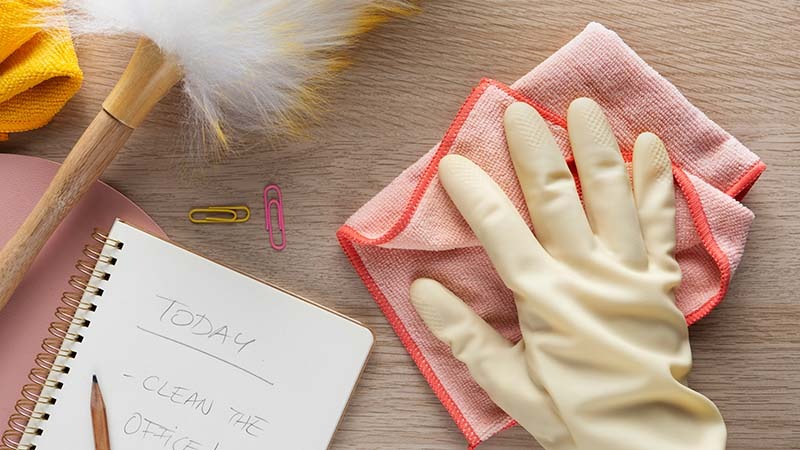
Polyester is a durable synthetic fiber widely used in the textile industry. It’s used in all sorts of casual and athletic clothing. All microfiber products are primarily made of polyester.
Here are three main reasons why polyester is important for microfiber cloth production.
1. Maintains Microfiber Structure
Polyester gives the microfiber towels their flexibility while maintaining durability. So, in the worst-case scenario, your microfiber cloth ends up with frayed edges or a chaffed surface. But it will not result in a hole through the microfiber or unraveling threads.
2. Provides Strength and Longevity
A high nylon content reduces abrasion resistance. Making microfiber more delicate and reduces the product’s lifespan. So polyester is a necessary component that makes microfiber cleaning cloths resistant to frequent washes and repeated use.
3. Improves Cost Efficiency
Compared to polyamide, polyester is considerably more economical. Meaning you can greatly reduce your overall microfiber manufacturing cost by increasing the polyester content. This opens the door for suppliers who want to enter cost-sensitive markets and primarily deal in large-volume orders.
What is the Role of Polyamide (PA / Nylon) in Microfiber Products?
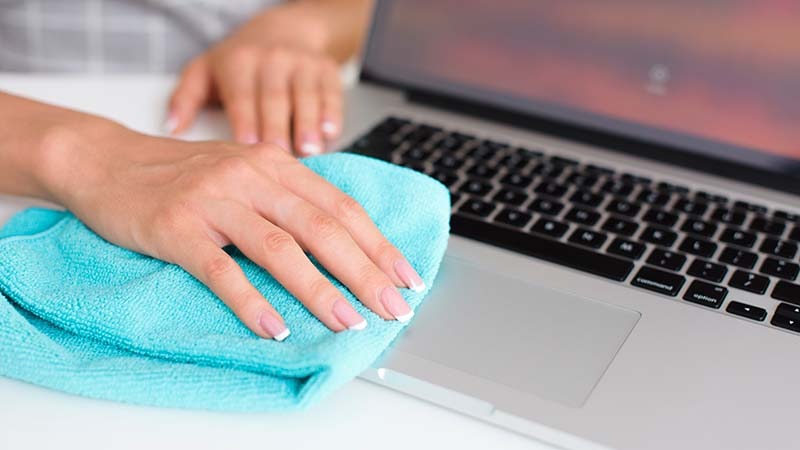
Polyamide is a petroleum-based synthetic polymer that is widely used in the textile sector and industrial manufacturing. In the case of microfiber cleaning cloths, polyamide provides softness, absorbency, and flexibility.
Polyamide is the scientific name for a class of polymers. Nylon is a specialized version of polyamide that was invented by DuPont in the 1930s.
Here are two ways polyamide (nylon) contributes to microfiber performance.
1. Improves Absorbency
The raw polyamide fibers are naturally moisture-absorbing. Even a 10% addition will increase water absorption compared to pure polyester products. Manufacturers can increase this percentage up to 30% for even higher water absorption and liquid retention.
2. Enhances Softness
In addition to absorbency, polyamide also contributes to a smoother surface texture. Softness is very important to the construction of a microfiber cleaning cloth or towel. It ensures cleaning doesn’t result in unwanted scratches on delicate surfaces like car paint, soft plastic, or wood panels.
Why Are Polyester and Polyamide Blended?
Polyester has several advantages over polyamide and vice versa. Blending allows microfiber manufacturers to get the best of both worlds. It also brings more diversity to microfiber products.
Table 2 – Comparing the material properties of polyester and polyamide.
| Material Properties | Polyester (PET) | Polyamide (PA / Nylon) |
| Durability | Higher | Lower |
| Softness | Lower | Higher |
| Absorbency | Lower | Higher |
| Cost | Lower | Higher |
| Elasticity | Lower | Higher |
| Stiffness | Higher | Lower |
| Oil Attraction | Higher | Lower |
| Drying Speed | Faster | Slower |
Common Microfiber Composition/Blend Ratios
Now, let’s dive a little deeper into microfiber blend ratios. In this section, we will analyze the most popular microfiber blends and their suitability for various cleaning tasks.
70% Polyester / 30% Polyamide
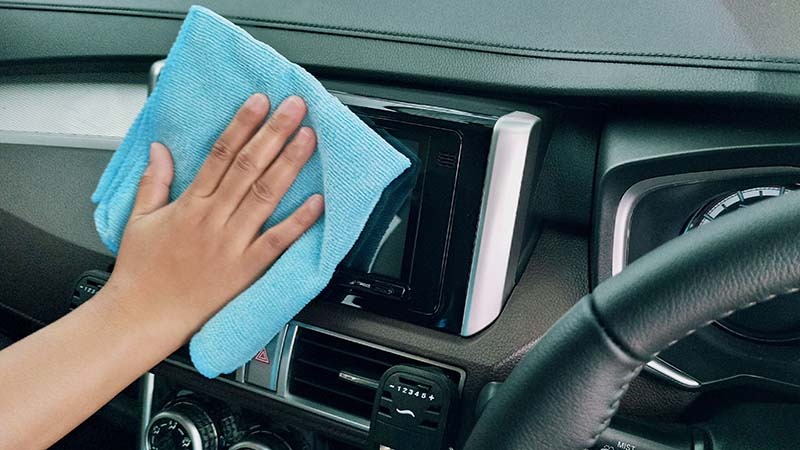
70/30 microfiber cloths are considered premium and higher-performing than the standard 80/20 blend. It makes sense too. Polyamide is a softer, absorbent, and more expensive material. A higher polyamide ratio results in better-performing microfiber towels and cleaning cloths.
However, the higher price point is not always justified. Several cleaning applications prefer a more durable microfiber towel and not a softer one.
Table 3 – Benefits and applications of 70/30 microfiber blend.
| Advantages | Applications | Typical Buyer |
| More Absorbent | Drying Cars | Automotive Enthusiasts |
| Softer Feel | Cleaning Digital Screens | Hospitality Businesses |
| Lower Scratch Risk | Facial Care Towels | Professional Cleaners |
| Luxury Spa Towels | Luxury Brands | |
| Delicate Cleaning Tasks |
80% Polyester / 20% Polyamide
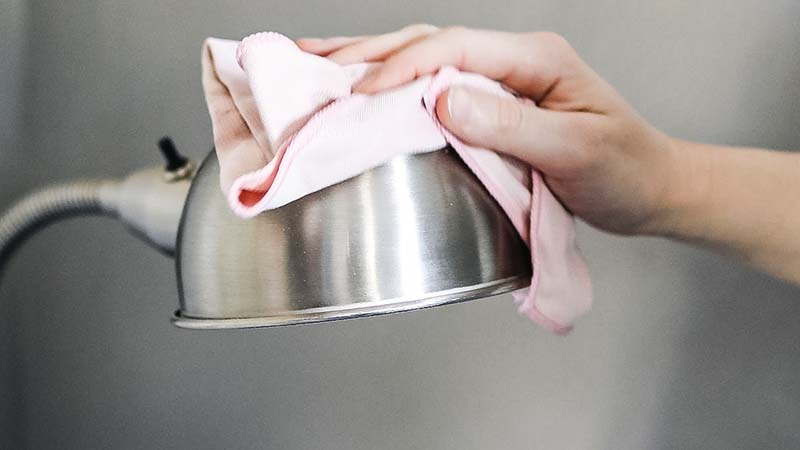
80/20 microfiber blend is the most commonly used composition. It gives you most of the benefits of a 70/30 blend, but with additional durability and more competitive pricing.
The reduction in polyamide is very little. It still gives you an absorbent microfiber cloth with a smooth surface texture. You lose some minor absorption and softness points but gain a lot more durability.
From a business point of view, this is the ideal blend. It reduces the overall microfiber price, which results in greater savings on larger orders.
Table 4 – Benefits and applications of 80/20 microfiber blend.
| Advantages | Applications | Typical Buyer |
| Good Absorbency | Kitchen Cleaning | Homeowners |
| High Durability | Microfiber Mops | Restaurants |
| Lower Price | Hand Towels | Small Businesses |
| Gym Towels | Hospitality Businesses | |
| Furniture Cleaning Cloths | Professional Cleaners | |
| Window Cleaning | Wholesalers |
90% Polyester / 10% Polyamide
We generally don’t recommend going below 20% polyamide composition. A 90/10 microfiber has pretty much the same performance as a 100% polyester cloth. So you get very little benefit for a higher price compared to pure polyester.
However, there are rare cases in which a lower polyamide blend might be useful. Industrial cleaning is often very harsh on the microfibers. If you use microfibers for cleaning grease stains, harsh chemicals, and toxic compounds, that cloth will have a much lower lifespan.
In such cases, a microfiber cloth will only be usable for a month. So a low-cost microfiber product is always going to be your best option.
Table 5 – Benefits and applications of 90/10 microfiber blend.
| Advantages | Applications | Typical Buyer |
| Very Low Price | Grease Cleanup | Factories |
| High Durability | Hazardous Waste | Construction Sites |
| Better than Cotton | Spills & Stains | Carpenters |
| Industrial Chemicals | Wholesalers | |
| Wood Stain/Wax Application |
Microfiber Composition Is Not the Only Quality Factor
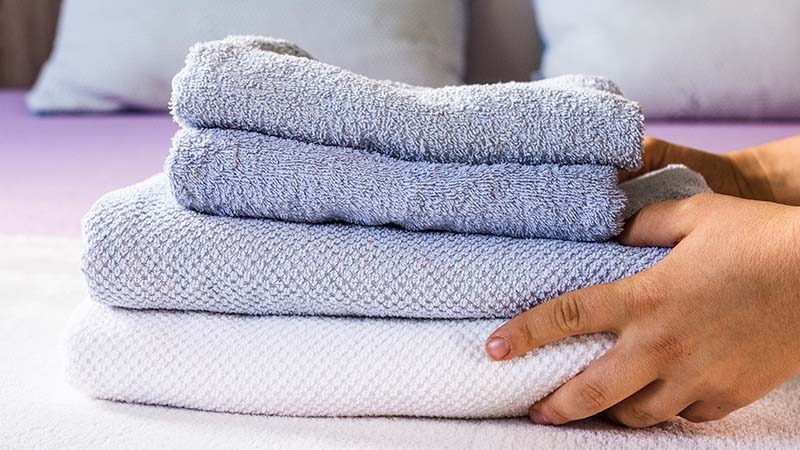
Microfiber composition only gives you a small level of control over the final product. Other factors have an equal or even greater effect on microfiber cleaning performance.
Here are three factors that are just as important as microfiber composition.
1. GSM (Grams per Square Meter)
GSM is a way to measure the density of a microfiber cleaning cloth. A high GSM microfiber cloth will have better absorption and liquid retention. This makes high GSM towels ideal for drying applications.
But higher GSM also results in increased weight. So there are several scenarios where a lower GSM towel with a 70/30 blend is more suitable. Such as microfiber cleaning cloths for phones, eyewear, and camera lenses.
2. Fabric Structure / Weave Type
Weaving is the process of converting microfiber threads into a cohesive fabric. Microfiber manufacturers use different weaving techniques to improve certain qualities.
Table 6 – Impact of microfiber weaving on cleaning performance
| Weave Technique | Twisted Loop Weave | Waffle Weave | Flat/Suede Weave | Coral Fleece Weave |
| Absorbency | High | Medium | Low | High |
| Softness | Medium | Medium | High | Very High |
| Linting Risk | High | Low | Very Low | Very High |
| Scratch Risk | Medium | Low | Very Low | Very Low |
| Durability | Medium | High | High | Low |
| Cost | Low | Low | Low | Medium |
3. Edge Finishing
The edge on a microfiber cleaning cloth or towel affects its durability and scratch risk. It is a balancing act between affordability, durability, and softness. You can only have two of these in your microfiber cloth.
Table 6 – Impact of edge finishes on microfiber cleaning performance
| Microfiber Edges | Durable Edges | Softer Edges | Cost Effective |
| Overlocked Edges | ✔ | ✘ | ✔ |
| Edgeless | ✘ | ✔ | ✔ |
| Hemmed Edges | ✔ | ✔ | ✘ |
| Piped Edges | ✔ | ✔ | ✘ |
Note: Edgeless microfiber cloths can be achieved by cutting using a sharp knife, low-power laser, or ultrasonic blade. In most cases, you are choosing between edgeless and overlocked microfiber cloths.
Conclusion
Microfiber composition directly impacts the quality and performance of cleaning cloths. Choosing the right one can significantly improve your microfiber product quality and reduce overall operating costs. But it isn’t the only important factor. You should also consider GSM, weaving technique, and edge stitching when buying microfiber cloths for your business.
Get High-Quality & Long-Lasting Microfiber Cloths from Manywell!
Manywell is a leading manufacturer and supplier of microfiber cleaning products. We offer full customization on our microfiber cleaning cloths, premium towels, mop heads, and all other cleaning products.
You can customize microfiber composition, GSM weight, weave options, sizes, and colors. Elevate your cleaning game with Manywell. Contact Us Now!