

Choosing the right mop is critical for maintaining cleanliness in large-scale facilities. Cotton and microfiber mops are the most popular choices for commercial and industrial cleaning. However, their cleaning performance is not the same.
In this article, we put cotton and microfiber mops in a head-to-head comparison and see which mop is better suited for large-scale commercial applications.
What Are Cotton Mops?
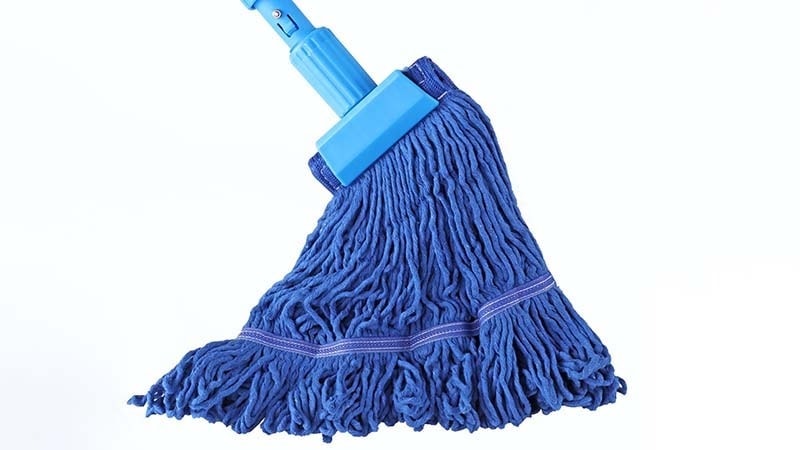
Cotton mops are cleaning tools made from twisted yarns of natural cotton fibers. This creates a fluffy texture with lots of air pockets that results in higher water absorption. All cotton mops fall under the category of wet mops.
Wet mopping refers to a floor cleaning technique that requires significant amounts of water. Hence, cotton mops are wet mops because they are useless in the presence of water.
Cotton fibers are loosely knitted to ensure maximum air pockets and water absorption. So the water absorption properties of cotton mops are directly tied to their size (volume). A larger size is generally beneficial for large-scale cleaning because the mop can easily clean up large spills before it needs to be wrung out.
These mops are commonly sold as string mops with their sizes measured in fluid ounces. Commercial mops are over 24 oz in size, and home options are under 16 oz.
Advantages
- Lower Cost
- Very Absorbent
- Durable
- Heat Resistant
- Longer Mop Life
Disadvantages
- Produces Lint
- May Leave Water Marks
- Slow Drying
Best Applications
Cotton mops are best suited to industrial environments where floor scrubbing is a necessity and excess water usage is allowed. Certain floor types like ceramics (marble, tile, stone, etc) are easier to clean with lots of water. And as we stated above, cotton mops work best when used as wet mops.
What Are Microfiber Mops?
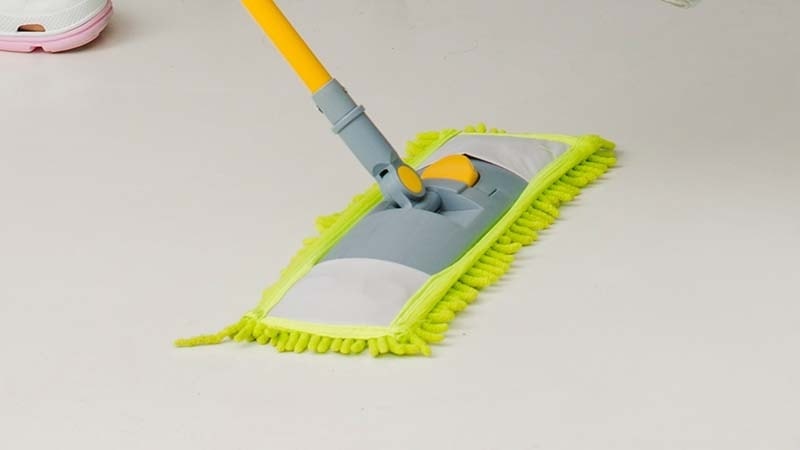
Microfibers are tiny fibers that are thinner than a human hair. It’s made from a blend of synthetic materials, like polyester and nylon. Microfiber mops provide higher water absorption per area compared to their cotton counterpart.
Compared to traditional mops, microfiber mops have a flat design. That’s because the most optimal structure for the fibers is a fabric. So microfiber mops are just an adaptation of microfiber cloths and towels to a mop design.
The flat mop design has its own benefits. You get a wider floor coverage with less material. So dry mopping (sweeping) becomes exceptionally easy. Several flat mop designs further enhance the mop’s capabilities.
Speaking of dry mopping. It’s the practice of cleaning floors with either zero or minimal water usage. The tighter weave of microfiber products traps dirt and dust particles without the need for water. By comparison, a cotton mop pushes dirt particles to the side in the absence of water.
Advantages
- Lightweight
- More Absorbent
- Lint-Free
- Anit-Bacterial
- Scratch Free
- Quick Drying
Disadvantages
- Higher Cost
- Less Durable
Best Applications
Microfiber mops are great for general cleaning and maintenance. The microfiber pads are removable and machine washable, which increases cleaning efficiency. These mops are compatible with all floor surfaces. Microfiber mops are less likely to scratch your hardwood or vinyl flooring.
Cotton Mops vs. Microfiber Mops: Which One is Better?
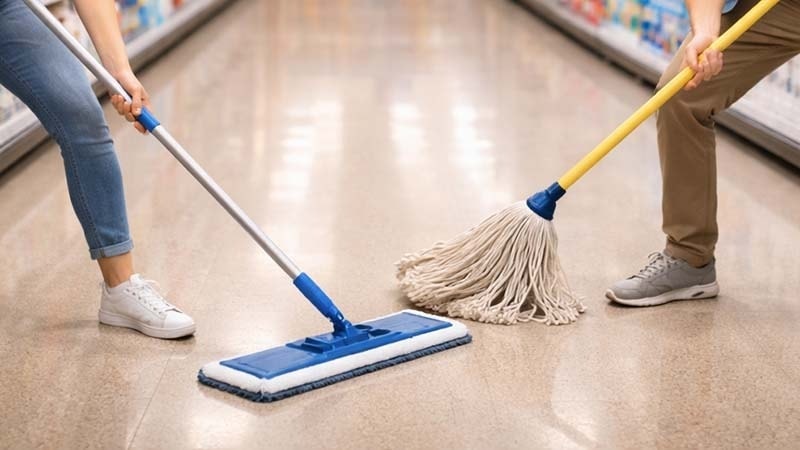
Both microfiber and traditional cotton mops are great options for general cleaning applications. But which cleaning solution is better for your business?
Here is a quick head-to-head comparison of the key features each mop head offers.
Table 1 – Comparison chart between cotton and microfiber mops.
| Features | Cotton Mops | Microfiber Mops |
|---|---|---|
| Absorbency | Good | Great |
| Durability | Great | Good |
| Water Usage | High | Low |
| Versatility | Low | High |
| Drying Time | Long | Short |
| Hygiene | Poor | Great |
| Environmental Impact | Low | Medium |
| Maintenance | Easy | Complex |
| Cost | Low | Medium |
| Use Case | Thorough Cleaning | Light Cleaning |
Microfiber mop heads have a unique hygiene advantage over cotton mop heads. Since microfiber is a lightweight material, it’s also fast drying. A dry mop is safer as it will not harbor any mold or mildew. Several studies show that microfiber cloths are better at bacteria removal.
Cotton vs Microfiber: Comparing Mop Types
Now we should discuss mop head designs and their impact on cleaning efficiency and efficacy. Mop heads are changeable, come in different sizes, and are targeted towards specific applications.
Here is a list of the most popular mop head designs.
1. Cotton String Mops
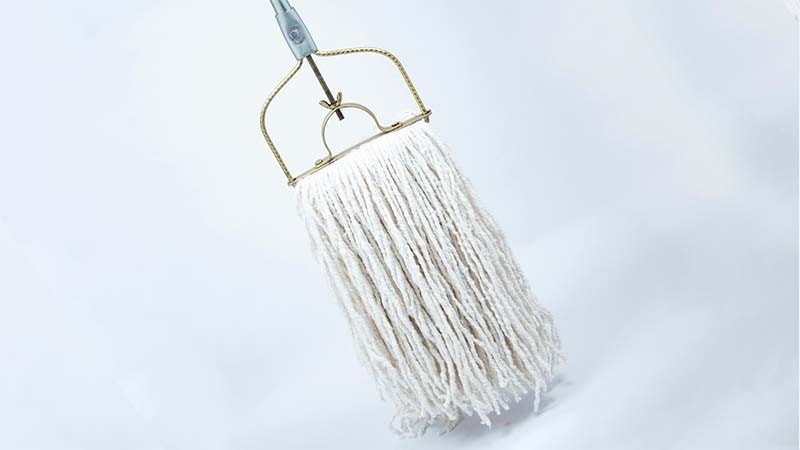
Cotton mop heads require a larger design to increase their water absorbency. Highly porous cotton strings maximize the surface area. So there are more points of water entry and thus higher liquid retention.
Due to their design, cotton string mops are not suitable for machine washing. You must use a mesh laundry bag, which increases the maintenance complexity. Also, since dirt gets trapped in those cotton strings, we recommend multiple laundry cycles to ensure maximum mop cleanliness.
Despite its shortcomings, cotton string mops are by far the most commonly used mop heads. They are simple to use, resistant to harsh chemicals, and most importantly, cost-efficient.
2. Microfiber Flat Mops
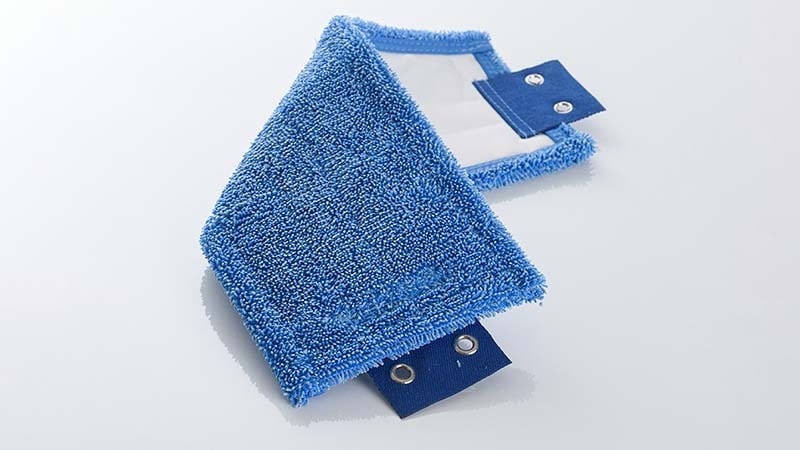
Flat mop heads are mostly made from microfibers. The horizontal design language enables creativity. Modern flat mops come in several varieties, each designed to improve the mop’s versatility.
There are four flat microfiber heads that we recommend for commercial cleaning.
- Standard Flat Mop: Has the texture of a microfiber towel.
- Dust Mops: Standard flat mop with a string border that improves dirt removal.
- Chenille Mops: A series of short but thick microfiber strings that increase water absorption.
- Acrylic Mops: Fur-like design with thin microfiber strands that are great for sweeping.
3. Microfiber Tube Mops
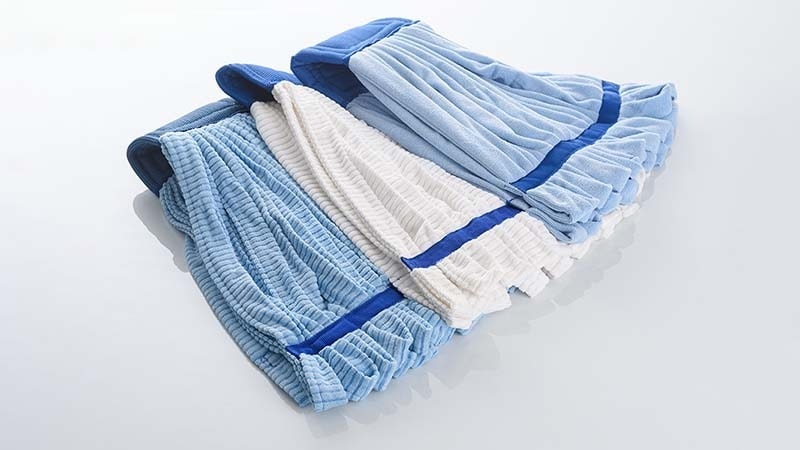
Cotton alternatives for string mops don’t exist. The closest thing to a microfiber string mop is a tube mop. It uses several tubes of microfiber cloth to mimic the structure of cotton string mops.
Still, these mops are often sold as microfiber string mops or strip mops. That is just the manufacturer’s way of saying that they perform similarly to a cotton string mop. Microfiber is generally not compatible with acidic chemicals, which limits it to daily cleaning applications.
4. Spin Mops
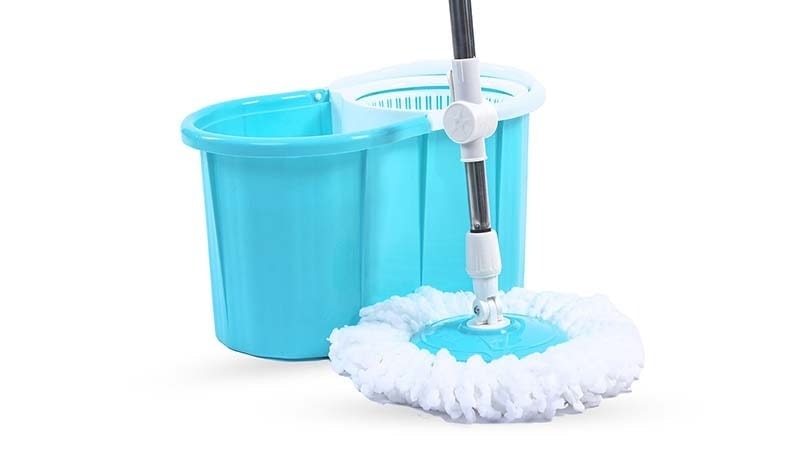
Spin mops have a flat disk design and use a proprietary mop bucket that spins the mop head to release excess water. These mops are also made from microfibers and generally come in small sizes. Because larger mop heads would be harder to spin and dry.
We mostly recommend spin mops for cleaning tight spaces like under the bathroom sink. Alternatively, you can use a small sponge mop for similar performance.
5. Disposable Mop Heads
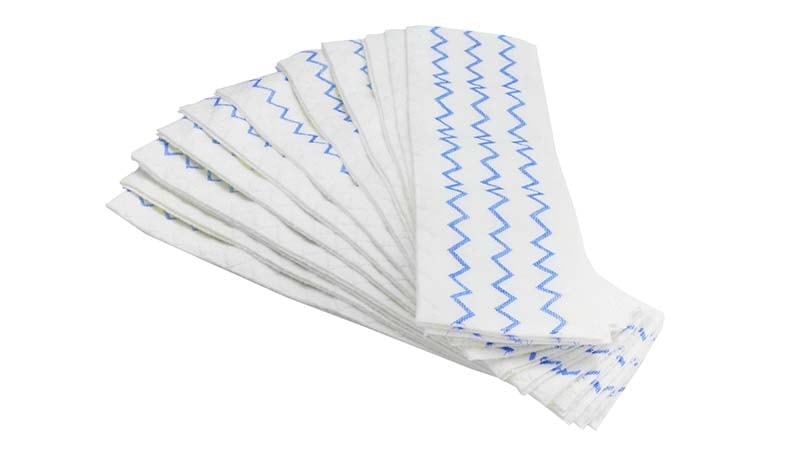
Lastly, we have disposable mop heads made from non-woven polyester fibers. They have the texture of kitchen towels and are incredibly lightweight. Disposable mops are great for cleaning sticky, hazardous, or organic materials in the hospitality industry.
If someone spills some soup, you can quickly mop it with a disposable mop head, then throw it away. In such applications, a cotton string mop will absorb the soup, and the smells will penetrate the fibers.
Table 1 – Comparison chart between cotton and microfiber mops.
| Application | Mop Head Recommendation |
|---|---|
| Heavy Duty Cleaning | Cotton String Mops |
| Light Cleaning | Microfiber Flat Mops |
| Dry Mopping | Microfiber Flat Mops |
| Heavy Spills | Microfiber Tube or Cotton String Mops |
| Floor Sanitization | Cotton String Mops |
| Cleaning Tight Spaces | Spin Mops or Small Microfiber Mops |
| Wooden or Plastic Floors | Microfiber Mops |
| Ceramic or Marble Floors | Microfiber or Cotton Mops |
Mop Performance in 8 Large-Scale Settings
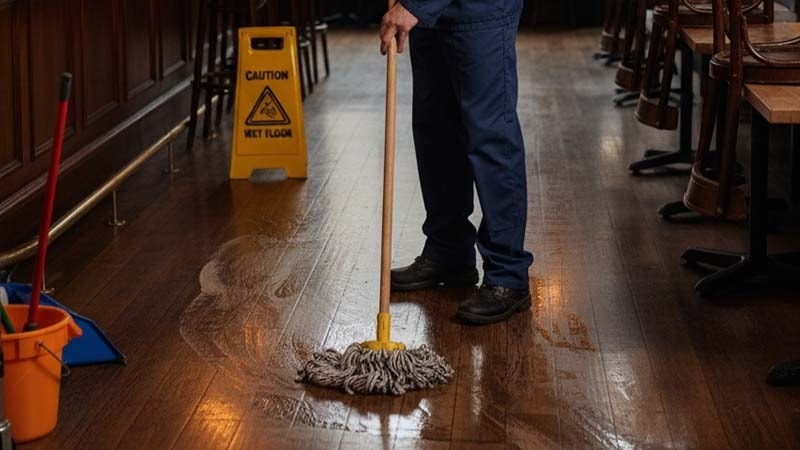
Mop performance varies by application. In this section, we look at eight large commercial & industrial settings and identify the right mop for each location.
1. Retail & Commercial Cleaning
Retail spaces like grocery or clothing stores have light cleaning needs. These areas see a lot of foot traffic, but there is a low chance of customers tracking in dirt or mud. The ultra-fine fibers of microfiber mops excel at cleaning smooth surfaces that are common in stores. You should also choose mop length based on your employee’s height.
2. Sports Venues
Sports venues are a breeding ground for bacteria. Hundreds of athletes in a confined space have lots of associated risks. Therefore, for sports venues, invest heavily in cleaning solutions that remove dirt and disinfect surfaces.
Cotton string mops are better for applying disinfectant, but microfiber mops help wipe surfaces dry afterwards.
3. Educational Institutions
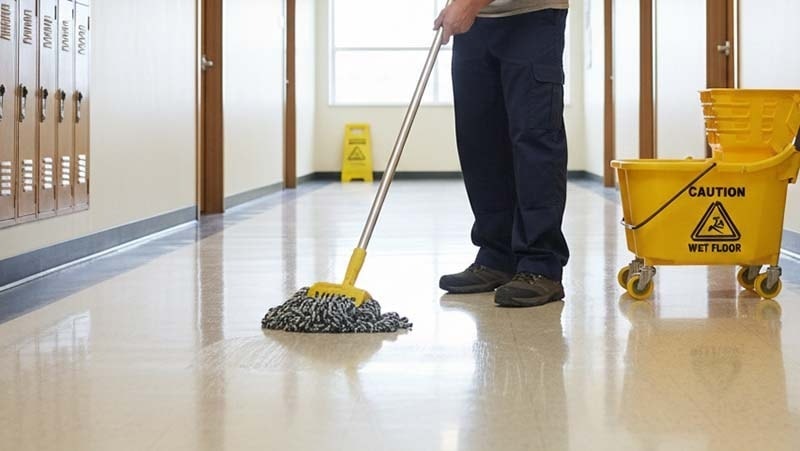
Schools and universities have large floor spaces that need frequent cleaning. Mud and dirt get tracked into hallways and corridors every day. Flat mops aren’t designed to deal with such scenarios. Your only real option is microfiber tube or cotton string mops.
4. Hospitality Industry
The hospitality industry, such as spas, hotels, and resorts, has lots of different floor types. You will see tiles for pool areas, marble for interiors, and stone steps for the exterior.
Flat mops are best for cleaning the hotel lobby and pool area, but you will need string mops for all other sections.
5. Healthcare Facilities
Hospitals and other healthcare facilities require regular disinfection of surfaces. Cotton is a cost-effective option and has better chemical resistance. Microfiber is more efficient at disinfecting flat surfaces but requires frequent replacement due to damaged microfibers.
6. Warehouse & Industrial Facilities
Warehouses have a vast floor space and see regular foot and vehicle traffic. The cleaning industry has dedicated industrial floor cleaners for the job. It reduces labor costs and ensures timely cleaning.
7. Public Bathroom
Public transit areas like bus terminals, train stations, and parking garages have public bathrooms that need to be cleaned several times a day. String mops are more useful here as they can scrub the grout lines between tiles.
8. Food Service Industry
Food preparation areas have the strictest cleaning requirements. Any type of cross-contamination is unacceptable. We recommend using multiple color-coded mops to ensure food safety.
- Red Mops: Toilets & Hazard Cleaning
- Yellow Mops: Washrooms & Bath Fixtures
- Blue Mops: Corridors and Offices
- Green Mops: Food Prep Areas
How to Choose the Best Mop for Commercial Cleaning Applications
1. Cleaning Needs
Identify your cleaning requirement based on mopping frequency and the nature of the cleanup. Cleaning mud and other stubborn dirt marks requires a heavy-duty mop. However, if you regularly clean your floors, then a lightweight microfiber option is also suitable.
2. Bacteria Removal
Disinfection requires strong chemicals that may damage your microfiber mops. Cotton string mops are better suited to bleach application. Look at manufacturers’ guidelines for chemical resistance.
3. Commercial Floor Type
Mop’s performance is also dependent on floor type. Microfiber favors smooth surfaces while cotton excels at all surfaces. However, cotton string mops use lots of water, which can warm wooden floors and damage vinyl planks.
4. Cost of Ownership
Cost of ownership calculates the initial investment plus ongoing maintenance for the cleaning products. Cotton mops are more affordable in the short run but require frequent replacement due to fraying.
5. Durability vs Ergonomics
Lightweight mops with plastic frames are usually the better choice as they require less effort to mop the floor. However, they are less durable than heavy-duty mops that have an aluminum frame.
Conclusion
Both cotton and microfiber mops serve an important role in cleaning and maintaining commercial spaces. However, each mop has its own advantages and disadvantages. Ideally, you should use cotton for heavy-duty cleaning and microfiber for regular maintenance. But recent developments in mop heads have closed that performance gap. Microfiber tube mops now perform just as well as cotton mops in heavy-duty cleaning tasks.
Get Cotton & Microfiber Mops from Manywell!
Manywell is a leading manufacturer of cleaning supplies. Our microfiber mops are made from a very fine blend of synthetic fibers that results in a softer and more absorbent mop head. We also produce various mop accessories and cleaning cloths.
Get the best quality mops at competitive prices today. Contact us now!