
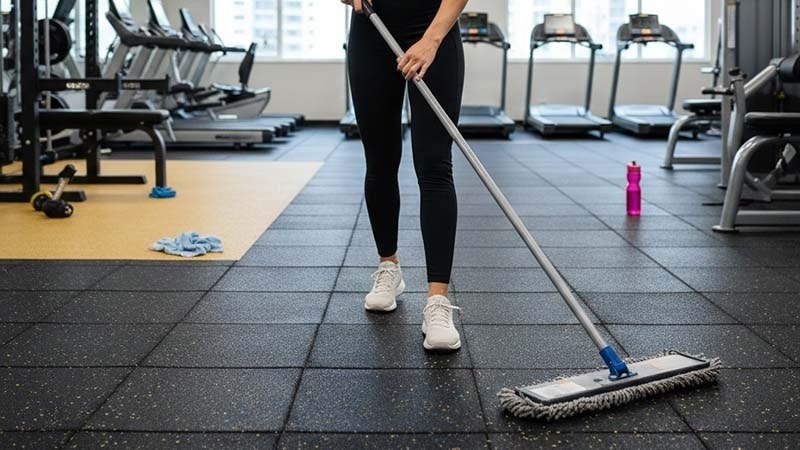
Gym floors endure constant foot traffic, sweat, and heavy equipment, which necessitate proper cleaning and maintenance for safety and hygiene. A thorough cleaning routine will prevent slips, control odors, and extend the life of flooring materials.
In this article, we’ll cover best practices for cleaning gym floors of every type and give practical advice for keeping your facilities clean, durable, and hygienic.
Common Types of Gym Floors
The basic method of cleaning gym floors involves a microfiber mop and a pH-neutral cleaner. However, not all floors are built equally.
Here are four of the most popular gym floor options currently in use.
1. Rubber Flooring
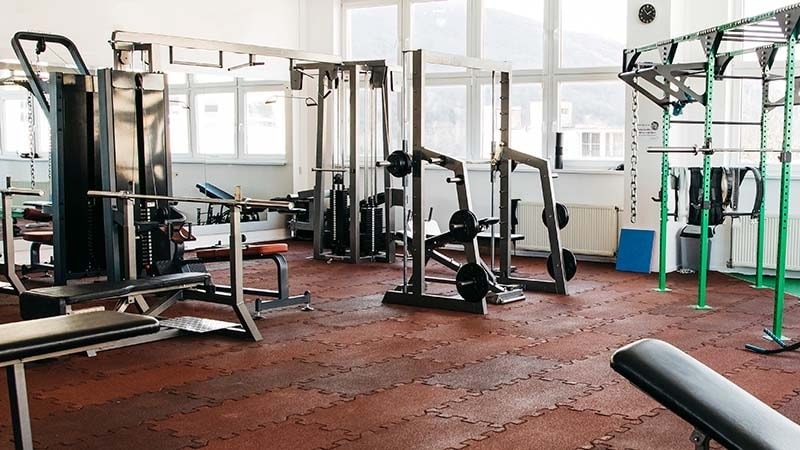
Rubber gym floors are the go-to choice for any fitness facility. The soft rubber floor mats provide a non-slip surface for a workout without compromising on durability.
However, the most useful feature of rubber floors is noise and impact dampening. Rubber can compress and bounce back to its original shape. So when you drop something heavy on a rubber floor, it will protect the underlying floor by absorbing the impact.
2. Wood Gym Floors

Hardwood gym floors are commonly used in high-level sporting venues. Natural wood has excellent shock absorption, resulting in better foot traction for athletes. Wood gym flooring also doesn’t affect ball bounce. Hence, its popularity in basketball and volleyball games.
The only real drawback here is wood gym floor maintenance. You need daily cleaning to prevent dirt and grime buildup. Wood floors also require refinishing every 5-10 years, which takes a lot of time, resulting in delayed matches.
Lastly, we have water damage. Commercial facilities use a water-resistant protective coating, but that doesn’t mean they are fully waterproof. Mopping and cleaning with excess water can result in warped floorboards.
3. Vinyl or PVC Sports Floors
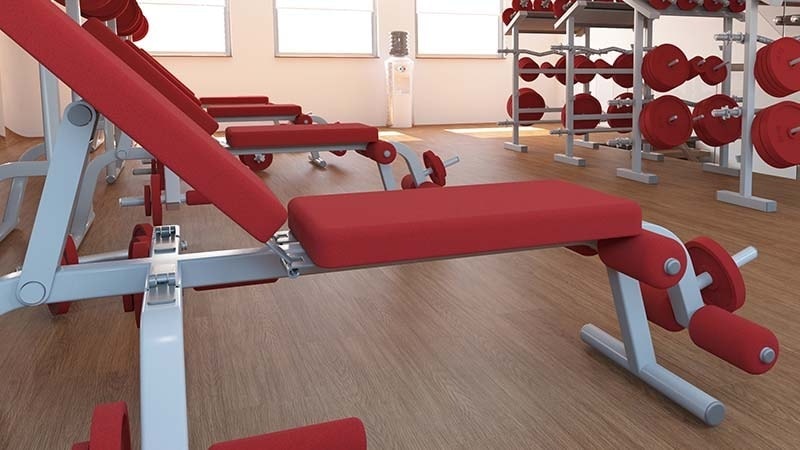
Vinyl gym floors share many of the benefits of hardwood floors but come at a lower price point. These floors are mostly found in school and college gymnasiums, where sports are the primary use case.
The vinyl floors often have a foam backing to provide shock absorption and a urethane finish to prevent dirt buildup. The urethane is less durable, so we recommend soft-bristle brooms and microfiber mops to prevent permanent damage to the floor’s finish.
4. Epoxy Concrete Floors
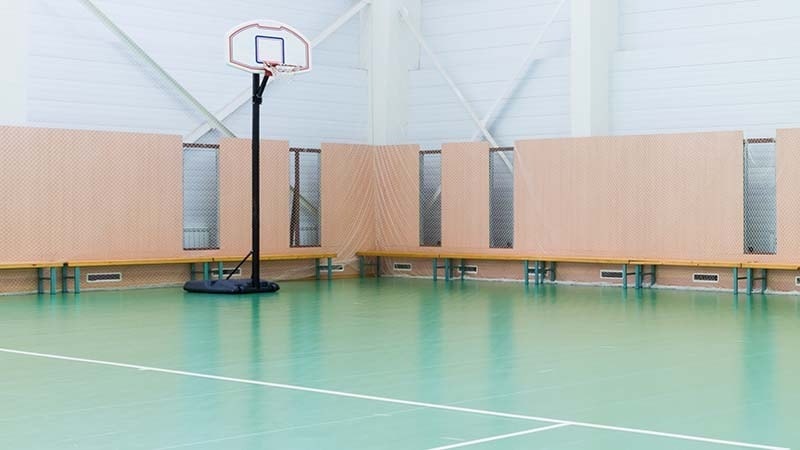
Concrete floors are the least popular option for gyms. Accidents on the hard concrete are much worse than on soft rubber or even hardwood gym floors. Nonetheless, many home gyms use some type of epoxy flooring.
Epoxy is applied to the floor in several coats, with each coat given 24 hours to fully cure. Lastly, a urethane coating is applied to prevent scratches. These floors are easy to clean and maintain, but also susceptible to impact damage.
Gym Cleaning Routine
Implementing a regular cleaning routine will help you maintain a safe and hygienic environment for athletes and visitors. Daily cleaning removes dust and loose debris tracked in by shoes and results in a clean gym floor.
In this section, we break down gym floor cleaning solutions in simple steps based on your cleaning frequency.
1. Daily Cleaning

Regular cleaning is more time-consuming but also less stressful. Dry sweeping the gym floor at the end of every day is a chore. But it also prevents serious dirt buildup. You are mostly sweeping fine dust and the occasional dirt particles from the floor.
- Step 1: Dry Sweeping
You can use a vacuum cleaner with a brush attachment or a large microfiber mop to sweep the gym floor without using any water. You can learn more about dry mopping here.
- Step 2: Damp Mopping
Excessive moisture can damage and warp hardwood gym floors. Therefore, we recommend using a damp microfiber cloth-based mop to help you get all the dirt off your gym floors.
You can either dip the mop head in clean water, then squeeze out the excess water, or simply use a spray bottle to mist the floor before mopping.
2. Deep Cleaning
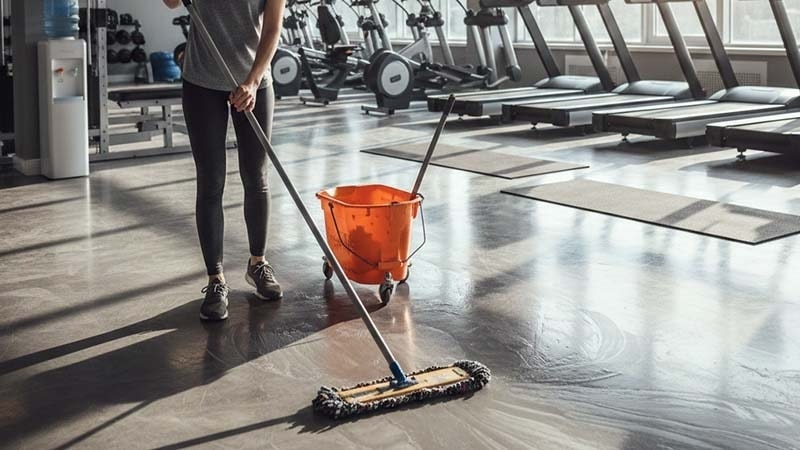
Deep cleaning means using damp mops to scrub the gym floors every week. This step involves cleaning up spills, removing standing water, and scrubbing shoe marks.
- Step 1: Dry Sweeping
Same steps as before, sweep the floor with a long flat microfiber dust mop. We recommend using at least a 36-inch wide mop to reduce cleaning time. After you are done, shake the excess dirt off and rinse the mop head in clean water.
- Step 2: Preparing a Cleaning Solution
Dilute the floor cleaner in clean water as per the manufacturer’s instructions. Use gloves and a face mask to protect your skin and lungs. Lightly damp the mop head with the cleaning solution.
- Step 3: Wet Mopping
Work in small sections and use overlapping passes to ensure complete floor coverage. One pass means you start mopping from one side and stop on the other. After two passes, rinse your mop head in the cleaning solution.
- Step 4: Spot Cleaning
During cleaning, if you see any stains or sticky surfaces, stop. Use scraping tools or a clean microfiber cloth to scrub the spot separately until the stain is gone.
- Step 5: Rinse & Repeat
Rinse your mop after every use and repeat the steps above until you are satisfied with the results. Use two buckets, one for rinsing mop heads and another for reapplying cleaning solution.
You can optionally apply a protective coating to prevent staining and ensure your gym floor stays in optimal condition.
3. Gym Floor Disinfection
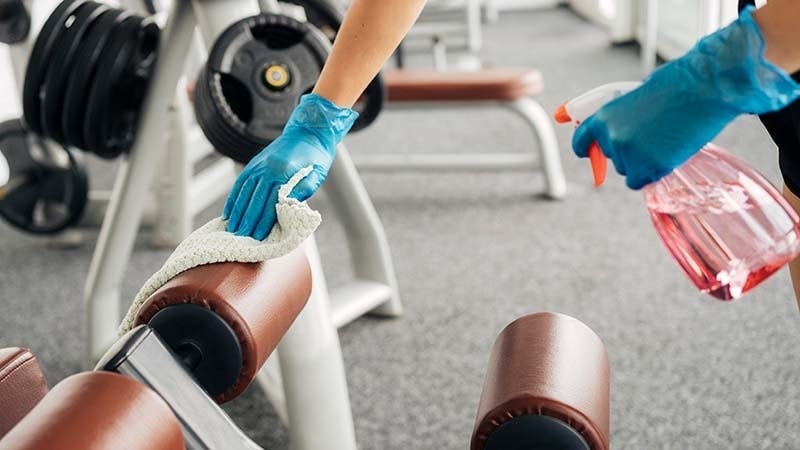
Disinfection is a necessary step when cleaning gym floors. It’s even more important in high-traffic areas where the risk of germs increases.
- Step 1: Deep Cleaning
You cannot apply disinfection to a dirty floor. Thoroughly cleans the gym floor with your choice of cleaning solution. Then let it air dry before applying a disinfectant.
- Step 2: Choosing the Right Disinfectant
Avoid harsh chemicals that can damage your floor’s finish. Rubber floors are particularly susceptible to bleach damage. Use EPA-registered disinfectants that are guaranteed to kill all pathogens within 10 minutes.
- Step 3: Inform Facility Managers
Inform your facility managers and supervisors that you will be using chemicals to clean the gym floors. This ensures safety by keeping unwanted individuals away from the work area and prevents them from accidentally inhaling toxic fumes.
- Step 4: Apply Disinfectant
Use a clean microfiber flat mop to apply an even layer of disinfection on the gym floor. You must wear the proper personal protective equipment (PPE) when dealing with chemical cleaners. After application, wait for the floor to dry, and then add your chalk or tape lines back.
8 Gym Floor Maintenance & Hygiene Tips
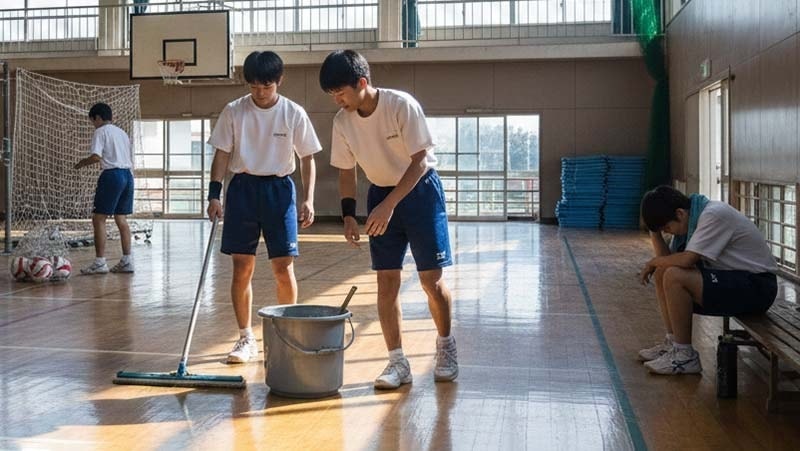
- Regular maintenance ensures athlete safety and prevents injuries.
- Implement a “no outdoor shoes” policy to prevent dirt buildup on the gym floor.
- Use floor mats at the gym entrance to catch most of the dirt before it enters the building.
- Avoid harsh chemicals like ammonia or bleach on gym floors. Use gym floor-approved cleaning products to preserve the floor’s finish.
- Rubber floor is durable but sensitive to harmful chemicals, heat, and oil-based cleaners, which can dissolve the rubber floor.
- Vinyl floor is easy to clean due to its high chemical resistance. But it is scratch-prone and weak to heat damage.
- Wash your mop after every use. Wet and dirty mops are a breeding ground for bacteria.
- Neglecting gym floor maintenance can result in permanent floor damage, resulting in costly repairs and even remodeling.
Conclusion
Gyms are relatively easy to clean as long as you have the right equipment. Wide flat mops are a necessary part of your cleaning arsenal. They provide a high surface coverage with every single sweep. Regular care is better than occasional deep cleaning. Preventing dirt from building up is a surefire way to extend your gym floor’s life. Use this guide to properly and safely clean your gym.
Get Gym Floor Cleaning Supplies from Manywell!
Manywell is a leading manufacturer of floor cleaning supplies. Our microfiber mops are ideal for maintaining gym floors. We use ultra-fine fibers that are scratch-proof and streak-free. You can also check out our microfiber cleaning cloths and mop accessories for your gym.
All Manywell products are fully customizable, so you can get the best mop tailored to your cleaning requirements. Contact us now for a Free Quote!