
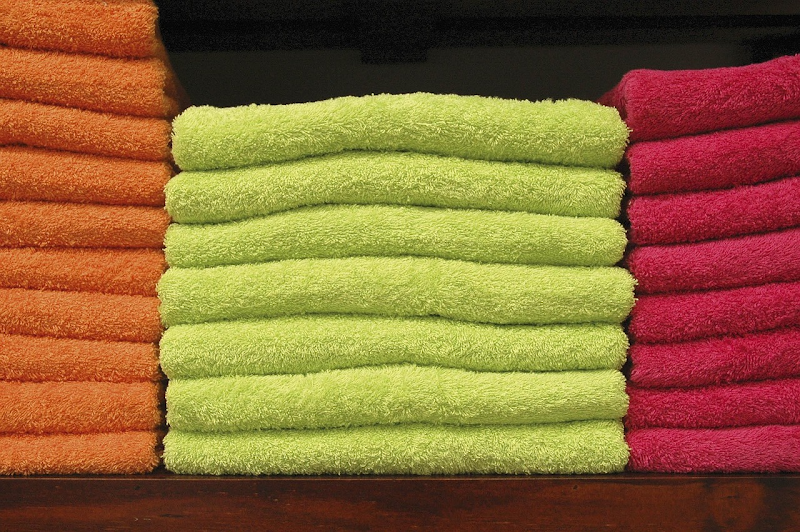
Microfiber towels are composed of a blend of polyamide and polyester. Polyester is responsible for ensuring structural strength, while polyamide increases the water absorption. The ratio between these two directly affects the performance, durability, and softness of microfiber towels.
Among different blends, the 70/30 blend is widely preferred in industries that demand high performance. It is not only soft but also has high absorbency. Do you want to know more different microfiber blends and buy the right one? Let’s get started.
Why 70/30 Microfiber Blend Matters?
The 80/20 and 70/30 are the polyester to polyamide ratios. Microfiber towels with a 70/30 blend are often considered superior to 80/20 blend and other cotton towels. It is because of its:
- Extra Softness: Polyamide contributes to the softness of microfiber towels. A higher polyamide percentage generally creates a softer, smoother texture, making the towel gentler and more suitable for delicate surfaces.
- Higher Absorbency: The polymer chains in a polyamide attract water molecules towards itself. That is why a microfiber towel with a higher polyamide ratio offers higher absorbency.
- Increased Scratch-Resistance: The fibers of a 70/30 blend are softer that minimize the friction. This makes it highly scratch-resistant. Hence, the 70/30 microfiber towels can be used on all types of surfaces including, glass, mirrors, and polished metals.
Key Points to Consider Before Buying Microfiber Towels
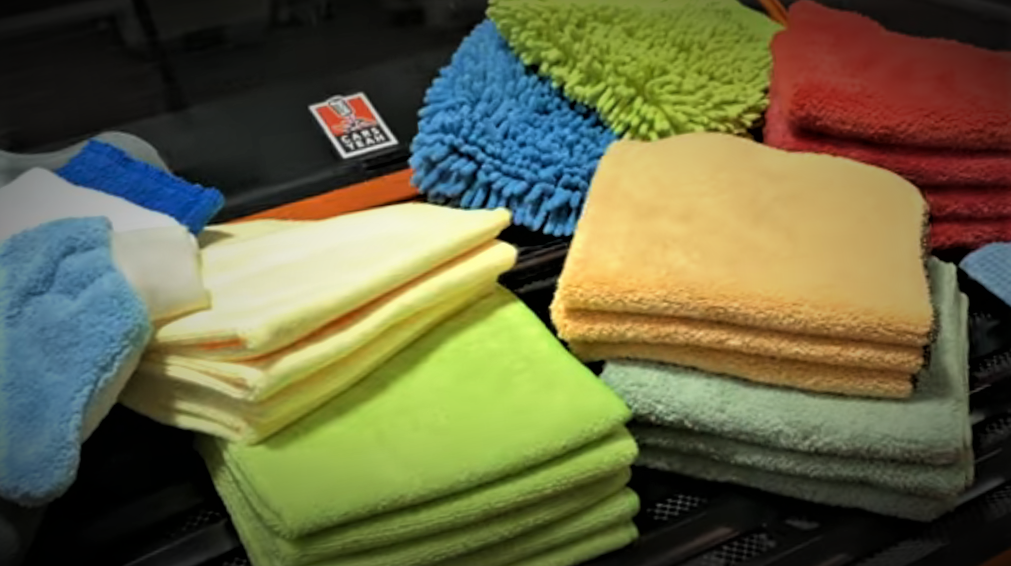
Before purchasing microfiber towels, it’s important to carefully evaluate a few key factors to avoid low-quality products. This becomes especially critical for bulk buyers such as wholesalers, commercial cleaning companies, and hotel operators, where consistency and performance directly impact customer satisfaction.
GSM Range:
Microfiber towels are available in a variety of GSM ranges. GSM (grams per square meter) refers to the weight and density of the fabric. Generally, a higher GSM indicates a thicker towel with greater durability. It comes in premium quality with higher absorbency.
Here are the different GSM ranges microfiber towels are available in:
- 160-250: These towels are lightweight and dry easily.
- 250-350: They are also lightweight with the higher absorbency as compared to 160-250 GSM towels.
- 350-500: The towels with a GSM range of 350-500 are soft and provide cushioning for delicate surfaces.
- 500+ range: These towels are the thickest but offer highest water absorption and are ideal for autodetailing.
Weave Type:
The fibers of cleaning towels are woven together in different patterns. Each weave type serves a specific function. For instance:
- Terry Weave: It is the most common weave type that offers high absorbency for both water and dirt.
- Waffle Weave: Waffle weave also has high absorbency. It has a unique 3D pattern that helps the towels to easily clean slimy and greasy surfaces.
- Twisted Loop: Microfiber towels with a twisted loop weave pattern are highly absorbent. They are usually large in size with a cushion-like texture suitable for drying automobile surfaces.
- Suede/Flat Weave: In this type, fibers are tightly woven together. These towels are highly scratch-resistant.
Edge Finishing
Microfiber towel edges are finished using different sealing techniques, which play a key role in determining the towel’s durability. Common edge finishing methods include:
- Laser-cut edges: In this, the towel edges are cut with a laser to seal them in place.
- Overlocked/Sewn Edges: Some microfiber towels have polyester threads sewn into them. This prevents the towel from fraying but can scratch surfaces.
- Piped Edges: To prevent scratches, the edges of microfiber towels are sewn with thin strips of silk or satin.
How to Choose the Right 70/30 Microfiber Towel
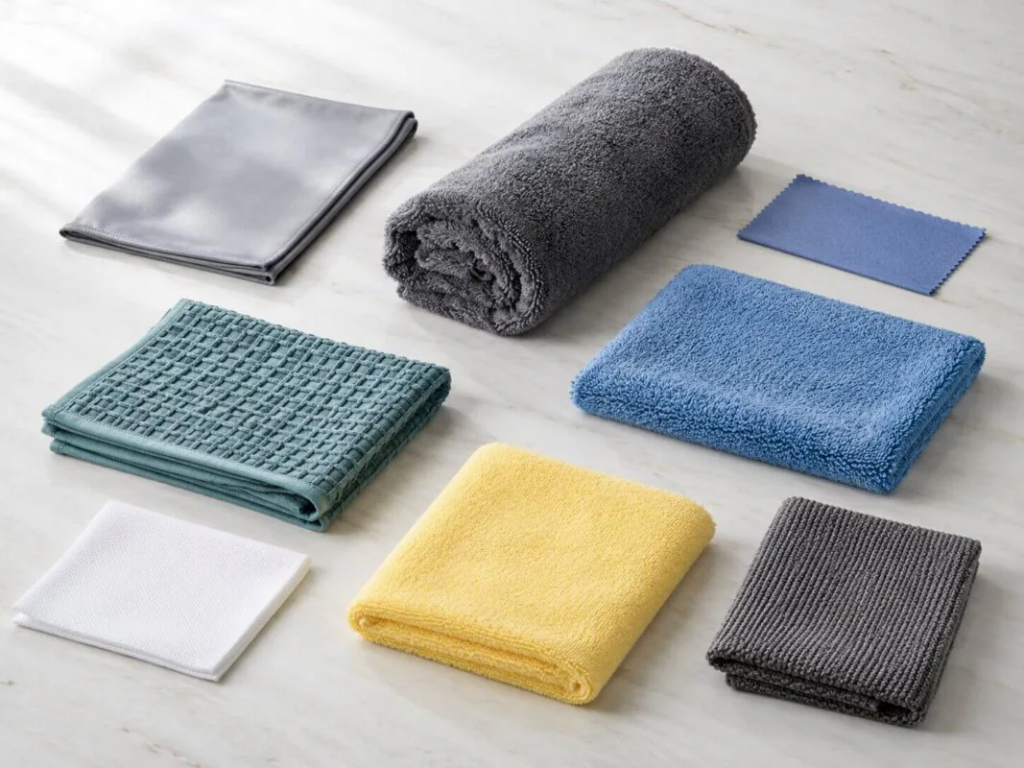
Choosing the right microfiber blend towels is necessary to ensure efficiency in cleaning tasks. Here is how to select an appropriate microfiber cleaning towel according to your needs:
- Select a Suitable GSM: Towels with higher GSM are not always the right option. For instance, for light dusting, low GSM microfiber towels are always the best. For general household tasks, choose towels with GSM up to 500. Cleaning towels above 500 GSM are best for heavy-duty applications.
- Match Weave Pattern to Your Application: Microfiber towels with waffle weave patterns are suitable for kitchen cleaning. For automobiles or glass cleaning, you can go for twisted or suede weave patterns.
- Decide on the Right Size: Microfiber towels come in different sizes. They do not follow the rule of “the bigger the better”. For drying purposes, you can go for large towels, while small microfiber cleaning towels are best for dusting or cleaning spills.
- Go for High-quality Edge Finishing: You must choose microfiber towels with smooth edge finishing to prevent scratches. Choose towels with laser-cut or piped edge construction.
- Check for OEM/ODM capability: Before making a bulk purchase, check for OEM/ODM capability of the suppliers. They should align with your requirements. This helps brands to have complete customization control over their products.
- Ask for Sample Availability: Before committing to large batches, check whether the company offers sample setups. The right suppliers do not set high MOQ and offer a variety of customization options.
To ensure you select the right supplier, pay close attention to how they communicate with you and whether they properly understand your requirements. If there is any uncertainty in production lead time, shipping, or total cost, consider it a red flag.
Best Practice for Use and Maintenance of Microfiber Towels
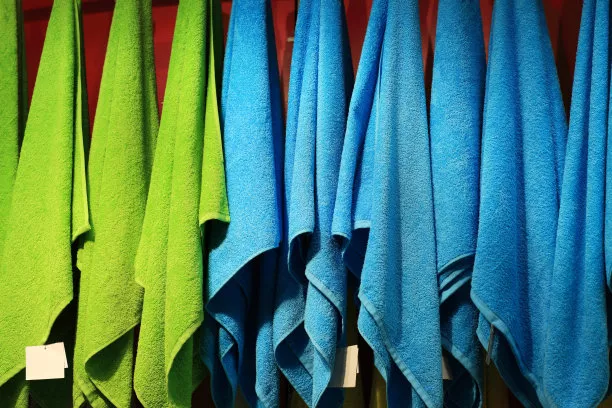
Microfiber towels can perform cleaning tasks efficiently even after hundreds of uses. Their durability depends upon proper care and maintenance practices. Here’s how you can increase their longevity:
- Wash microfiber towels in cold water. Use warm water only when there are stubborn stains or grease buildup in the towel.
- Avoid using hot water, fabric softeners, or harsh detergents as they can affect the absorbency of microfiber towels.
- It is best to air-dry the towels in an area away from direct sunlight. You can also tumble-dry them, but only on low-heat settings.
- For heavily soiled microfiber towels, soak them overnight in a mixture of water and vinegar. Avoid using bleach.
- Store the cleaning towels only when they are completely dry. The storage area must not be damp.
- Wash the microfiber towels separately from other fabrics, including cotton. It is because they can easily trap lint from other towels.
Conclusion
A 70/30 microfiber blend is considered a premium blend because of its high absorbency and softness. However, the cleaning efficiency of towels does not depend only on the blend quality. You also need to be mindful of GSM, weave patterns, and edge finishing while making your purchase.
They play a crucial role in the application of microfiber towels across different industries. Considering all these aspects helps you choose the right towels more effectively and save costs in the long run.
Get Your Microfiber Towels Customized from Manywell
Finding the right suppliers to purchase microfiber towels? Choose Manywell. We are microfiber specialists and offer cleaning towels in premium blend ratios (70/30 and 80/20). We follow ISO-certified quality management systems. Your brand also gets complete OEM/ODM support from us.
From colors to sizes, weights, logos, and even packaging type, you can get everything customized. On top of everything, we offer small batch trials. So, whether you are a big or small brand, Manywell can handle everything for you.
Contact us to get your samples, request MOQ information, or explore customization options that can help your brand stand out.