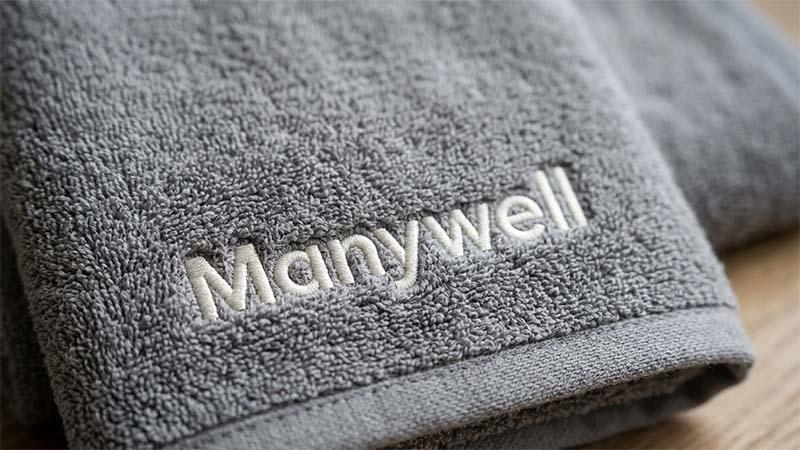
Custom microfiber towels with a logo are a powerful way to branding tool. The personalization increases brand recognition, which results in repeat customers. Each logo method affects the look, feel, and texture of microfiber towels.
In this article, we’ll explain the seven ways you can add a logo to customize microfiber towels for your business.
The Impact of Custom Logos on Microfiber Towels
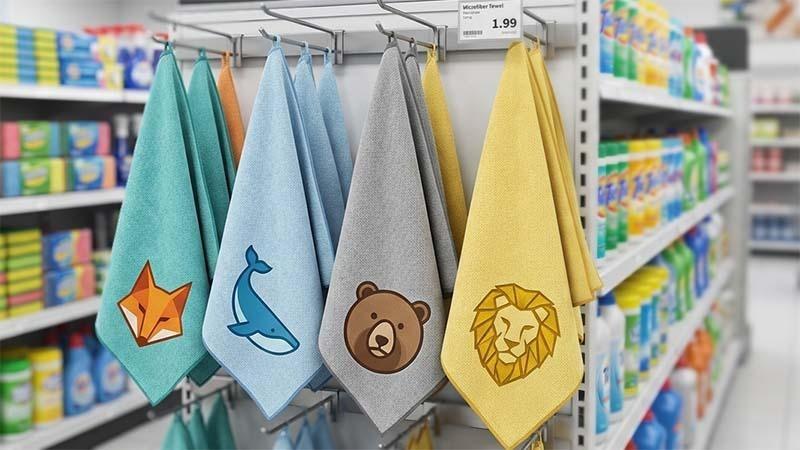
Here are five ways logo design and placement affect your microfiber towels.
1. Brand Image
Logo design, colors, and placement heavily affect the appearance of a towel. Poor-quality logos give an impression of cheapness. A well-designed quality microfiber towel appeals to customers and makes them more likely to buy.
Good logo design leaves a lasting impression on the consumer and gives them a reason to come back for repeat orders. You can also add your company’s contact info, along with graphics, to ensure more sales.
2. Feel & Texture
Some logo methods affect the softness and texture of the microfiber towel. Methods like heat transfer and silkscreening apply a layer of paint on the towel. The towel area under the logo is now sealed with lower absorbency.
A smaller logo and a flat towel minimize the absorption loss. So, you can make sure your personalized towels remain highly absorbent.
3. Wash Durability
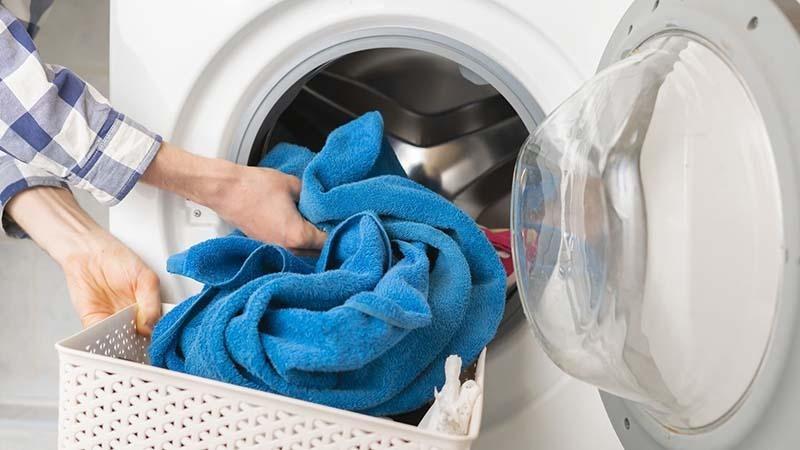
Once you add a logo to a microfiber towel, there is a chance it will fade or chip away after a wash. Choose logo methods that permanently adhere to the fabric surface for the best results.
Alternatively, you can add a warning label to the towel packaging. Let your customers know that washing microfiber towels with harsh detergents, hot water, or harmful chemicals can damage the logo.
4. Lead Times
Custom microfiber towels take longer to manufacture. That is because after towel production, there is a lengthy customization process. Logo processes, like embroidery, take much longer than simple screen printing.
5. MOQ & Pricing
As you increase design complexity, the manufacturing cost also increases. Expensive logo methods also have larger MOQ (minimum order quantity) requirements.
This means businesses have to order a larger volume (quantity) of custom logo towels. It gives your business a lower price per unit and ensures profitability for the towel factory.
7 Ways to Add a Logo to Custom Microfiber Towels
Whether you run a small mom-and-pop store or procure towels for a large hotel chain. Learning the different ways to add logos will help your bottom line.
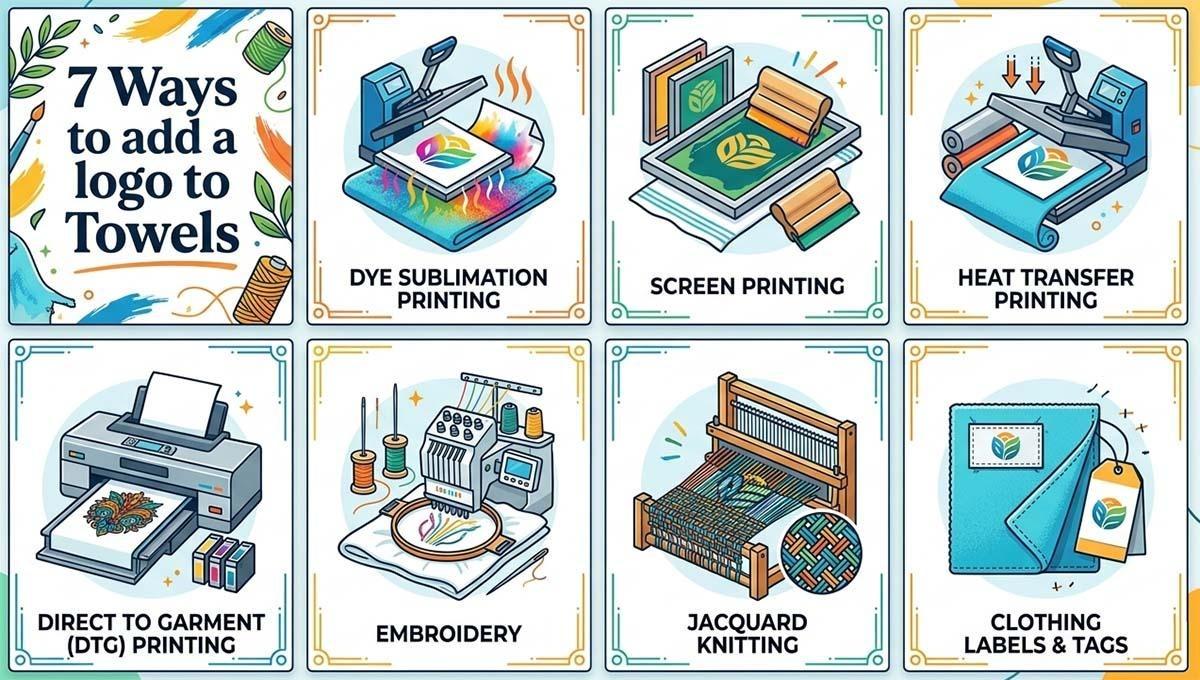
Here are seven effective ways to add a logo to a microfiber towel.
1. Dye Sublimation Printing
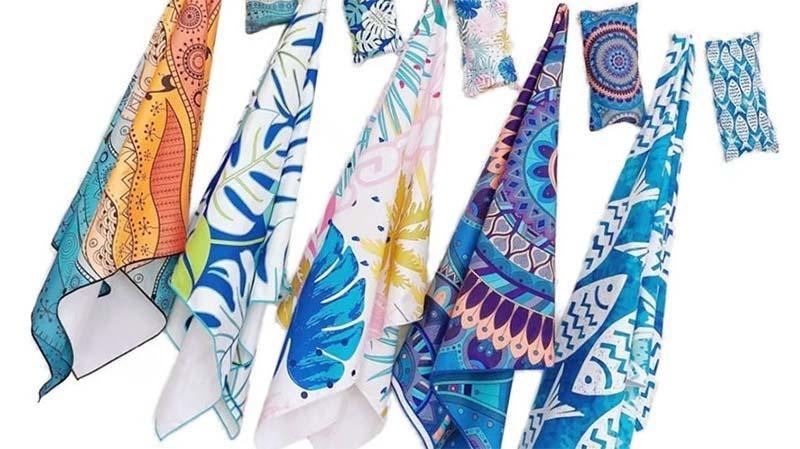
Dye sublimation is the perfect process for vibrant designs on towels. Designs are printed on paper and heat-pressed into the towel. It uses special sublimation ink that turns to vapors after heating. The ink vapours then bond to the fabric, creating a permanent design.
This unique printing method doesn’t impact towel softness and texture. The printed designs and logos remain vibrant after several washings.
There is one major drawback. Dye sublimation is not suited to cotton fabrics. But you can also use dye sublimation on towels made with recycled materials. The sublimation ink only bonds to polyester fibers, which make up 70-80% of microfiber towels.
We recommend dye-sublimation branded products for most businesses. It’s great for a sports team-branded gym towel, colorful beach towels, and custom hand towels for promotional campaigns.
| Dye Sublimation Printing for Microfiber Towels | ||
| Benefits | Best Use | Drawbacks |
| Excellent Print Colors | Cleaning Cloths | Expensive |
| Maintains Logo Details | Gym Towels | Limited to Polyester |
| Wash Resistance | Beach Towels | |
| Fade Resistance | Car Drying Towels | |
| Fabric Softness | Corporate Gifts | |
| No Impact on Absorbency | ||
| Suitable for All Surfaces | ||
2. Screen Printing
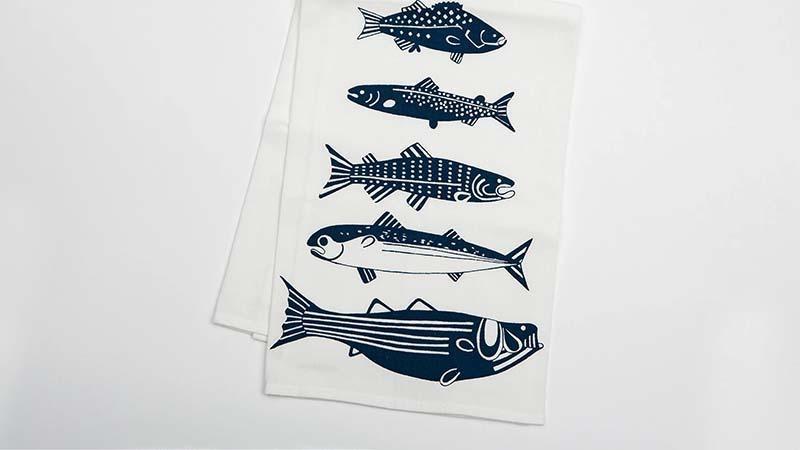
Screen printing is one of the oldest methods of customizing fabrics. This process pushes acrylic paint through a stencil called a screen. Once a stencil is made, you can use it thousands of times without worry.
This process is expensive for small-volume orders and prototypes. But it’s incredibly cost-effective for bulk orders. It enables single and full color designs at the cost of detail.
A big benefit of screen printing is that it’s suitable for smooth and slightly textured surfaces. You cannot use it on terry cloth or fluffy surfaces, but that is a small compromise.
Screen printing adds a layer of paint on the microfiber towel. Thus, it reduces the cleaning performance for that area of the towel. Lastly, screen printing has less wash durability. A poorly screen-printed logo will result in a worse customer experience.
| Screen Printing on Microfiber Towels | ||
| Benefits | Best Use | Drawbacks |
| Good Colors | Hand Towels | Less Durable |
| Cost Effective | Kitchen Towels | Less Detailed |
| Widely Available | Promotional Events | Less Premium |
| Quick Process | Reduces Absorbency | |
3. Heat Transfer Printing
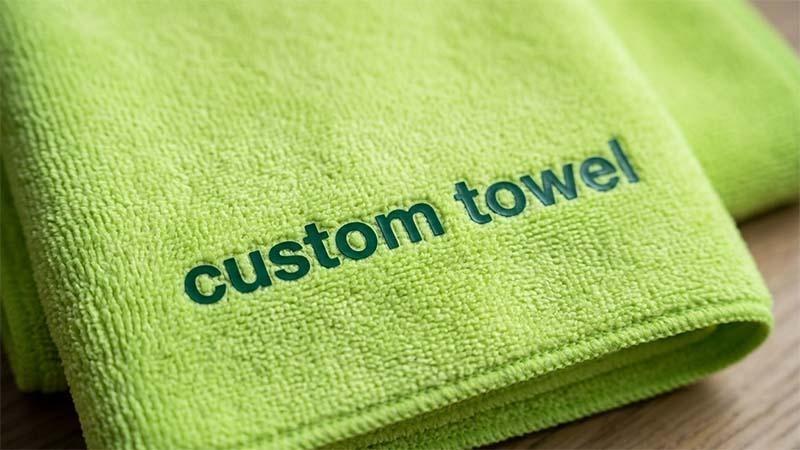
Heat transfer printing is a hybrid of sublimation and screen printing. In this process, the brand logo and design are printed on a heat-safe paper. Then the paper is placed on top of the towel, and heat is applied to the surface.
The benefits are clear. You get a highly detailed and vibrant design for a fraction of the cost. The design can also be as complex as your printer allows. Of course, with this method, you are not limited to a single stencil or template. You can easily make changes to the designs without any extra cost.
Heat transfer printing has the flexibility of dye sublimation but the texture of screen prints. Meaning there is a thin layer of paint on the towel. This paint layer colorful but less durable. It also affects the surface feel of microfiber towels.
| Heat Transfer Printing for Microfiber Towels | ||
| Benefits | Best Use | Drawbacks |
| Good Colors | Disposable Towels | Less Durable |
| Maintains Logo Details | Kitchen Towels | Less Breathable |
| Good for Most Surfaces | Promotional Events | Reduces Absorbency |
| Quick Process | Smaller Logos | Affects Towel Feel |
| Cost Effective | ||
| Lower MOQ | ||
4. Direct to Garment (DTG) Printing
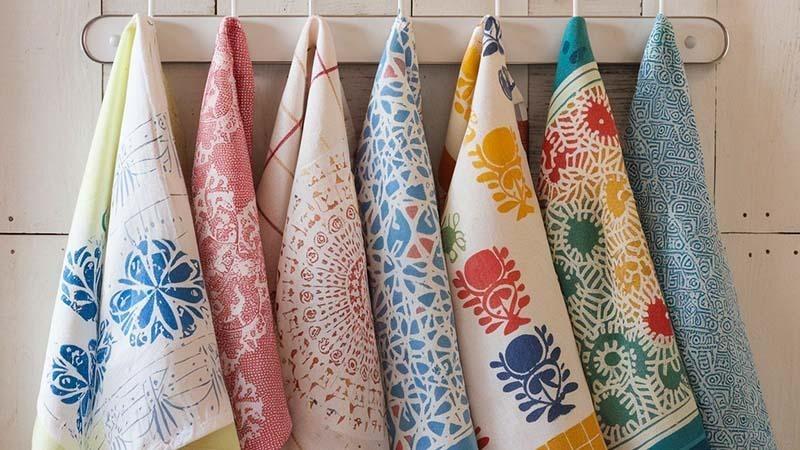
Direct-to-garment printing directly prints the logo on fabric. It requires a special pre-treatment machine that prepares the fabric and a special printed design for cloth printing. Then you use a heat press so the designs dry quickly.
This process yields a colorful and highly detailed logo. Because of the pre-treatment, DTF has superior durability to heat transfer. It also has a lower impact on towel breathability and absorbency. However, this process is limited to flat weave microfiber towels.
| Direct to Garment (DTG) Printing for Microfiber Towels | ||
| Benefits | Best Use | Drawbacks |
| Good Colors | Disposable Towels | Less Durable |
| Maintains Logo Details | Promotional Towels | Reduces Absorbency |
| Quick Process | Affects Towel Feel | |
| Lower MOQ | Limited to Flat Surfaces | |
5. Embroidery
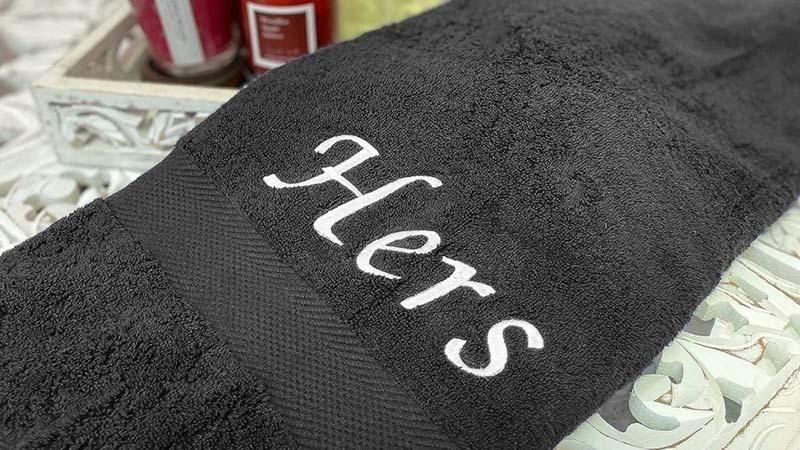
Embroidery is a classic technique that uses sewing to add details. In old times, embroidery was a time-consuming process done by hand. Today, towel manufacturers use embroidery machines, which are faster and more accurate.
By all accounts, embroidery is a superior logo method. It is incredibly durable, feels premium, and gives your logo a personality.
The only drawback is that embroidery threads are thicker than any printing. So, embroidered logos have less detail and change the towel’s texture. Hotel towels often use embroidered logos or crests for a personalized look.
| Embroidered Logos and Designs on Microfiber Towels | ||
| Benefits | Best Use | Drawbacks |
| Premium Look | Luxury Towels | Less Detailed |
| Highly Durable | Corporate Gifts | Higher Cost |
| Breathable | Gym Towels | Longer Lead Times |
| Environment Friendly | Kitchen Towels | Affect Towel Thickness |
| Improves Brand Identity | Bath Towels | |
| Suitable for All Surfaces | ||
6. Jacquard Knitting
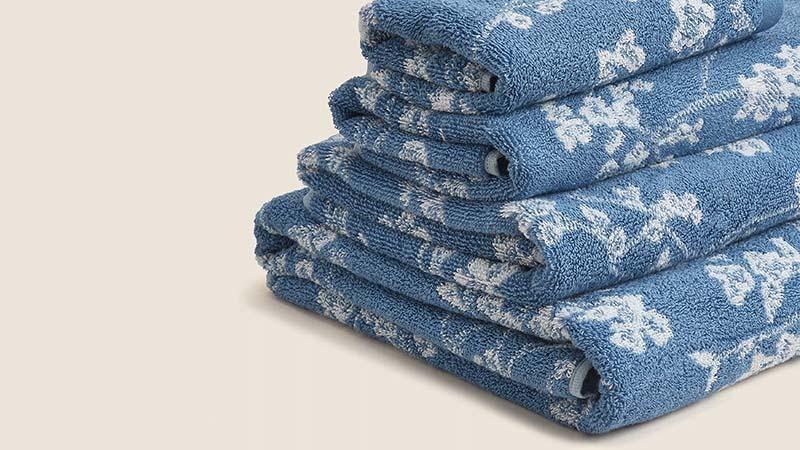
Jacquard knitting is a manufacturing process that knits designs and patterns into the fabric of the towel. Unlike other logo addition methods, this process happens even before the towel is made.
You need a special warp knitting machine that uses different colored yarns. Your brand logo and graphics are knitted into the final product. The best part is that it doesn’t affect the performance of the towel. Absorbency, texture, softness, and skin feel all remain the same.
Knitting is less precise than printing. So you are limited to simple logos and a few colors. Sports teams use this type of knitting for their promotional items.
| Jacquard Knitting Microfiber Towels | ||
| Benefits | Best Use | Drawbacks |
| Premium Look | Sports Towels | Less Detailed |
| Highly Durable | Corporate Gifts | Higher Cost |
| Breathable | Gym Towels | Longer Lead Times |
| Environment Friendly | Beach Towels | |
| Ensure Softness | General Purpose Towels | |
| Improves Brand Identity | ||
| Suitable for All Surfaces | ||
| Retains Towel Feel | ||
7. Labels & Tags
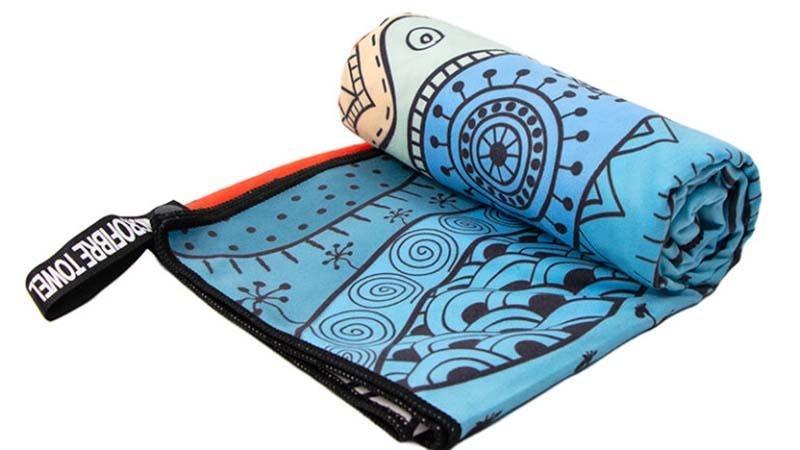
Labels and tags ensure that your towels remain soft and absorbent. Car drying towels require every square meter to have maximum absorbency and scratch-free performance. Other than dye sublimation and jacquard knitting, all other logo methods impact cleaning performance.
So most manufacturers prefer to stitch a soft fabric tag to the edge of the towel. This label displays the brand logo, contact details, microfiber cloth blend, and towel washing guidelines. It does this all while maintaining the functionality of the microfiber.
| Adding Labels & Tags to Microfiber Towels | ||
| Benefits | Best Use | Drawbacks |
| Classy Look | Cleaning Cloths | Some Tags Can Scratch |
| Highly Durable | Buffing Towels | Less Detailed |
| Ensure Softness | Car Drying Towels | |
| Retains Towel Feel | Body Towels | |
| Less Distracting | General Purpose Towels | |
| Suitable for All Surfaces | Kitchen Towels | |
| Beach Towels | ||
What is the Best Way to Add a Logo to a Microfiber Towel?
Let’s discuss which logo method is best suited to your business model. There are five factors that custom microfiber towel brands need to consider.
- Appearance: A good-looking logo and design will improve brand image and customer perception.
- Softness: Your logo methods should not compromise on towel softness and absorbency.
- Wash Durability: The logo print quality needs to be high so it can withstand frequent washes.
- Eco-Friendly: Premium brands should balance a luxurious feel with sustainable business practices.
- Cost & Value: The best logo customization will not be valuable on a low-cost towel. Balance the cost of the towel with the cost of customization.
| Logo Method | Logo Appearance | Softness Impact | Wash Durability | MOQ Requirements | Cost |
| Dye Sublimation | Excellent | Negligble | Very High | Medium | Medium |
| Screen Printing | Excellent | High | Moderate | High | Medium to Low |
| DTG Printing | Excellent | Medium | Moderate | Low | Medium |
| Heat Transfer | Excellent | High | Moderate | Low | Low |
| Embroidered Logo | Decent | Negligible | Very High | High | High |
| Jacquard Weaving | Decent | Negligble | Very High | Very High | High |
| Labels & Tags | Decent | Conditional | Very High | Very Low | Very Low |
Conclusion
Microfiber towels are designed for softness and absorbency. Businesses have to balance towel performance with logo details. Logo methods that provide colorful and detailed results also impact towel performance. Other methods that preserve towel performance come with a detailed penalty. Use this guide to choose the perfect logo method for your custom microfiber towels.
Get Custom Towels in Any Design, Full Color, and Various Sizes from Manywell!
Manywell is a microfiber expert. We manufacture all manner of high-quality cleaning products. Our catalog includes full print microfiber towels, highly absorbent cotton towels, long-lasting flat mops, and more.
You can get custom microfiber towels with your brand logo, colors, and graphics. Take advantage of our flexible MOQ requirements with each order. Contact Us Now!