

If you are sourcing microfiber mops in bulk or building a janitorial line, supplier choice can shape far more than product quality. It can affect margins, supply consistency, and how reliably your business grows.
A strong microfiber mop supplier does more than provide products. They help reduce sourcing risk and support long-term success. In this guide, we cover how to choose a microfiber mop supplier from the lens of experienced and successful buyers.
Why Supplier Evaluation Matters in the Microfiber Mop Business
Microfiber goods are not a commodity product. Consumers especially consider the effectiveness of cleaning goods before purchase. The quality of good microfiber mops ultimately depend on how durable commercial microfiber mop supplier you choose.
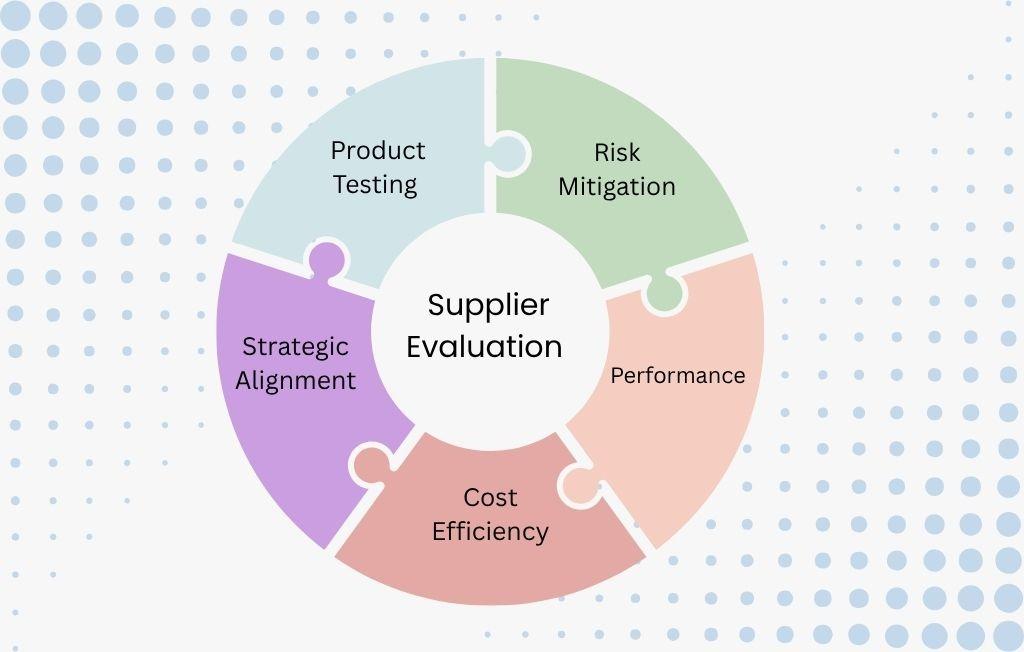
- Risk mitigation: A poor supplier can disrupt your supply chain, delay orders, and create problems later, so checking credibility early helps lower risk.
- Performance: Look at GSM, fiber blend, adhesion, and edge stitching. These shape how microfiber mop pads perform and why they often outperform cotton mops, sponge mops, and traditional mops.
- Cost efficiency: The quoted price is not always the real cost, since defects, delays, shipping, and replacement pads can add up.
- Strategic alignment: A good supplier should understand cleaning needs. Not just sell a bucket and a mop. There focus tools that reduce labor time and cover surfaces well should truly show in their products.
- Performance evaluation: Request a sample and see how the microfiber mop heads perform in real use before replacing your current cotton or sponge mop systems.
Check the Supplier’s Product Quality First
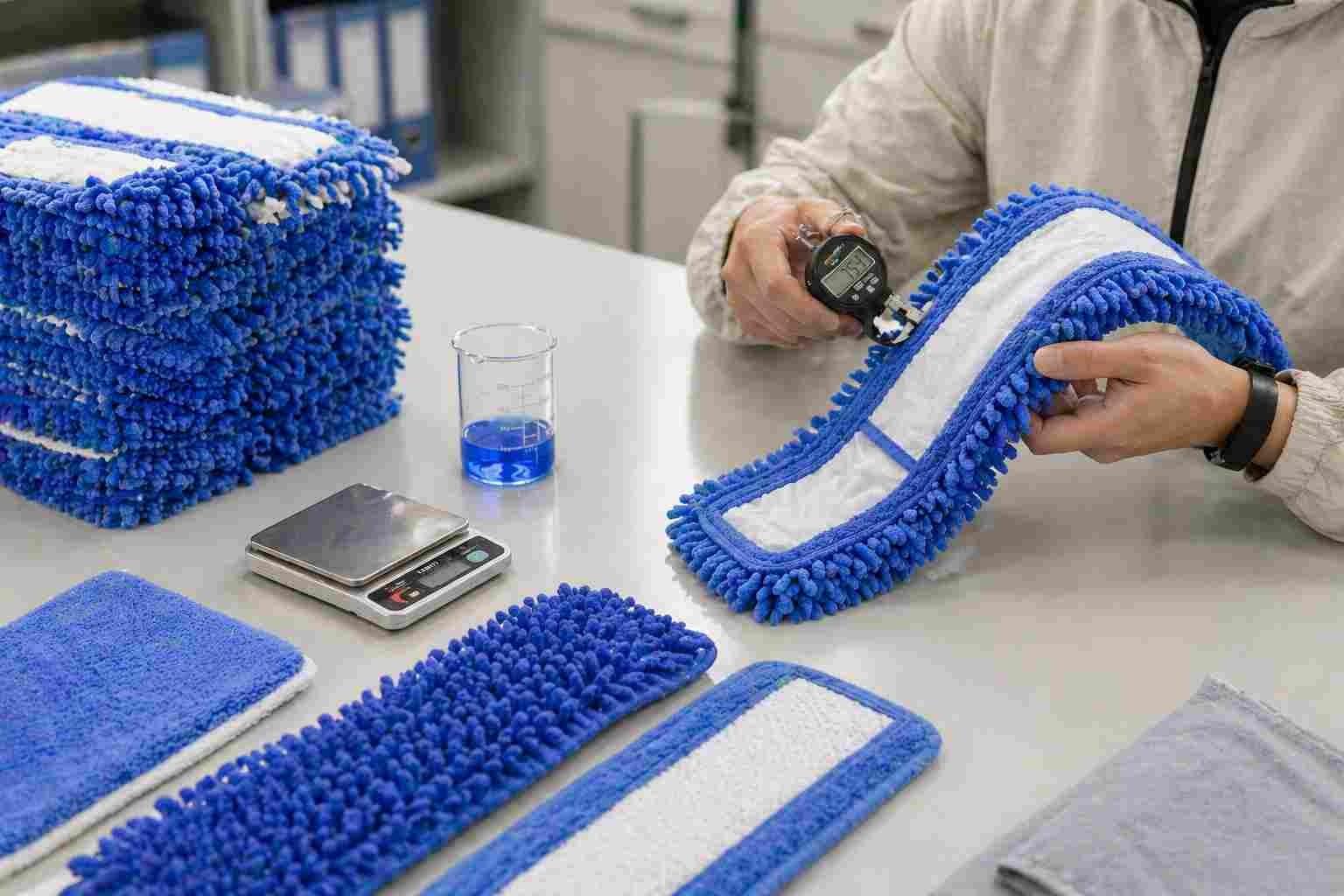
A bad supplier means heavy monetary loss on your end. You can lose customers fast. Your credibility will go down the drain, as your words don’t live up to the expectations of your clients.
So when sourcing microfiber mops in bulk, even small issues in fiber quality, stitching, absorbency, or durability must be evaluated with as much caution as possible.
Here are key things buyers should check.
Examine the Microfiber Material for Better Cleaning Efficiency
Start with the fiber. Not all microfiber is made the same, and microfiber mop quality often starts here.
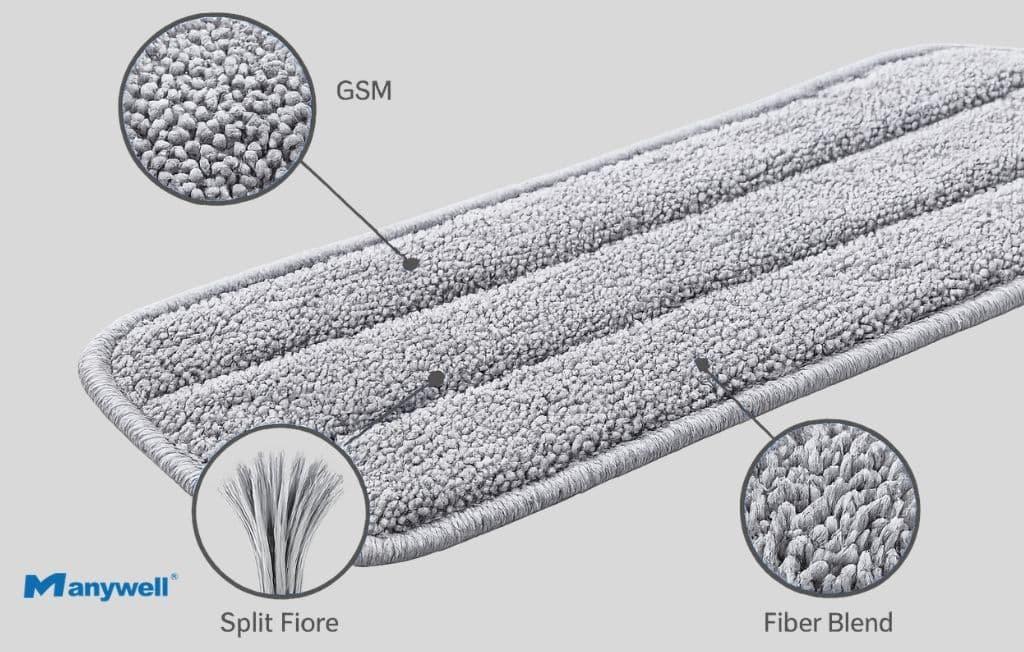
Checking GSM is one of the first ways buyers assess microfiber towel quality. It shows fabric density. Higher GSM often means more fine fibers packed into the mop heads. This tends to be a great indicator to judge effectiveness of the mops.
Be sure to review microfiber blend ratios. This usually affects how well mop heads hold dust across different surfaces.
Technical Evaluation of Microfiber Material
Table 1 – Key Material Benchmarks for Evaluating Microfiber Mop Quality
| Material Factor | Recommended Range / Benchmark | Why It Matters |
|---|---|---|
| GSM | 250–300 GSM (household), 300–380 GSM (commercial) | Affects absorbency, dust pickup, and cleaning efficiency |
| Fiber Blend Ratios | 80/20 polyester-polyamide (±2%) | Influences softness, moisture pickup, and durability |
| Fiber Splits | 0.1–0.3 denier | Helps trap dirt and hold liquid better |
| Nylon Content | Around 20%, avoid below 15% | Low levels may reduce absorbency and wear resistance |
| Weave Density | 300+ threads per 10 cm | Helps with durability and lint control |
| Wash Durability | 300–500 wash cycles common benchmark | Shows how well the material holds up over time |
Be cautious of low nylon content and poor fiber splits. Both can reduce dirt pickup and affect how well microfiber captures bacteria, which is one reason these mops can perform better than string mops.
Practical Evaluation Checks
This is where mopping technique should be simple. Not overly complicated. The mop should be able to handle more dirt. This includes working with cleaning chemicals, and maintaining performance when proper care is taken to avoid fabric softeners.
Table 2 – Practical Tests for Evaluating Microfiber Mop Quaility
| Practical Test | What to Look For | Pass Signal |
|---|---|---|
| Water Absorption Test | Soak and measure uptake | Holds 5–7x its weight in water |
| Dirt Pickup Test | Dry mop dust or debris | Strong pickup with minimal residue |
| Linting Test | Rub or wipe dark surface | Little to no visible lint |
| Hand Feel Check | Touch and flex material | Soft, dense, not stiff or brittle |
| Burn Test (Spot Check) | Check fiber authenticity | No harsh plastic odor, fine ash residue |
| Wash Test | Wash 5+ cycles | No shrinkage, hardening, or fraying |
Quick Questions to Ask Suppliers
Ask suppliers for data or test reports on:
- Fabric weight tolerance (±5% or better)
- Fiber composition test reports
- Pilling resistance (Grade 4+)
- Tensile strength (50 cN/tex or higher)
- Shrinkage rate (within ±3%)
Look at Stitching and Construction
The architecture of mops ultimately impacts the quality as well. During evaluation make sure to put them through rigorous testing. At the end of the day, you need to be satisfied with how secure the stitching and finishing of the product is.
Things you need to consider:
Table 3 – Comparing Key Construction Factors for Microfiber Mop Quality
| Construction Factor | What to Check | Why It Matters |
|---|---|---|
| Seam Strength | Even stitching, no loose threads | Prevents fraying after repeated laundering |
| Edge Finishing | Reinforced edging, secure hems | Improves durability and shape retention |
| Stitch Density | 2–3 stitches per cm benchmark | Helps resist wear in heavy duty use |
| Hook-and-Loop Backing | Strong adhesion after repeated use | Keeps microfiber mop heads secure on frames |
| Layer Bonding | Material layers firmly joined | Reduces pad breakdown over time |
| Hem Strength | Reinforced edge tape (1 cm+) | Supports long-term durability |
| Wash Stability | Holds shape after repeated washes | Helps prevent shrinkage and distortion |
Take a deep dive into how their systems perform over time, especially for cleaning frequency, durability after laundering, resistance to wear. Check for whether the products handle dirty water, harsh chemicals, and cleaning in tight spaces well.
Request Real Samples
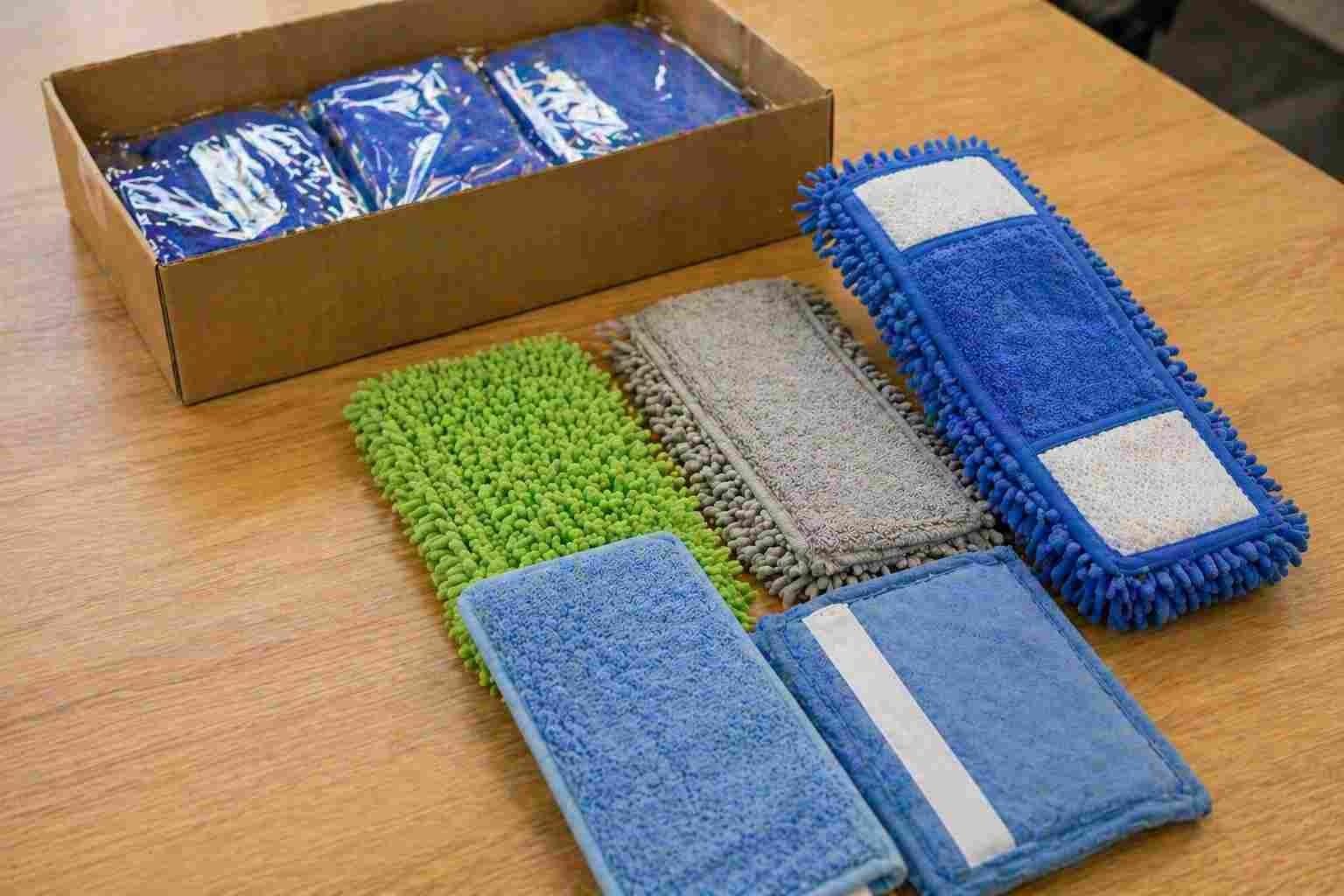
Always request samples before placing a larger order. Testing absorbency, stitching, wash durability, and real cleaning performance often reveals more than specifications alone.
It is especially useful when evaluating cleanliness, hygiene, baseboard reach, wood floor suitability, and how well a mop eliminates dirt and debris.
You can contact Manywell to discuss your needs, as they offer both OEM and ODM services, and request microfiber cloth or mop samples to further evaluate product quality before moving forward.
Verify Manufacturing Capability
A good sample is only the start. You also need to assess whether a flat mop microfiber mop quality supplier can deliver consistent quality and durable microfiber cleaning solutions at scale. These key factors help show whether their products can perform as claimed.
Factory vs Trading Company
Before choosing a microfiber mop supplier, know if you are working with a microfiber mop factory or a trading company. A microfiber mop factory makes products in-house meanwhile a trading company acts as a middleman. Between them which will benefit your business more? It’s truly subjective.
However, through this table, you can get a better idea of which manufacturing model resonates best with you.
Table 4 – Comparing Microfiber Mop Factories and Trading Companies
| Evaluation Point | Microfiber Mop Factory | Trading Company |
|---|---|---|
| Production | In-house manufacturing | Sources from partner factories |
| Quality Control | Higher visibility and control | Can vary by supplier |
| Customization | Often stronger OEM/ODM support | May be more limited |
| Product Consistency | Usually more predictable | Can vary between batches |
| Product Range | May be narrower but specialized | Often broader |
| Pricing | Fewer middleman markups | Can include trading margins |
| Best For | Bulk buyers and private label | Small businesses or mixed sourcing |
A microfiber mop factory often gives better visibility into materials, manufacturing, and quality control. A trading company can offer convenience and broader sourcing, which may help smaller buyers.
Before moving forward, ask:
- Who actually makes the product?
- Who handles quality control?
- Where does production happen?
- Are they a factory or intermediary?
Production Capacity
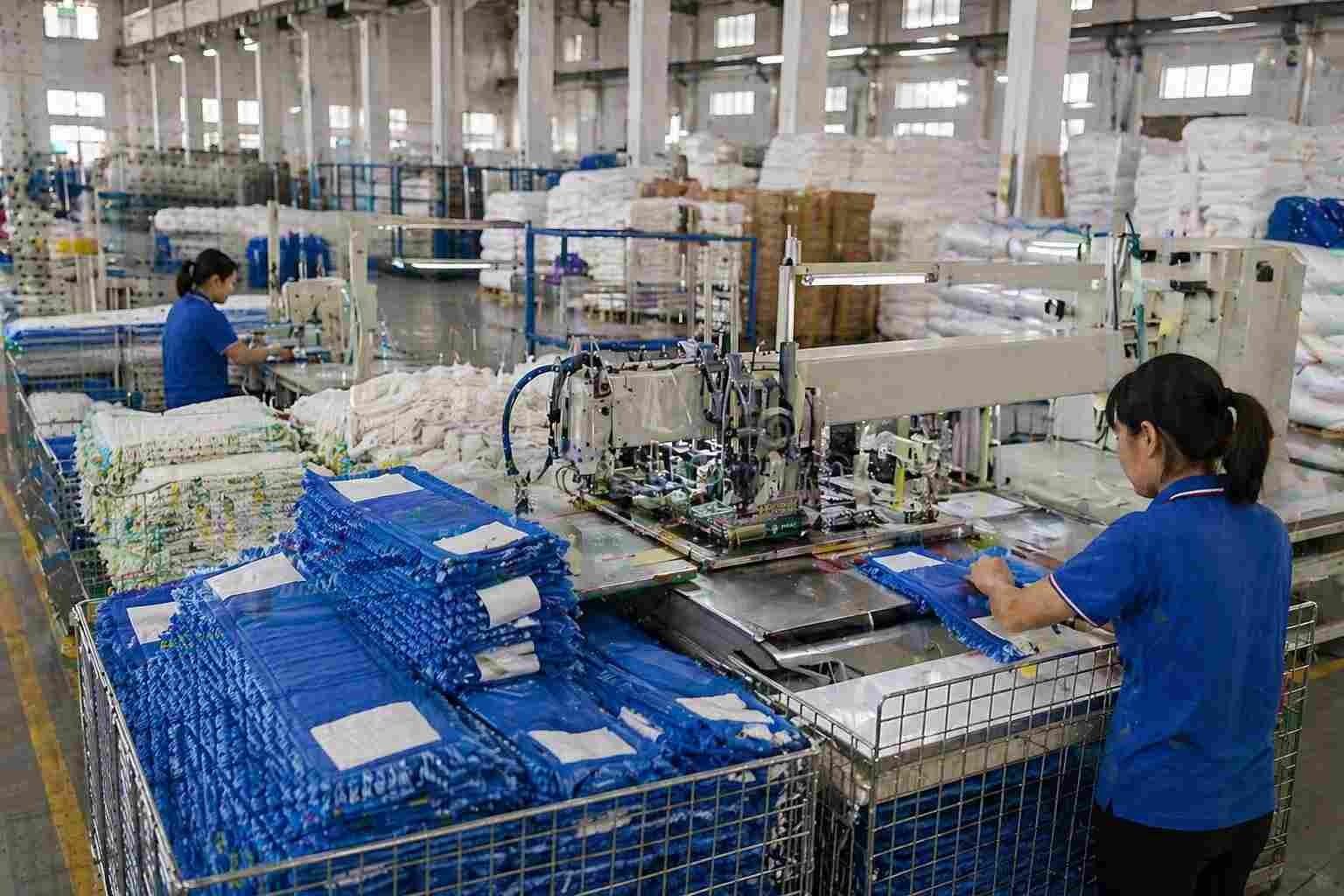
A supplier may make a good sample, but can they produce at scale? That is a different question.
Ask about:
- Monthly output capacity and whether they can support repeat bulk orders
- Lead times, with around 30 days often seen as a reasonable benchmark
- Rush order support, especially if they can handle urgent orders in 15 days or less
- MOQ flexibility, particularly if they support trial orders before larger commitments
- Delivery consistency, including whether they can maintain a low delay rate
It also helps to ask how they manage:
- Peak season demand
- Larger repeat orders
- Capacity increases
- Rework or emergency replenishment
If they already supply distributors or commercial buyers, that can be a strong sign they can support growth.
Product Range
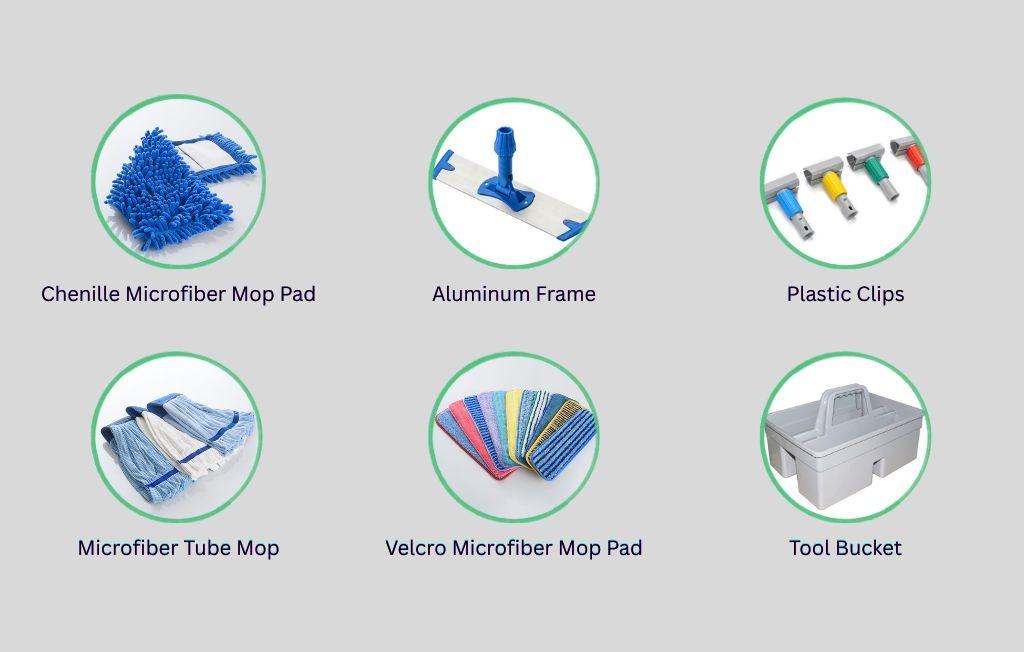
A supplier’s product range can reveal a lot about capability.
Look for what they produce and who they are catering to. Certain mop factories may only offer mops for smooth surfaces while many also cater mops for concrete floors. It’s always best to look at their catalog.
If you want to get into microfiber mop business, this range is often a good start to look out for:
- Microfiber mops
- Flat mops
- Dust mops
- Wet mop pads
- Specialty mops for concrete floors
- Different yarn blends and constructions
A supplier offering only one or two basic products may be more limited.
Ask what mop styles, materials, and constructions they produce, not just what is listed in the catalog.
That often tells you more about a microfiber mop supplier than pricing alone.
Review Quality Control Systems for Commercial Cleaning Products
Delivering consistent results is the supplier’s job. But choosing which supplier to work with is ultimately your decision, so picking one vigilant with quality control is one of the best decisions you can make.
Ask About Inspection Procedures
Inspection is a crucial step on a microfiber cleaning products manufacturer’s part. Ask how products are checked before shipment. Do they inspect stitching, absorbency, dimensions, and defects? This is a big part of quality control for microfiber mops and says a lot about microfiber mop head quality.
For specialized uses, ask about standards tied to food-contact-grade mops licensing as well. A reliable commercial microfiber mop supplier should be able to explain the inspection process clearly.
Check for Standardized Quality Management

Microfiber mop head suppliers must either follow the ISO standards for quality management systems or similar processes. A structured system often means proper documentation, repeatability, and fewer quality issues.
Consistency Matters More Than One Good Sample
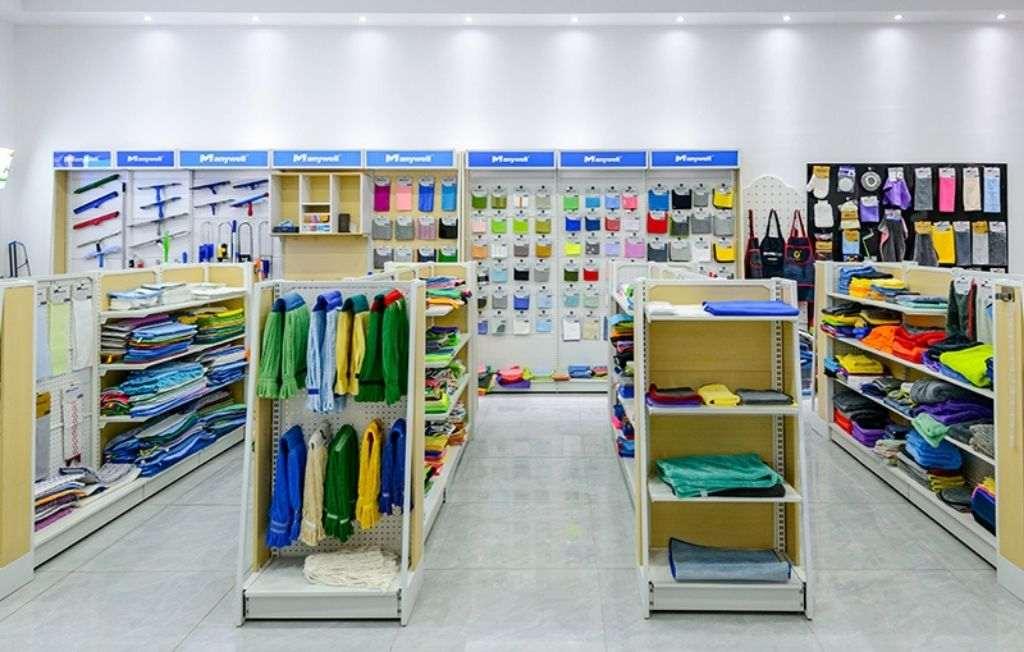
One high quality microfiber mop sample is not enough. The real question is whether every order will match that sample. Consistency in production matters, especially for when you’re marketing high quality material. That is what protects product quality long term.
Manywell takes pride in delivering consistent quality in production, giving clients confidence that what performs in the sample is what carries through in bulk orders.
Many long-term customers rely on that consistency and can rest assured production standards stay dependable.
Evaluate Certifications and Compliance
Certifications help show stronger systems, compliance, and quality control for microfiber mops. They do not guarantee quality, but they are an important filter.
Look for:
- ISO 9001 for quality management
- OEKO-TEX for textile safety
- REACH for Europe compliance
- BSCI or SMETA for audit standards
Also ask for:
- Batch test reports
- Production traceability
- QC inspection records
Assess OEM and Customization Ability

If you want to build a brand, customization matters. A good OEM microfiber mop manufacturer or custom microfiber mop supplier should offer more than stock products.
Look for support with:
- Custom sizes and materials
- Colors and logo branding
- Private label packaging
- OEM vs ODM microfiber cloths options
- Specialty mop pads or custom features
- MOQ, sample times, and artwork revisions
Packaging matters too. Retail, wholesale, and distribution may need different solutions, so a strong microfiber dust mops supplier or mop head manufacturer should help guide those options.
Ask for Export and Shipping Support
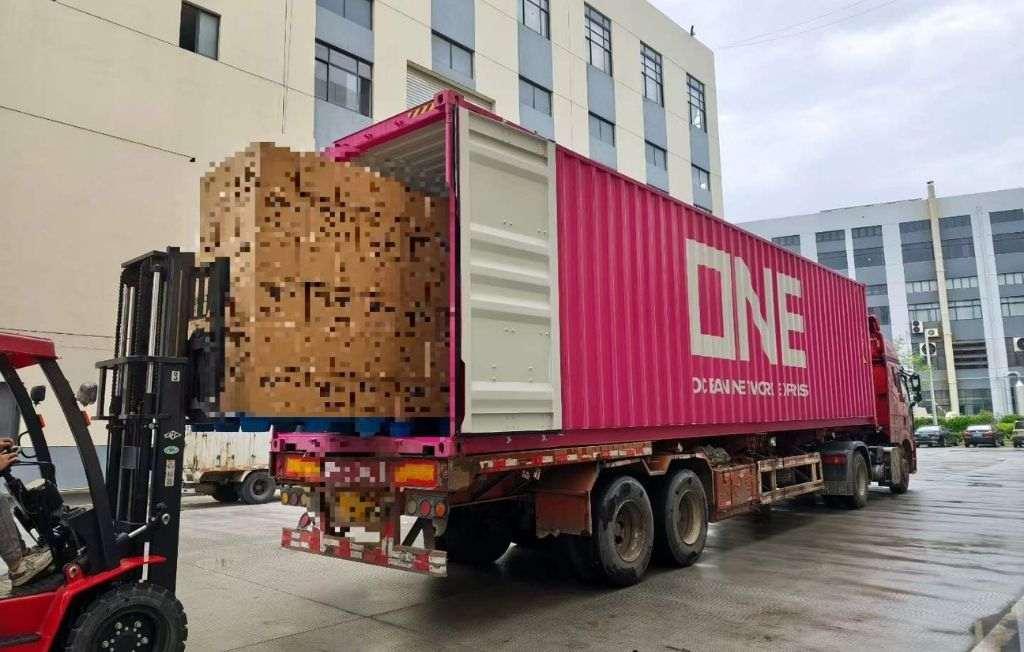
This step matters as much as production. Making good microfiber mops is only part of the job. Packaging, paperwork, and shipping matter too. Weak export support can cause delays and extra costs.
Many Chinese microfiber towel manufacturers like Manywell, usually provide shipping support, but still ask relevant questions.
You may want to look at their export experience, packaging information, shipping documentation, lead times, and how they handle logistics coordination for international orders. These are some questions you can ask your supplier:
1. What export markets do you already ship microfiber mops to, and what shipping documents do you provide?
2. How do you handle packaging and carton specifications for international shipments?
3. What are your lead times, shipping terms, and how do you manage delays or urgent replenishment orders?
This matters if you sell in the US or Europe. This protects the inventory in transit and helps avoid costly mistakes.
Read Customer Signals and Proof of Experience

Customer feedback is practically a goldmine for research. Testimonials often show things a catalog will not. Look for comments about microfiber mops. They will likely give you a detailed review on their quality, durability, proper care, communication, and delivery.
Check product photos, videos, and factory images too. See if the supplier already works with wholesalers or brands selling microfiber dust mops and other cleaning tools for high traffic areas.
Good signals may include products that manage dirt well, cover strong surface area, reduce user fatigue, and use features like ergonomic handles or eco friendly materials.
Questions Buyers Should Ask Before Choosing a Microfiber Mop Supplier
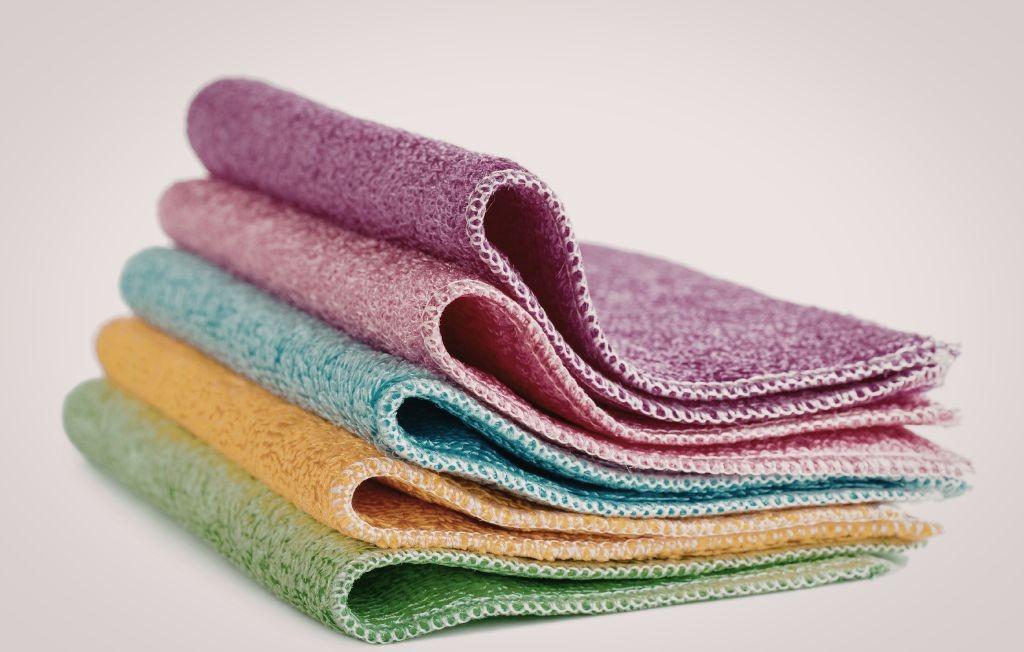
Choosing a supplier can shape your business. A checklist helps you compare suppliers and spot problems early. It also helps you learn how to choose a cleaning tools supplier with less risk.
Ask simple questions:
- What microfiber material do you use?
- Can you show wash data and durability tests?
- Are you a factory or trading company?
- What certifications do you have?
- Can you customize mop pads, colors, or packaging?
- What is your lead time?
- How do you keep bulk orders consistent?
- Can you provide samples?
- What export markets do you serve?
- Do you also supply flat mops, dust mops, or loop end mops?
The answers matter. Good suppliers respond clearly. Great ones give proactive ideas. That is often what separates a supplier from a partner.
Red Flags to Watch Out For
Another checklist should be red flags. Even if you find just one, do not brush it aside. Small warning signs early can turn into much bigger problems later.
Watch for things like:
- Prices far below market level with no explanation
- Unclear specifications
- No real sample support
- Inconsistent communication
- No clear quality control process
- No proof of manufacturing experience
- Unrealistic lead times
- Weak packaging knowledge for export shipments
Final Thoughts
At the end of the day, a microfiber mop supplier should help you deliver products people can rely on. The right mop should clean well, hold up over time, and support real cleaning needs day after day. Poor products get replaced quickly. Well-made systems earn repeat business. That is why taking time to evaluate the right supplier is worth it.
Source Quality Microfiber Mop Pads from Manywell
If you are looking for microfiber mop pads for your business, quality and consistency matter. With 18+ years of experience and customers in 69 countries, Manywell has built a strong reputation for manufacturing microfiber mops buyers can rely on for dependable performance and repeat orders.
Manywell also offers OEM and ODM support, with options to customize materials, construction, and private label packaging. If you are comparing suppliers, you can contact Manywell to discuss your requirements and request samples to see the quality firsthand.