
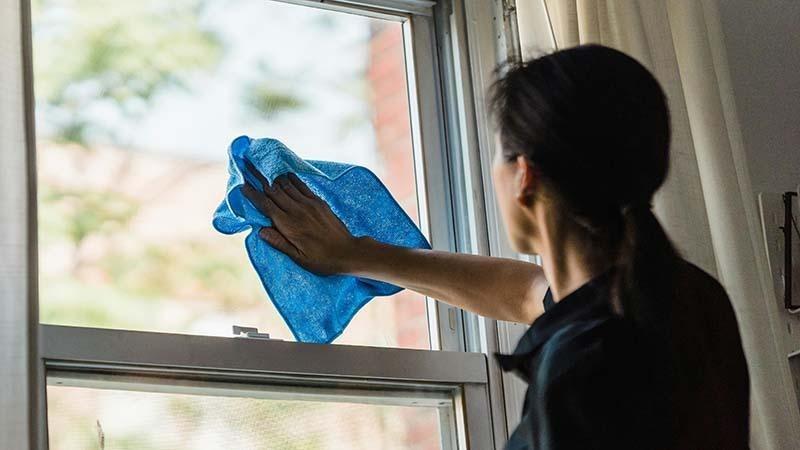
Microfiber cloths, towels, mops, and sportswear are more common than ever. Even natural fibers are mixed with polyester to make them more breathable and reduce costs. Regardless of the applications, microfiber products are still made from plastic polymers.
In this article, we examine the structure of microfibers and chart their environmental impact. We also explain ways in which businesses can be more eco-friendly with microfiber products.
How are Microfiber Products Made?
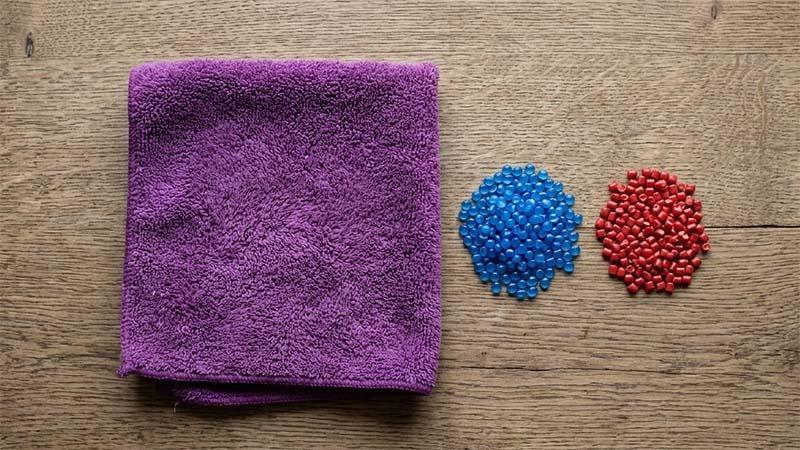
Microfiber fabrics are made by weaving tiny fibers of polyester with polyamide (nylon). Polyester provides the structure, and polyamide improves absorbency and softness.
Microfiber manufacturing starts with pellets of polyester and polyamide. These small plastic pieces are mixed into an optimal blend. The pellet mixture is then melted and extruded through a spinnerette. This results in noodle-like strands of microfiber.
- 70/30 Soft Blend Microfiber: 70% Polyester & 30% Polyamide
- 80/20 Durable Blend Microfiber: 80% Polyester & 20% Polyamide
Next, the strands are stretched, strengthened, and then chopped into tiny fibers. Lastly, these fibers can be woven like traditional cotton fibers. Following is a list of the most popular microfiber products.
- Absorbent Towels
- Soft Cleaning Cloths
- Mop Heads
- Synthetic Clothing
- Athletic Sportswear
- Upholstery for Furniture & Car Seats
- Bedding, Pillowcases, Linen, & More
Why Do People Care About Microfiber’s Environmental Impact?
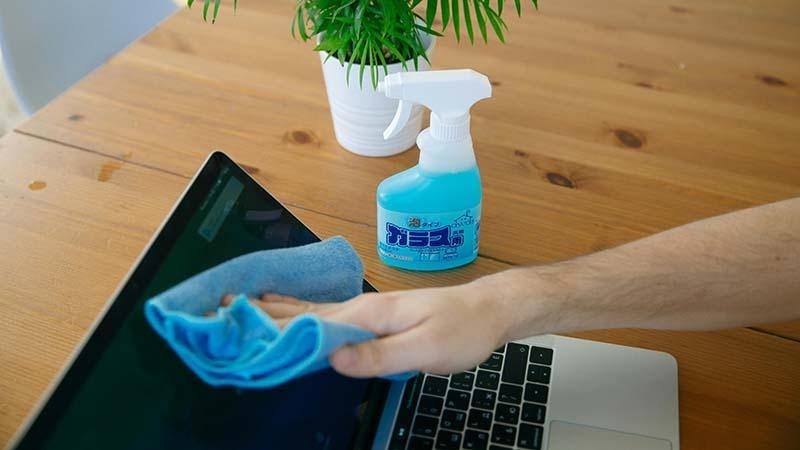
At its core, microfiber cloths are made from polymers (plastics). Since microfiber products are widely used in our everyday routine, people have concerns about synthetic fiber pollution.
The data shows that more consumers are switching to sustainably produced products. So naturally, people are asking questions about the long-term environmental impacts of microfibers. In short, there are five major concerns customers have.
1. Are Microfibers Bad for Marine Animals?
Answer: Yes. When improperly disposed of, microfibers end up in our oceans, which can negatively impact marine life.
2. Are Microfibers Recyclable or Biodegradable?
Answer: Not Really. Individually, polyester and polyamide are recyclable. But when mixed together into microfiber cloths, recycling becomes near impossible. Some companies claim to have solved microfiber recycling, but it’s too soon to tell.
3. Does Microfiber Pollution Impact Personal Health?
Answer: Not Right Now. Microfiber pollution means microplastics. According to the USFood and Drug Administration (FDA), microplastics are present in our environment and food sources. But so far, there is no evidence that it harms our personal health.
4. Are There Better Options Than Microfibers?
Answer: Yes… and No. Conventional cotton fabrics are biodegradable, but they are heavy, less hygienic, and more expensive. Similarly, you can switch to cotton mops & cleaning cloths, but they will be less absorbent.
5. Can You Reduce the Environmental Impact of Microfibers?
Answer: Yes. The first step in sustainability is to use a plastic product for as long as you can. With proper care and smart usage, you can significantly reduce the environmental impact of microfibers.
6 Environmental Advantages of Microfibers
Let’s take a look at the positive impact microfiber has made on our lives. Here are six reasons why people should use microfiber cloths.
1. Microfiber Production Uses Less Water
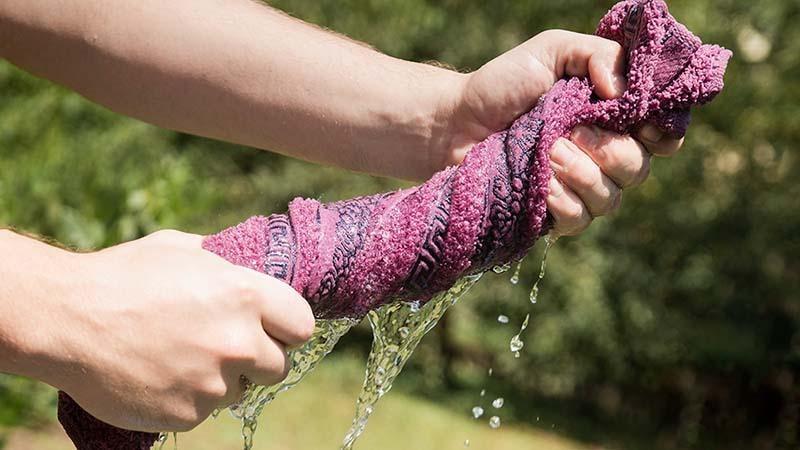
Organic cotton, hemp, bamboo, and other natural fibers are taxing on the water supply. You need lots of water to grow these plants. In comparison, polymers (microfiber bases) are a byproduct of petroleum. Therefore, the use of less water during the manufacturing process.
2. Microfiber Cleaning Cloths are Reusable
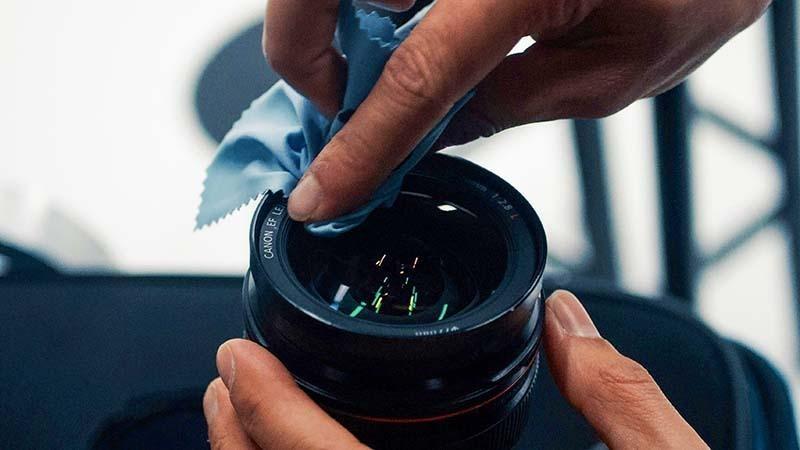
Cleaning tools like paper towels and single-use wipes promote material waste. Instead, you can buy a microfiber cloth once and reuse it hundreds of times. Remember, paper is biodegradable, but single-use paper towels come in wasteful plastic packaging, and it takes energy to produce and transport paper products.
3. Microfiber Products Have a Long Lifespan
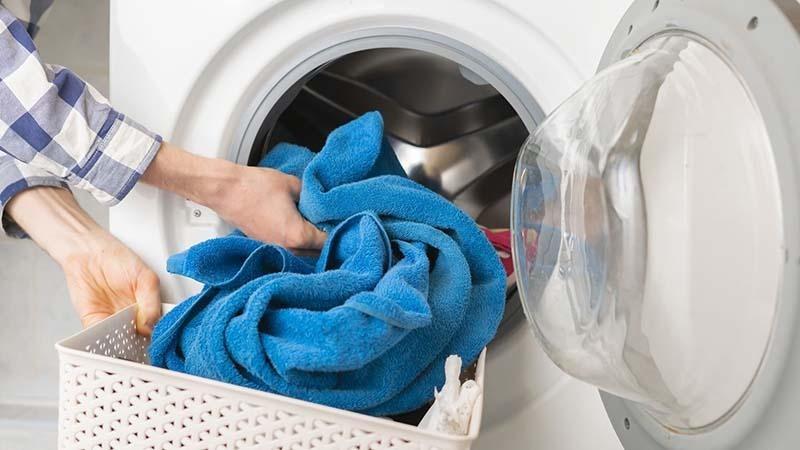
It’s not enough that microfiber products are reusable. They have a high degree of reusability. On average, microfiber products can withstand 400-500 wash cycles. Provided you avoid harmful chemicals, high heat cycles, fabric softeners, and abrasive surfaces.
Let’s convert microfiber wash cycles to years.
- Microfiber bath towels should be washed after every 3-4 uses. Lifespan is 4-5 years.
- Microfiber dust mops should be washed after every use. Lifespan is 1-2 years.
- Microfiber car drying towels are used once or twice a month. Lifespan is theoretically 16 years when washed and stored properly.
4. Microfiber Reduces the Use of Chemical Cleaners
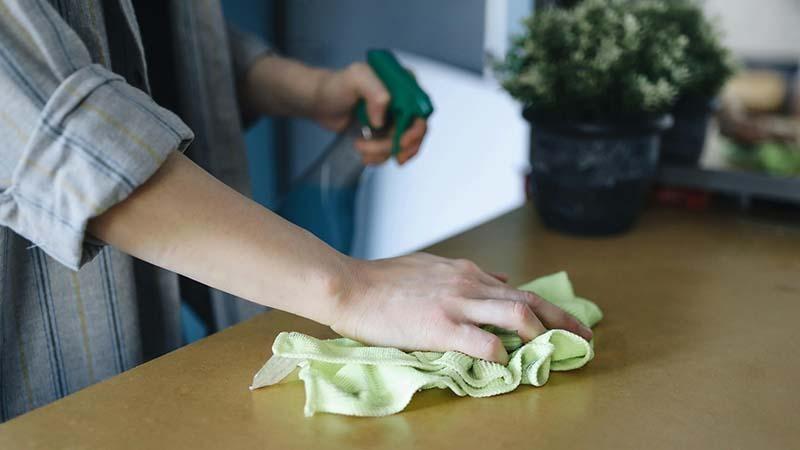
Microfiber is designed to attract dirt and debris. On top of this, they are highly water absorbent and mildly antimicrobial. When using a microfiber flat mop or cleaning cloth, you can clean with just water. For sanitization applications, use a light spray of a bleach or your preferred cleaning agent.
Cleaning chemicals are also harmful to human health. Long-term exposure can damage the skin and lungs through inhalation. Microfiber cleaning products encourage green cleaning, meaning you use fewer chemicals in your daily life.
5. Using Microfiber Cleaning Tools Reduces Water Usage
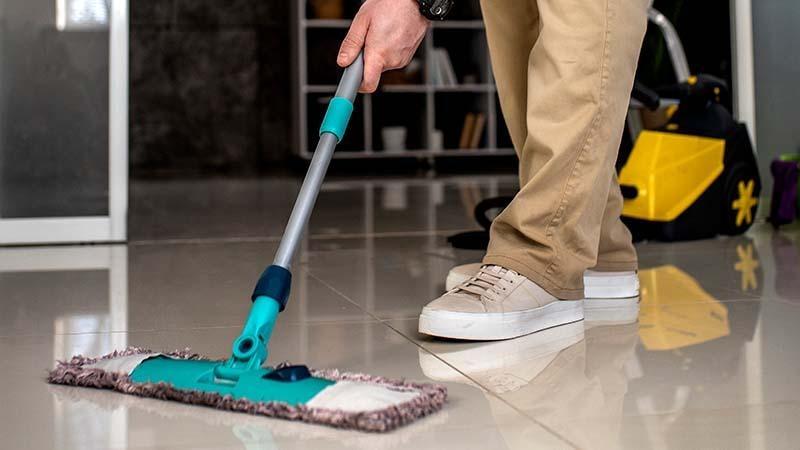
Dry cleaning isn’t just for clothes anymore. Dry mopping and dusting are a great way to clean the house, office building, hotel lobby, and kitchen counter, and digital screens.
With microfiber cloths, you can clean your phone screens and eyewear without the use of any liquid. Let’s be realistic. You will not eliminate the use of water in your cleaning habits. But you can switch to systems that use less water.
6. Recycled Microfibers Are Always an Option
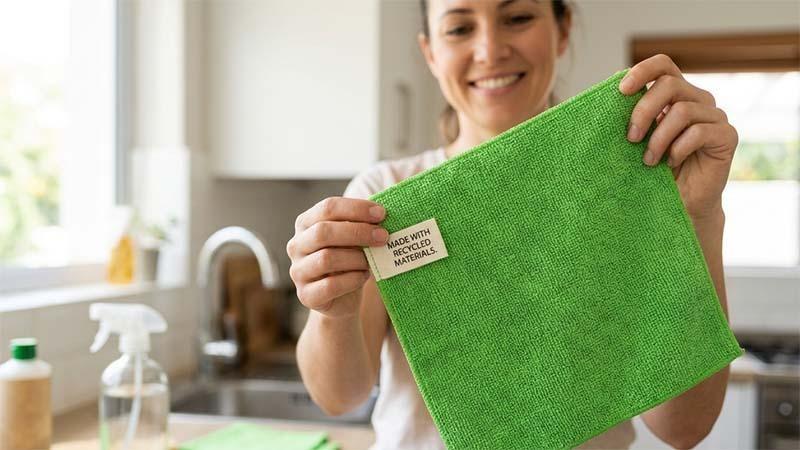
Remember, microfiber blends are hard to recycle. But polyester recycling and polyamide recycling are possible and practical solutions. So look for microfiber products that are made with recycled polyesters instead of virgin materials.
Businesses can contact the microfiber factory directly and ask for a mix of virgin and recycled materials. A Global Recycled Standard (GRS) certification means 20% recycled material was used in the production of the microfiber.
4 Reasons Why Microfibers Are Bad for the Environment
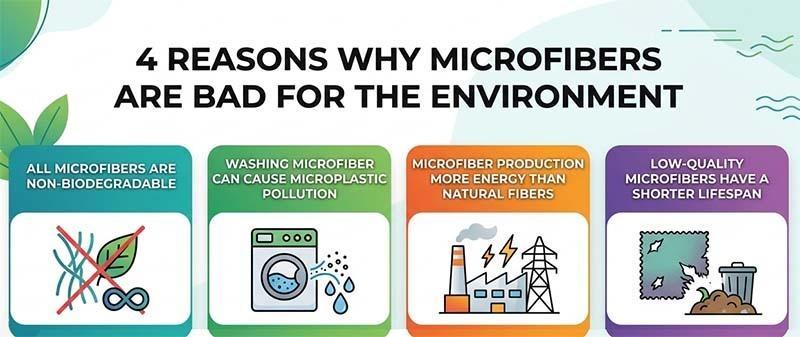
There are two sides to every story. And microfibers aren’t perfect. Here are four ways microfibers are harmful. You can then decide if switching to alternatives is a better option for your business.
1. Microfibers Are Non-Biodegradable
Biodegradable means the item naturally breaks down into water, carbon dioxide, and biomass. Synthetic fibers are non-biodegradable. Meaning even after a hundred years, those microfiber cloths won’t decompose.
We can burn these microfiber cloths and convert them back to energy. But the process results in toxic fumes. Research into recycling microfibers is still ongoing, and we hope for a more concrete solution.
2. Washing Microfiber Can Cause Microplastic Pollution
Large microfiber products end up in the ocean, which harms sea life. Small shredded pieces and small loose fibers end up as microplastics.
Microplastics are everywhere. You’ll find microplastics in fish-related products, water sources, soil, and the human body. Every human today has microplastics inside them.
3. Microfiber Production More Energy than Natural Fibers
The microfiber manufacturing process is energy-intensive. We can’t cover the entire process here. So let’s go over the basic steps.
- Step 1: Convert petroleum byproducts into plastic pellets
- Step 2: Melt and shape the plastics into threads.
- Step 3: Work the threads into durable fibers.
- Step 4: Spin the fibers into a usable yarn.
Making cotton fabrics is much easier. However, as we mentioned above, it comes with a heavy water penalty.
4. Low-Quality Microfibers Have a Shorter Lifespan
Low-quality products are often the biggest problem in any industry. A high-quality microfiber towel will last you a very long time. But a low-quality lightweight might not last a month. The EU has introduced special laws to combat low-quality textiles, also called fast fashion.
Similarly, low-quality microfiber mops and cleaning cloths start to degrade and lint after a few uses. Forcing customers to buy more and throwing away old ones.
How Businesses Can Source Microfibers in an Eco-Friendly Way?
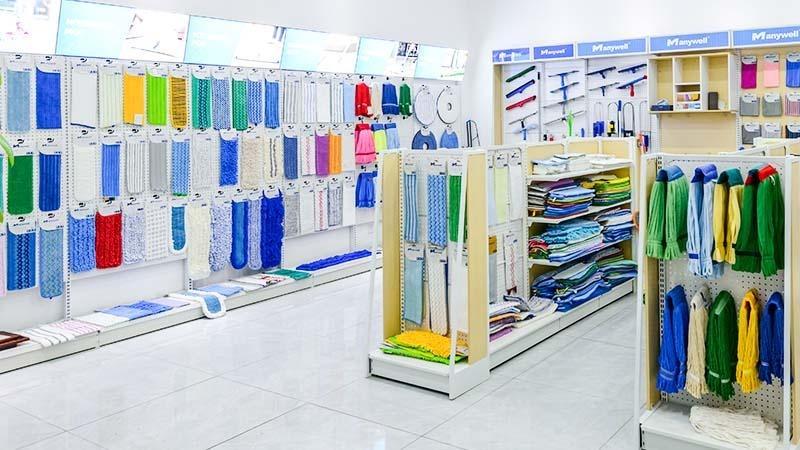
You can improve your business’s sustainability by making small changes.
1. Choose a Reliable Microfiber Factory
Durable microfiber products are reusable, last longer, and reduce environmental impact. Partner with a microfiber factory that is committed to sustainability. Request the use of recycled materials, paper packaging, and always ask for early samples.
2. Embrace Recycling
Even the simplest steps can make a big difference. You can include a percentage of recycled polyester and nylon in your microfiber. It makes your business a little more eco-friendly without compromising microfiber performance.
3. Reduce Your Packaging Waste
Unlike perishables, fabrics don’t require special packaging. OEMs can ship their products in bulk packaging and save money on individual packaging. End retailers can package the microfiber in paper or cardboard for a more eco-friendly approach.
4. List Care Instructions on the Packaging
Let your customer know the proper way to wash and store microfiber cloths. It helps the customers by increasing the life of their products. And it helps the environment by limiting consumption.
Conclusion
Microfiber sustainability is a modern issue. At best, it creates unnecessary waste, and at worst, it creates microplastic pollution. Our current recycling technology is not equipped to deal with blended polymers like polyester and polyamide. But it’s not as simple as picking an alternative. Many natural fiber alternatives are simply not as good as microfiber. Use the information from this article to plan a more eco-friendly course for your business.
Get Ethically Sourced Microfiber Cloths & Towels from Manywell!
Manywell is a leader in the microfiber production space. We have over 18 years of manufacturing experience and deal in all types of microfiber products. Get microfiber towels, cleaning cloths, disposable cloths, flat mops, and more.
All Manywell products are ethically produced. Our factory is compliant with ISO9001 and BSCI requirements. It ensures our production line remains efficient, and product defects are minimized. Contact Us Today!