
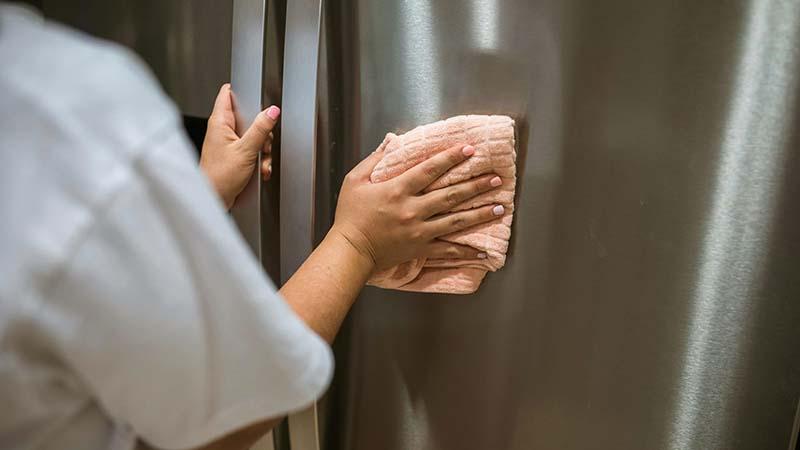
Stainless steel appliances look modern and premium. But they easily show fingerprints, water spots, grease stains, and scratches. The saving grace for stainless steel is soft microfiber cleaning cloths. Theyare completely scratch and streak-free cleaning tools.
This quick guide covers the various issues of cleaning stainless steel and guides you on choosing the right cleaning cloth.
Why Stainless Steel Appliances Are Hard to Clean?
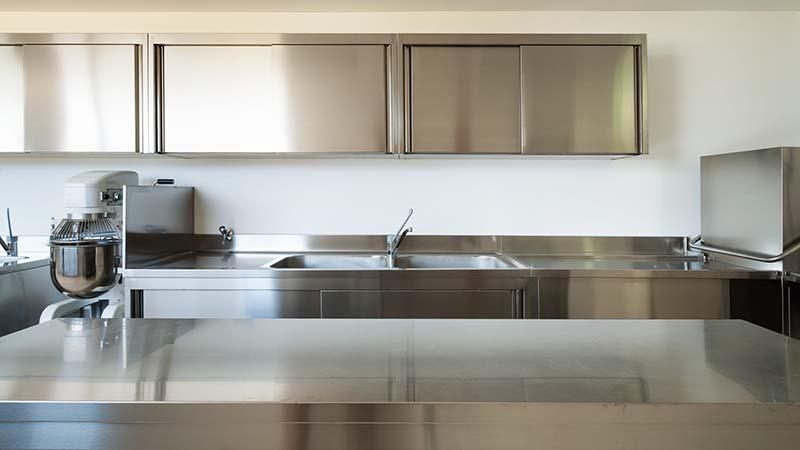
Stainless steel appliances are often polished for a mirror or near-mirror finish. It improves the visual appeal of the appliance but also makes it harder to clean. Polished metal reflects light evenly. Therefore, even the slightest inconsistency in stainless steel surface finish is noticeable.
Even a light smudge from your hand stands out on stainless steel. Because the oils from your skin are imparted on the metal. The oily fingerprints reflect light differently than the polished steel, making it stand out.
Here are six of the biggest issues that arise when cleaning stainless steel appliances.
- Visible Fingerprints from Daily Use
- Water Spots from Light Splashes
- Small Scratches
- Damage from Harsh Chemical Cleaners
- Oil & Grease for Kitchen Appliances
- Minor Corrosion Over Time
Stainless steel is mostly used for kitchen appliances. But stainless steel is also used for sectors.
- Kitchen Appliances (Refrigerator, Microwave, Cooktops, Coffee Machines, Dishwashers, etc.)
- Commercial Kitchen Equipment (Deep Fryers, Grills, Food Prep Tables, etc.)
- Cleaning Appliances (Washing Machines, Tumble Dryers, Vacuum Cleaner Parts, etc.)
- Industrial Equipment (Industrial Mixers, Storage Tanks, Sterilization Tools, etc.)
- Non-Appliances (Sinks, Faucets, Car Parts, Water Bottles, Cookware, etc.)
Our cleaning cloth recommendations and cleaning techniques apply to both regular kitchen appliances and industrial stainless steel equipment.
Microfiber Cleaning Cloths: The Best Choice for Stainless Steel Appliances

Microfiber cloths are designed to capture dirt and prevent water spots without accidentally scratching the cleaning surface. It works like a charm on all stainless steel surfaces.
Let’s talk about the benefits of using microfiber cleaning cloths for stainless steel appliances.
1. High Absorbency
Absorbency is one of the biggest factors in any cleaningproduct. Microfibers ensure that any accidental spills, water splashes, sauces, and soap residue are completely removed from the surface.
2. Streak-Free Shine
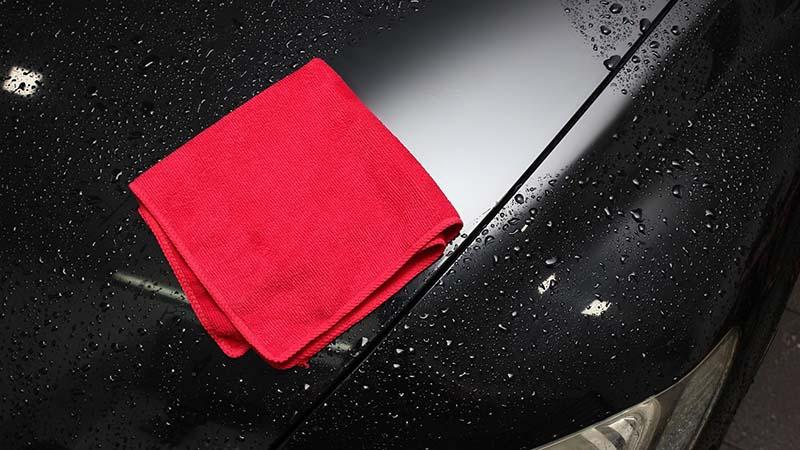
Poor absorbency results in a streaky finish. Microfiber cloths absorb more water than cotton. This means no water spots or streaks on your stainless steel appliances.
3. Easily Remove Fingerprints
Good absorbency applies to oil and water. Fingerprints are mostly water and body oils. So, an absorbent microfiber cloth is really helpful in removing fingerprints from clean stainless steel.
4. Good Dust & Dirt Capture
The tiny fibers in microfiber create small electrostatic charges that attract and trap dust particles. Where a cleaning rag drags dirt across the surface, microfibers actually capture it.
5. Scratch-Free Cleaning
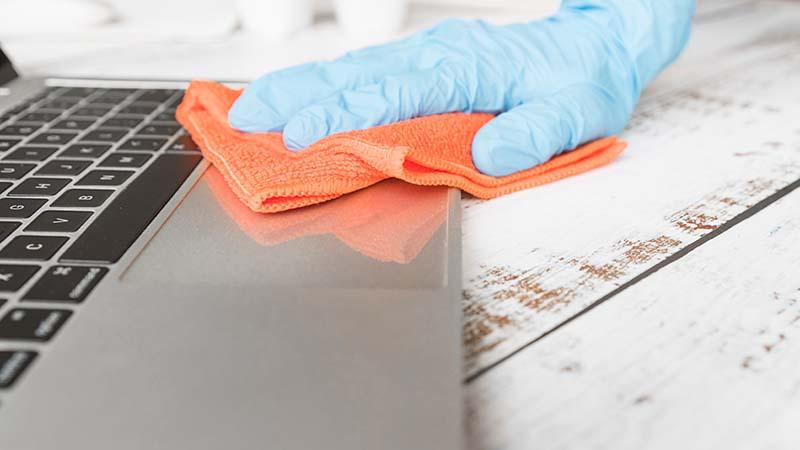
Microfiber cleaning products are exceptionally soft. Combine softness with good absorption and dirt collection, and you get a cleaning cloth that doesn’t scratch.
6. Lint-Free Performance
Mirofiber cloths come in flat and plush designs. A flat weave cleaning cloth has a smooth surface that doesn’t snag on edges. This means fewer chances of cleaning cloths shedding loose fibers or lint.
7. Use Less Stainless Steel Cleaner
You don’t need a dedicated cleaning solution with microfiber cloths. Warm water and a soft cloth can remove most of the dirt buildup on stainless steel. For tough stains, you can use some dish soap and a little elbow grease.
8. Quick Drying
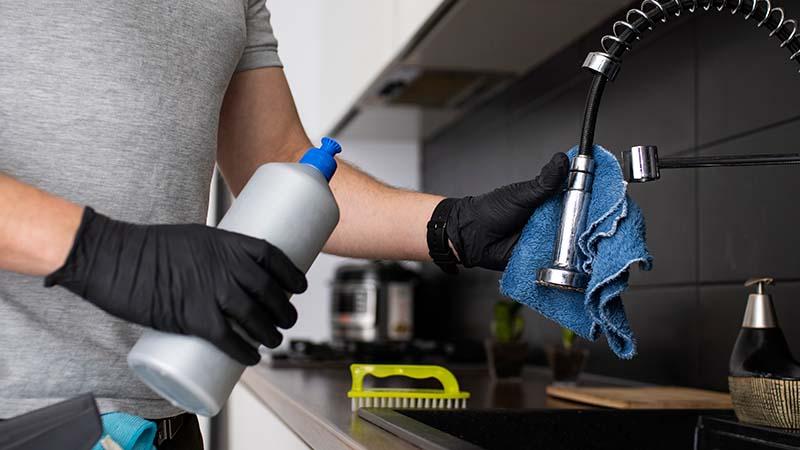
Microfiber cloths are also quick-drying. After you clean your stainless steel appliances, the cleaning cloth will dry faster and be ready for cleaning again. Something not possible with older cotton towels or cloths.
Microfiber vs Cotton vs Paper Towels for Stainless Steel
Let’s compare the performance of microfiber cleaning cloths with industry alternatives. Your other options are cotton cloths, then paper towels, and soft sponges.
Table 1 – Comparing microfiber, cotton, paper, and sponge cleaning tools for stainless steel surfaces.
| Properties | Microfiber Cloth | Cotton Cloth | Paper Towel | Cleaning Sponge |
| Absorbency | Excellent | Good | Moderate | Good |
| Durability | Very High | Moderate | Very Low | Moderate |
| Dry Cleaning Performance | Excellent | Good | Poor | Poor |
| Wet Cleaning Performance | Excellent | Good | Moderate | Excellent |
| Lint Performance | Excellent | May Leave Lint | Will Leave Fibers | Lint-Free |
| Streak Resistance | Excellent | Moderate | Poor | Moderate |
| Scratch Resistance | Excellent | Good | Good | Depends on Surface |
| Fingerprint Removal | Excellent | Moderate | Low | Good |
| Chemical Usage | Low | Moderate | Moderate | High |
| Reusability | Highly Reusable | Reusable | Single-Use | Reusable |
| Washability | Excellent | Excellent | Not Washable | Limited |
| Cost Per Use | Low | Low | High | Moderate |
| Suitability for Stainless Steel | Excellent | Good | Limited | Limited |
Microfiber cloths lead in almost every category, with cotton cloths coming in second. By comparison, paper towels and sponges are just not up to the task.
- Microfiber Cloth: Use as an all-purpose cleaning cloth.
- Cotton Cloth: Use for large spills and general wiping.
- Paper Towels: Use for small spills and emergency wiping.
- Sponges: Use for deep scrubbing and stubborn stains.
- Steel Wool: Only as a last resort in desperate situations, like cleaning burnt food off a hot pan. It will ruin the stainless steel surface.
How to Clean Stainless Steel Appliances?
Let’s start with the basic steps in cleaning stainless steel. This method works for appliances, pans, tables, and other stainless steel surfaces.
Step 1: Identify Stainless Steel Grain & Finish
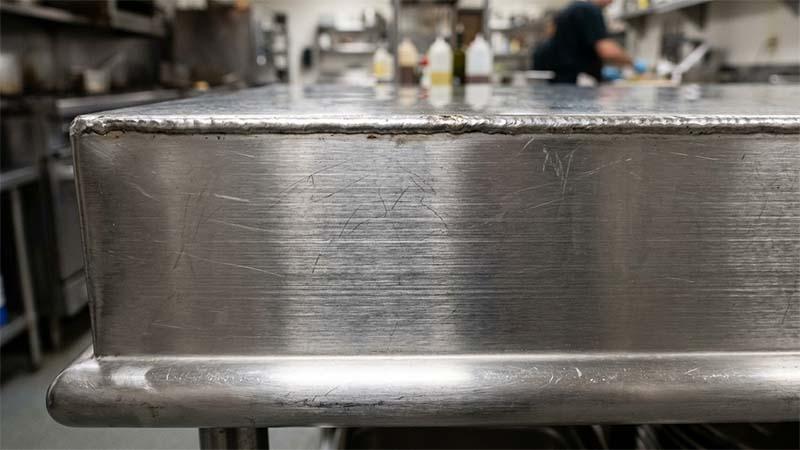
Stainless steel has visible manufacturing process marks called grains or a brushed finish. Grain lines help to hide minor scratches. When you clean stainless steel, move in the direction of the grain.
Additionally, stainless steel may undergo mechanical polishing or high-temperature annealing for different finishes.
Step 2: Remove Dust with Dry Microfiber Cloth
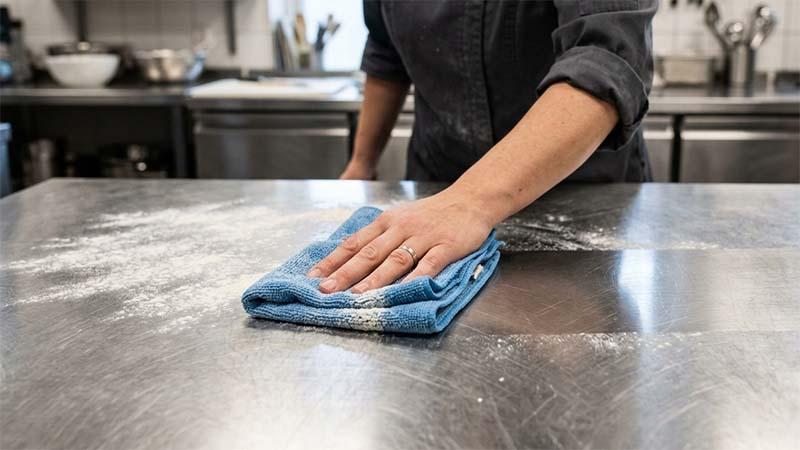
Dusting gently pushes dirt off the steel without pressing it into the surface. So there is a lower chance of scratching. Wipe in the grain direction. So even if you accidentally scratch the surface, it will be less noticeable.
Step 3: Use Damp Microfiber for Deep Cleaning
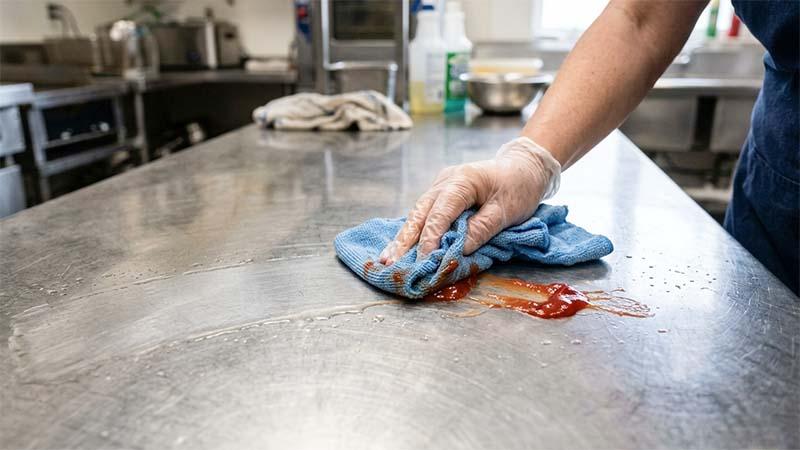
Now use a damp microfiber cloth to clean surface oils, dry dirt, or stuck-on food particles. We recommend using warm water for sugar stains and grease. This is especially useful when cleaning stainless steel pans, ovens, blenders, and other cookware.
Avoid hot water because it can cause thermal shock or warping. Thermal shock is rare in stainless appliances, but not impossible.
Step 4: Dish Soap, Olive Oil, Baking Soda, or Vinegar Solution?
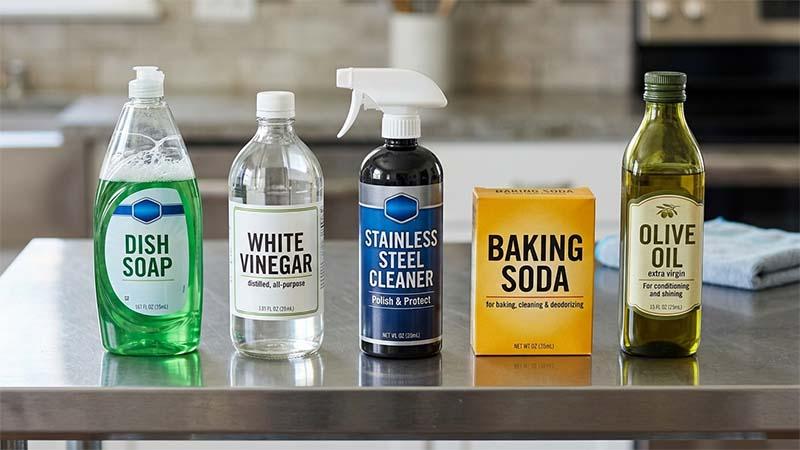
Finally, let’s discuss cleaning chemicals. The internet recommends everything from dish soap to white vinegar. We recommend that you always use these cleaners as a mixture with water to dilute their potency.
Table 2 – Comparing cleaning solutions for stainless steel surfaces.
| Cleaner | Benefits | Drawback | Use on Stainless Steel |
| Dish Soap | De-Grease | Basic Cleaning | Recommended |
| Vinegar Solution | Remove Water Spots | Can Stain | Recommended |
| Commercial Cleaner | De-Grease | Expensive | Recommended |
| Baking Soda Paste | Abrasive | Will Scratch | NOT Recommended |
| Olive Oil | Shiny Finish | Sticky Oily Finish | NOT Recommended |
Step 5: Dry the Surface with a Microfiber Cloth
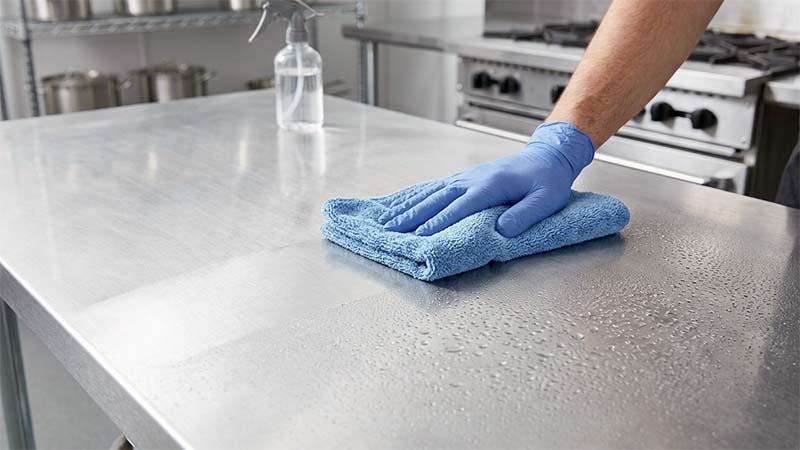
After you clean everything, wipe down the steel surface with a clean, dry cloth. This will remove small amounts of water, oil, and cleaner residue left on the surface. Additionally, you can apply a stainless steel polish after this step. It will protect the steel from dirt and rust.
Professional and home cooks should develop a daily cleaning routine. Remember, stainless steel has a delicate exterior and requires proper care.
How to Choose the Right Microfiber Cloth for Stainless Steel Appliances
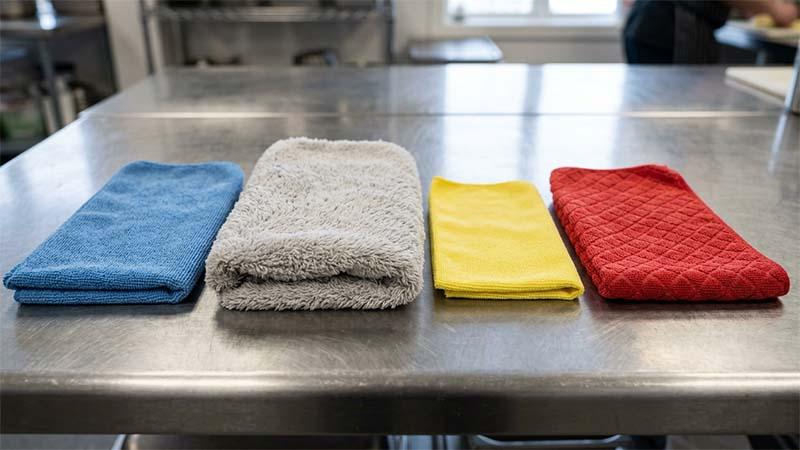
Now let’s talk about how to choose the right microfiber cloth for cleaning tasks.
- Fabric Blend: Fiber blends are ratios of polyester (70%) and polyamide (30%). 70/30 is softer and 80/20 is more durable.
- Cloth Weave: Flat weave has low absorbency and lower scratch risk. Textured (waffle or fish-scale) weave increases absorbency while staying scratch-free.
- Microfiber GSM: This refers to fabric weight. Heavy GSM microfiber absorbs more water but also takes longer to dry.
- Cleaning Cloth Size: Use a 24×24 in. cleaning cloth for large appliances and a 12×12 in. cloth for small appliances.
- Packaging Options: For bulk business procurement, ask the manufacturer to bulk pack the cleaning cloths for cost savings. Alternatively, you can ask the microfiber factory for individual packaging to save time.
- Get Samples from Factory: Always request early samples from microfiber factories to make sure they are up to your standards.
- Bulk Procurement: Microfiber cloths are small, lightweight objects. Their shipping and production costs are tied to economies of scale. Meaning bulk orders result in a lower price per unit.
Conclusion
Stainless steel is an easy-to-clean material, but hard to keep scratch-free. It’s a rust-resistant and long-lasting metal with a shiny surface finish. So as long as we are careful in our cleaning practices, stainless steel appliances will remain free of marks and scuffs. Use microfiber cleaning cloths paired with smart cleaning techniques for the best results.
Get Stainless Steel Safe Microfiber Cleaning Products from Manywell
Manywell has over 18 years of microfiber manufacturing experience. We specialize in stainless steel-compatible microfiber cleaning cloths, disposable cloths, and scrubbing sponges. All of our products come with quality assurance and a satisfaction guarantee.
We offer significant discounts to businesses and B2B procurement. You can also customize your order and get cleaning cloths with your brand colors and logo. Contact Us Today!