
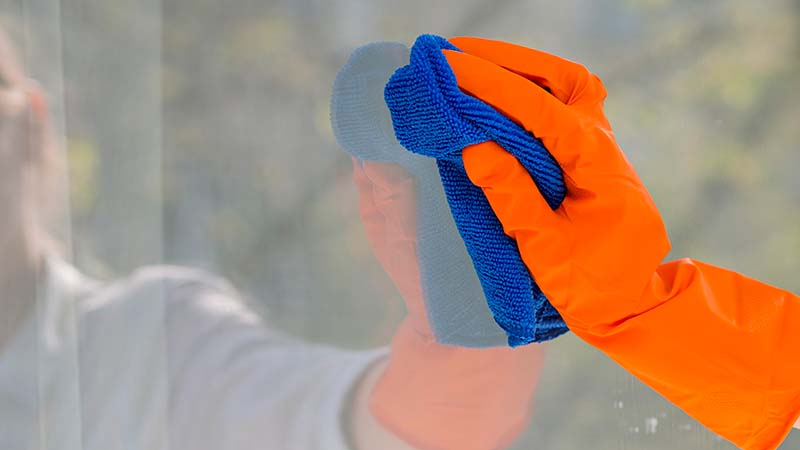
Microfiber towels, cleaning cloths, and mop heads all share the same base materials. The differences in cleaning performance arise from the various microfiber properties.
In this article, we explore the seven key properties of microfiber fabric and their impact on cleaning performance.
What Are the Main Properties of Microfiber?
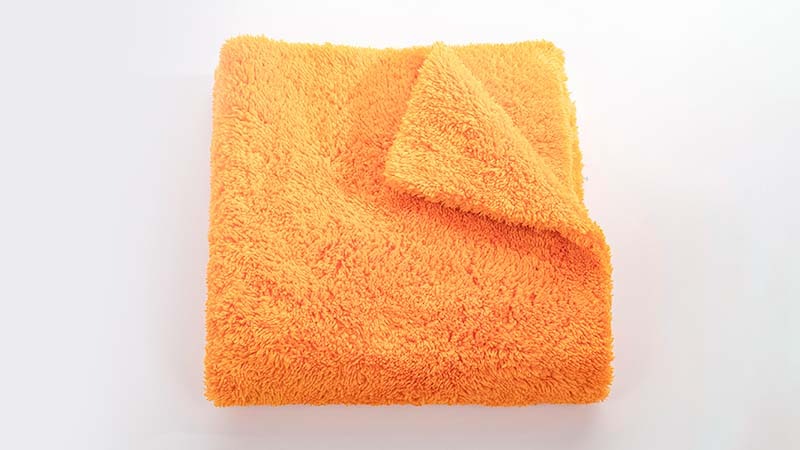
Microfibers have several unique material properties that translate to excellent cleaning products. Manufacturers can customize these properties to enhance the absorbency, softness, and durability of microfiber cloths.
Here are seven main properties of microfiber fabrics.
1. Fine Fiber Structure
Microfibers are ultra-thin synthetic fibers. On average, microfibers are less than 1 denier thick. This means a single 9000m long microfiber yarn weighs less than 1 gram.
Fine fibers have several key advantages. They result in a softer microfiber fabric that remains lightweight. Smaller microfibers also increase the surface area of the final woven fabric. In microfiber, this characteristic results in greater surface contact.
High surface contact increases cleaning efficiency. Firstly, it improves water absorption through the fine microfibers. The fine fibers also trap small dirt and dust particles, which reduces the amount of water required for cleaning.
2. Softness and Flexibility
Softness and flexibility are also directly related to the finer microfiber structure. The super small microfibers have a pleasant skin feel. Microfiber manufacturers further optimize the softness with various weaving techniques that convert the raw fibers into a soft microfiber cloth.
When you weave smaller fibers, they will result in a flexible fabric. Meaning microfiber cloths and towels can be easily folded, twisted, and squeezed dry. Excess heat can damage the small and delicate microfibers. Hence, high-heat tumble drying often results in a dry and stiff microfiber cleaning cloth.
To preserve the flexibility of microfiber products, you should prioritize air drying.
3. Hydrophilic and Oleophilic Properties
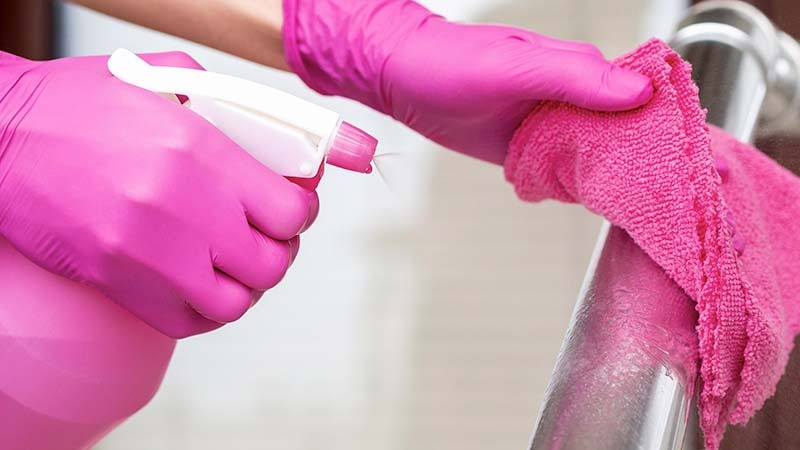
A good microfiber cleaning product must be able to clean water- and oil-based stains. This is where microfiber blends come in handy.
All microfiber products are made from a blend of Polyester (PET) and Polyamide (PA/Nylon). Polyester provides the microfiber structure, and nylon brings the softness. The most common blend ratio for microfibers is 80/20. This means it contains 80% polyester and 20% polyamide.
Here is the interesting bit. Polyester is hydrophobic but oleophilic. But its partner, polyamide, is hydrophilic.
- Hydrophilic: Materials that attract water. So, polyamide improves water absorbency.
- Oleophilic: Materials that attract oils. So, polyester improves oil and grease absorbency.
- Hydrophobic: Materials that repel water. So, polyester doesn’t increase water absorbency.
This means a microfiber cloth has the perfect properties for all types of cleaning tasks.
4. Moisture Absorption and Retention
Microfibers are moisture-absorbing because of the natural hydrophilic properties of polyamide. However, the fine fiber structure further increases the moisture absorption rate of microfiber fabrics.
Next, the various microfiber weaving techniques improve fabric weight, density, and GSM. These techniques ensure that the microfiber cloth can hold on to the liquid for a longer period.
Good moisture retention ensures you do not end up with water streaks as you clean glass, metal, or polished surfaces.
5. Tensile Strength and Durability
First, let’s separate these two similar but overall different microfiber cloth properties.
- Tensile Strength: The ability of microfibers to withstand large pulling forces.
- Durability: Microfiber’s ability to retain its shape and performance after repeated use, washing, and general wear.
The two key components (polyester and polyamide) of microfiber fabric are both incredibly strong. So microfiber towels and cleaning cloths have a naturally higher tensile strength.
Durability is complicated. Microfibers are durable, and microfiber towels can last several years. However, to achieve that level of longevity, you need to take precautions. Wash microfiber cloths in cold water using a mild detergent and absolutely no high-heat drying. You also should avoid rough surfaces and sharp corners when cleaning.
6. Electrostatic Properties
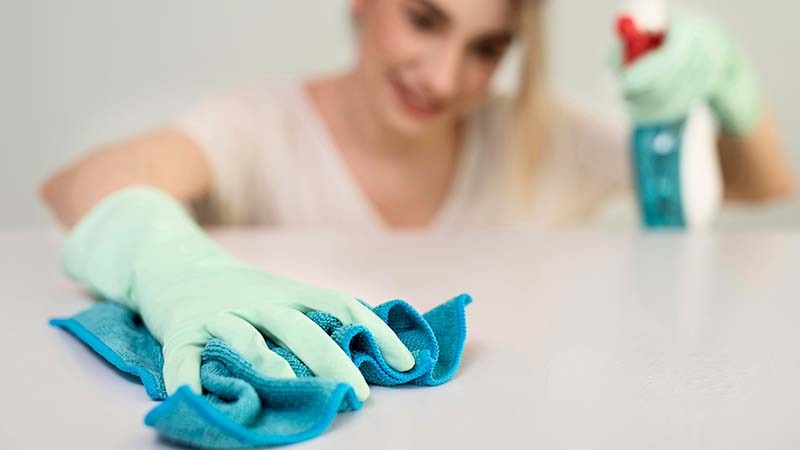
Static electricity refers to loose electrons that accumulate on the surface of synthetic fibers. It occurs when two different materials come into contact. This results in the transfer of surface electrons from one material to the other.
So when a microfiber cloth gains static charge, it attracts non-charged particles. Hence, cleaning with a microfiber cloth generates static electricity, which then attracts and traps dry dust to the microfiber surface.
This microfiber property improves cleaning performance and decreases the need for liquid detergents.
7. Breathability
Breathability means the microfiber fabric structure allows air to pass through its surface. Good breathability improves microfiber drying times. It ensures that your microfiber towels don’t stay wet and musty after use.
This prevents bacterial growth and also ensures a dry and soft surface. Breathability also means microfiber cloths can be air-dried quickly.
Table 1 – Microfiber properties and their impact on cleaning performance
| Microfiber Properties | Impact on Cleaning |
| Fine Fiber | Improves Softness & Reduces Weight |
| Softness | Reduces Scratching Risks |
| Flexibility | Easier to Clean Complex Shapes |
| Hydrophilic & Oleophilic | Suitable for Water & Oil Cleanup |
| Moisture Absorption | Improves Water Cleanup Rate |
| Moisture/Liquid Retention | Less Water Streaks |
| Tensile Strength | Ability to Stretch Without Breaking |
| Durability | Increases Microfiber Lifespan |
| Electrostatic Charges | Attracts and Traps Dry Dust |
| Breathability | Faster Drying & Reduces Bacteria |
What Are the Benefits of Microfiber for Businesses & Homeowners?
Depending on your use case and cleaning applications. You can enhance your cleaning performance and reduce your cleaning time.
Let’s talk about the various benefits microfiber products bring to your cleaning habits and businesses.
1. Soft and Gentle on Surfaces
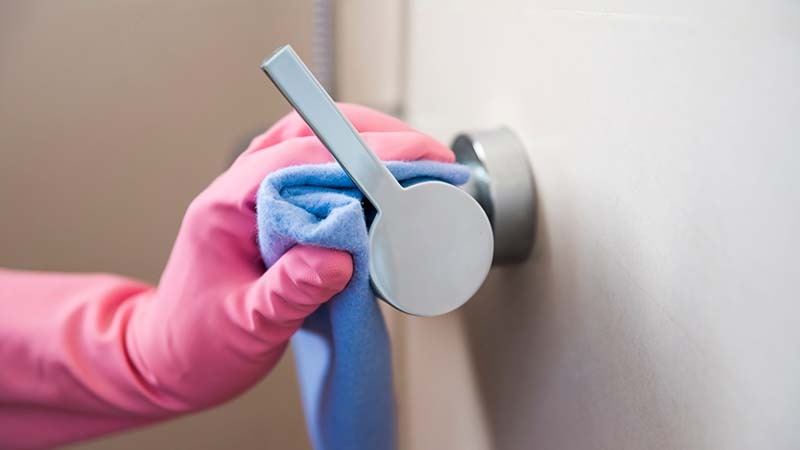
Microfiber products are known for their exceptional softness. Cleaning with microfiber cloths uses less force as the fibers naturally attract water and dust.
Therefore, microfiber cleaning cloths will ensure your delicate surfaces remain scratch-free. This applies whether they are eyewear lenses, phone screens, antique furniture, vinyl floor panels, or stainless steel kitchen appliances.
Less pressure is required with microfiber cloths. This means you have a lower risk of scratching surfaces with microfiber.
2. Effective Moisture Absorption
Absorbency is microfiber’s greatest capability. For similarly sized cleaning cloths, the microfiber will absorb seven times more moisture than a cotton one. But it’s not only the quantity. Microfibers also absorb moisture a lot faster than other materials.
Effective moisture absorption increases overall cleaning speed. It also ensures there are no water streaks (water spots) on clear glass surfaces after drying.
Hence, most automotive cleaning companies exclusively sell microfiber-based car drying towels.
3. Lightweight and Easy to Handle
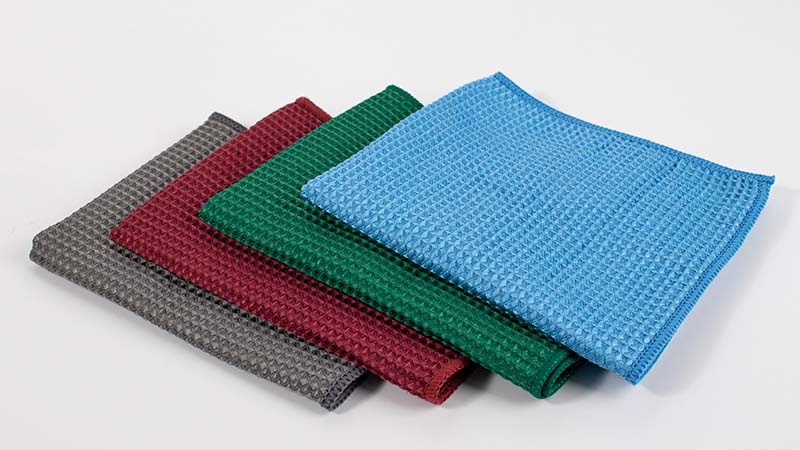
Weight is a big part of any cleaning tool. Microfiber cloths offer excellent cleaning performance and absorbency in a much smaller and lighter package.
Lightweight microfiber cloths are more flexible, making them easier to use around corners and tight spots. Thicker microfiber towels are useful for larger surfaces. But for fine detailing, a low GSM (lightweight) microfiber cloth is ideal.
Microfiber manufacturing factories often offer a wide range of weights and sizes for their microfiber products.
4. Durable and Long-Lasting
Microfibers strike a good balance between cleaning performance and durability. Under normal usage, it’s almost impossible to damage a microfiber cleaning cloth. Manufacturers can increase durability with an 80/20 microfiber blend or prioritize softness with a 70/30 blend.
With proper care, microfiber cleaning cloths can easily last several years. This means
- Hand-wash microfiber cloths or machine-wash on a gentle cycle.
- Avoid fabric softeners, as they can clog up the microfibers.
- Avoid harsh chemicals and strong bleach that can discolor or damage the microfibers.
5. Versatile Applications
A big advantage of microfibers is that they are versatile. A single microfiber cloth can be used for several different cleaning tasks.
- Microfiber terry cloths can be used for tables, walls, appliances, and any other fixture.
- Suede weave microfibers can be used for glass, metal, ceramic, and painted surfaces.
- Waffle weave microfiber towels are useful for every type of kitchen cleaning task.
6. Efficient Cleaning Performance

If you take all of the above benefits and express them in one word. It would be efficient. Microfibers are the most efficient cleaning tool we have today. They use less water, less soap, and less effort to achieve the same results as other cleaning cloths.
In terms of space coverage, microfiber cleaning cloths occupy less space than equivalent cotton cleaning cloths. Less storage space is particularly useful for businesses that have less floor space.
FAQ
What is the Best Microfiber Cleaning Cloth for Household Use?
You should use a twisted loop microfiber towel for high-absorbency cleaning and a waffle weave for general kitchen cleaning.
Is Microfiber a Natural or Synthetic Material?
Microfiber is made from a blend of two synthetic materials (polyester and polyamide).
Are All Microfibers the Same?
No. Microfibers differ mainly based on blend ratio. 80/20 microfibers contain more polyester and are more durable. 70/30 microfibers contain more polyamide and are softer.
Does Microfiber Lose Its Properties Over Time?
No. When properly maintained. Microfiber retains its properties and cleaning performance for many years.
Can Microfiber Be Used on All Surfaces?
Yes. Microfiber cleaning cloths can be used on all types of surfaces. However, abrasive and rougher surfaces will damage the microfibers over time.
Conclusion
Microfibers have lots of properties that are beneficial for cleaning applications. From their fine fiber structure to their incredible absorbency, you can clean almost any surface and any stain with a microfiber cloth. These properties are particularly beneficial for business owners who need hygienic, reliable, and long-lasting cleaning cloths.
Get the Best Microfiber Cleaning Products from Manywell!
Manywell is one of the biggest manufacturers and suppliers of high-quality microfiber cleaning products. We offer nearly a dozen types of microfiber towels, microfiber mop heads, and various microfiber tear-away cloth rolls.
Every microfiber product in our catalogue is fully customizable. Choose colors that represent your brand and add flourishes like your mascots or company logo to the microfiber cloths.