
In commercial settings, that luxury of cleaning neglect doesn’t exist. A streaky mirror in a hotel room. A smudged glass door at the office entrance. Either one can shape a customer’s opinion before they’ve even said hello.
One of the biggest pieces you need to get right is the cleaning cloth itself. A glass cleaning cloth has to be built with the end user in mind, so the results come out spotless and a lot easier.
In this guide, you won’t just learn what makes the perfect microfiber cloth for glass, but where to find it, so consistency in your service is never a matter of speculation.
Why Microfiber Cloths are The Best Cloth for Cleaning Glass?
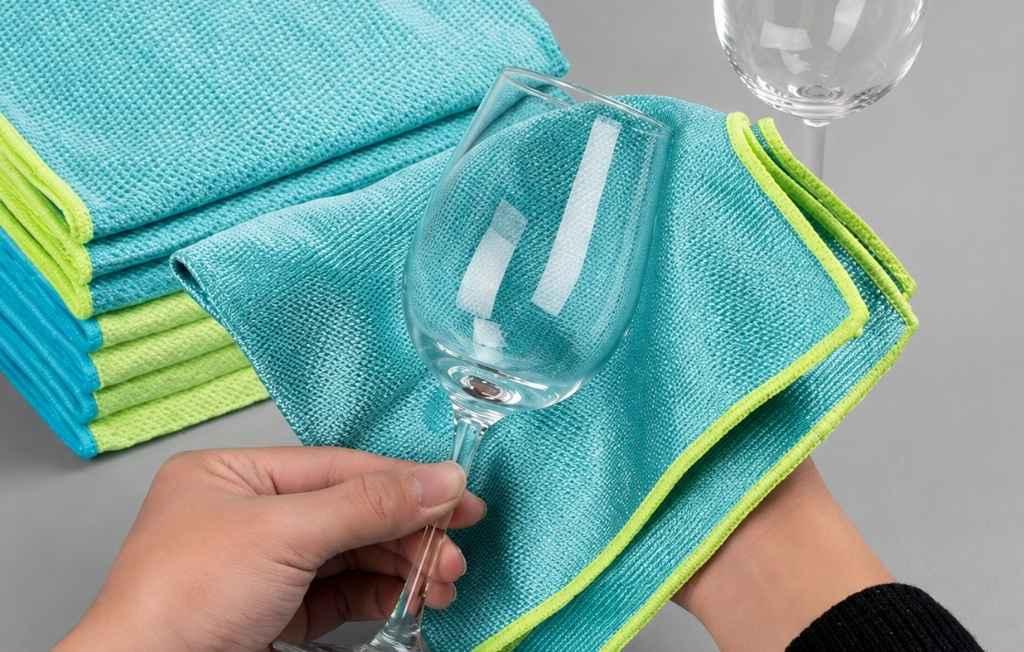
Glass needs a cloth that can remove dust, fingerprints, grease, moisture, and cleaning residue, without leaving anything behind.
Microfiber glass cleaning cloths are non abrasive and thus are the best cloths for this job. Its fibers are extremely fine and split apart. This lets them trap dust and dirt using static charge, instead of just pushing them around smooth surfaces.
The dense fiber structure makes them the perfect streak free glass cleaning cloth. The denseness helps the cloth soak up moisture more evenly. That means fewer water streaks and cloudy patches. Unlike what you often see when glass is wiped with cotton cloths, paper towels, or regular rags.
Microfiber is particularly useful for glass because it:
- Picks up fine dust and loose particles
- Absorbs fingerprints, grease, and skin oils
- Removes moisture before water spots form
- Collects cleaning residue that can create haze
- High-quality microfiber cloths can withstand hundreds of washes
- Requires fewer repeated wipes
- Cleans effectively with less chemical solution
- Remains gentle on most glass surfaces
Why Ordinary Cleaning Cloths Often Fail on Glass
If you’ve found your company using cotton cloths or paper cloths to wipe off glass, it shouldn’t come as a surprise when stains are left behind.
Here are a couple of reasons why you should steer clear of cloths that aren’t specifically built for glass cleaning.
- General purpose cleaning cloth can leave lint behind and give glass a cloudy appearance.
- They spread moisture around instead of effectively absorbing it, leaving streaks behind.
- Takes up more time and effort as they don’t effectively clean surface on a single wipe.
- The wrong cloth if rubbed across dirt can leave scratch marks.
- Require harsh chemicals for cleaning, and eventually wear out fast.
- Cloths that are not meant for large-scale cleaning will give inconsistent cleaning.
The Anatomy of a High-Performance Microfiber Glass Cloth
What makes the best microfiber cloth for glass depends on many fabric specifications. And even then, glass surfaces vary between camera lenses and window glass. A single microfiber cloth for cleaning glass isn’t the solution for all glass types.
Material Blend
Microfiber cloths are usually made from a blend of polyester and polyamide. Polyester, being in higher content than polyamide, contributes to the cloth’s structure, strength, and durability. Polyester contributes to its soft-feel and absorbency.
Where polyester picks up dirt and oils from the surface, polyamide helps retaining them in the cloth.
The ratio between polyester and polyamide is usually either 80:20, or 70:30. Naturally, they both perform differently, and thus have expertise in different cleaning surfaces.
| Fiber composition | What the cloth does | Best commercial surfaces |
|---|---|---|
| 100% polyester | Provides firm wiping, low water retention, and fast drying. Better for dry polishing than wet cleaning. | Mirrors, interior glass partitions, display panels, and final spot polishing |
| 90% polyester / 10% polyamide | Offers light absorbency while retaining a relatively firm wiping surface. Handles dust and minor fingerprints. | Office windows, internal glass doors, mirrors, and lightly soiled partitions |
| 80% polyester / 20% polyamide | Balances grease removal, moisture absorption, controlled drying, and commercial durability. | Standard windows, mirrors, entrance doors, partitions, showcases, and tempered glass |
| 70% polyester / 30% polyamide | Holds more water and cleaning solution while providing a softer wiping surface. Suitable for damp cleaning and sensitive finishes. | Coated glass, tinted glass, window films, mirrored panels, and delicate decorative glass |
Weave Structure
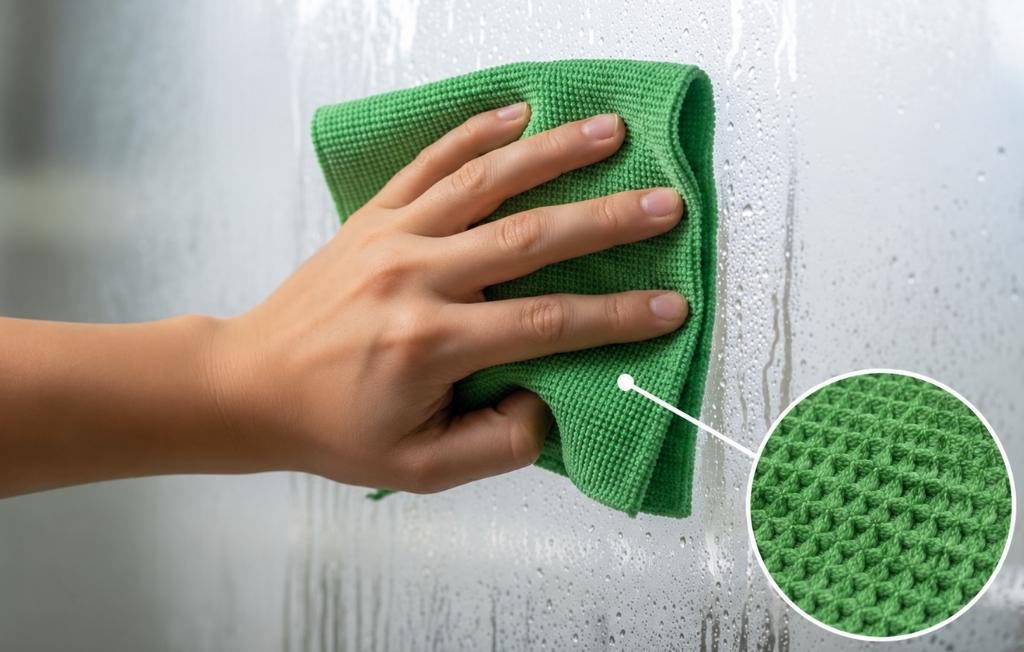
Weave is how a microfiber cloth is knit or woven. It changes how the cloth acts on glass. It can pick up lint. It can soak up water. Or it can wipe away smudges and stains.
For glass cleaning, three weave types work best. These are the ones businesses trust when glass needs to look perfect.
Waffle microfiber glass cloth:
It drains water fast and dries fast too. It’s waffle like weave doesn’t have a very high pile making it great for picking lint and wiping. That’s why it’s the top choice for windows, large glass panels, and commercial jobs where speed matters.
Fish scale microfiber:
Fish scale microfiber cloth has a fine, diamond-shaped texture. It cuts through fingerprints and grease with ease. No bacteria or residue is left behind. That makes it the best cloth for cleaning mirrors, bathroom glass, kitchen surfaces, and car glass.
Suede microfiber:
Suede cloth is flat and smooth, with barely any pile. It won’t pick up much lint or soak up water well. But it shines at wiping off smudges, fingerprints, and streaks. Think camera lenses, phone screens, and other small electronics.
Thickness (GSM)
GSM is how much synthetic fiber is packed per square meter. The more the plushier, but not always better. Low GSM cloths make great microfiber window cleaning cloth because they can absorb water and drag across the surface effortlessly.
While high GSM cloths make premium automotive glass microfiber towel because they are more delicate on the surface and extremely absorbent.
Here’s a clearer look at which GSM ranges work best for professional glass cleaning cloths.
| GSM Range | Recommended Application |
|---|---|
| 200–250 GSM | Glass windows and mirrors |
| 250–400 GSM | Multi-purpose cleaning |
| 400+ GSM | Premium detailing applications |
How to Choose a Glass Cleaning Cloth for My Business Needs
Every glass surface has its own demands, and every setting puts a different kind of stress on a cloth. What works for a home window won’t necessarily hold up in a hotel lobby. Here’s a clear breakdown by application, so there’s no guesswork left when it’s time to order.
Cleaning Windows, Sliding Doors & Glass Tables

Go for: A medium-GSM (300–400) waffle weave cloth with high absorbency.
The honeycomb texture drains water fast and leaves a streak-free, lint-free finish. It makes for the perfect lint free microfiber cloth for big glass surfaces like windows and glass doors.
Mirrors & Bathroom Glass
Go for: Fish scale microfiber with low lint output.
This weave is built to cut through fingerprints, toothpaste residue, and oil buildup, the most common contaminants on mirrors, shower doors, and vanity glass.
For lighter daily dusting on smaller surfaces like makeup mirrors or glass tea tables, a thinner fish scale cloth also works well, though it’s less effective against heavier limescale buildup.
Automotive Glass — Windshields, Windows, Mirrors, Sunroofs
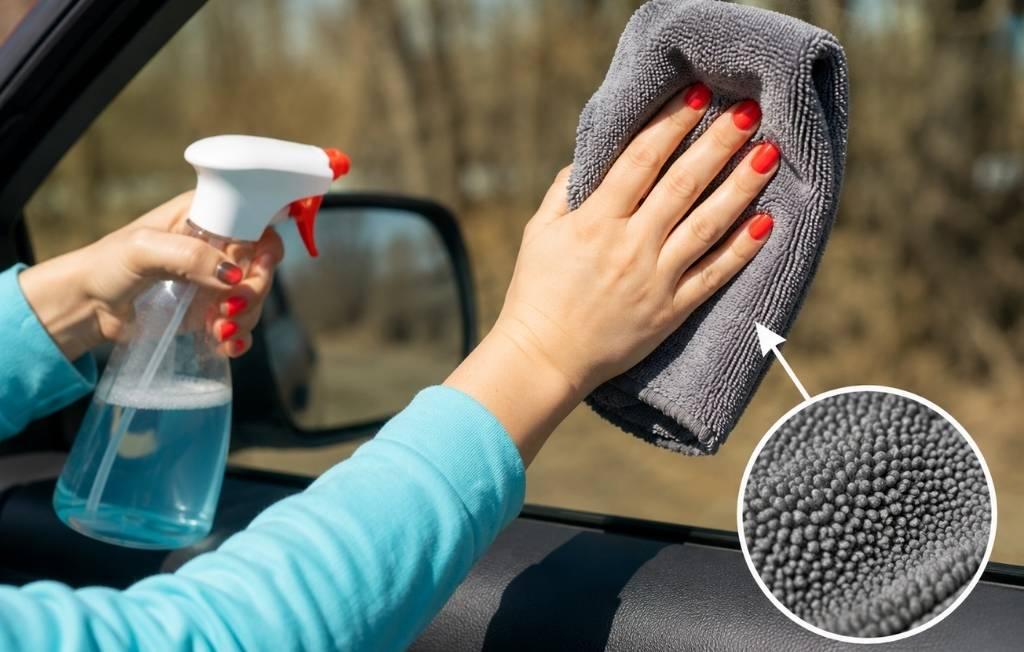
Go for: Edgeless microfiber with a smooth finish, or a double-sided suede composite towel for an all-in-one option.
Edgeless cloths are gentle on curved glass. Stitched edges can scratch car surfaces over time, so it’s safer to skip them. A double-sided suede towel works well too. One side has long pile to soak up water first. The other side has a suede finish for the final polish.
For big surfaces like windshields and sunroofs, most car detailing shops use a thick waffle towel. It’s the standard specification for microfiber towel for windows. A twist loop towel can speed things up. It’s great for pulling off bulk water fast. But don’t skip the final polish, it still needs that last pass to look right.
Commercial Cleaning — Hotels, Offices, Mall Storefronts
Go for: Oversized, industrial-grade waffle towels with reinforced edge finishing.
Durability matters just as much as performance here. These cloths need to handle floor-to-ceiling windows. They go through far more wash cycles than a household cloth ever would. And they need to stay consistent across large batches.
That’s why reinforced edges and bulk-friendly packaging aren’t optional extras. They’re the standard.
Here’s a summary of which glass cleaning microfiber cloth your business should go with.
| Setting | Cloth Type |
|---|---|
| Home windows & glass tables | Medium-GSM waffle weave |
| Mirrors & bathroom glass | Fish scale, low-lint |
| Automotive glass | Edgeless or double-sided suede |
| Commercial/hospitality | Oversized industrial waffle, reinforced edge |
How to Clean Glass with a Microfiber Cloth: Step-by-Step
The right cloth may not always deliver streak free glass finish if the technique is off. Here’s the process of how cleaning professionals clean glass paired with other cleaning products to get crystal clear glass surfaces.
Step 1: Dust the Surface First
Use: A dry, low-lint microfiber cloth (fish scale or suede)
Before any liquid touches the glass, wipe away loose dust and debris with a dry cloth. Dust should be removed before applying cleaning solution to avoid scratches and muddy film.
Step 2: Apply Cleaning Solution
Use: A spray bottle with glass cleaner or just water.
Spray directly onto the glass rather than the cloth. This gives more even coverage and avoids over-saturating one section.
Step 3: Wipe Down with a Damp Microfiber Cloth
Use: A waffle weave microfiber cloth
The honeycomb structure of waffle weave lifts dirt, oil, and cleaning solution off the surface while draining water quickly. Work in straight lines (top to bottom or side to side) rather than circles, which helps avoid streak patterns that show up under light.
Step 4: Remove Excess Moisture
Use: A twist loop pile towel (optional, for larger surfaces)
For bigger glass surfaces — storefronts, large windows, sunroofs — a quick pass with a high-absorbency towel removes bulk water before it has a chance to dry into spots. This step can be skipped on smaller surfaces like mirrors.
Step 5: Final Polish
Use: A dry suede or fish scale microfiber cloth
Once the surface is mostly dry, go over it one more time with a soft, dry cloth to catch any remaining moisture or streaks and bring out a clear, polished finish.
Step 6: Check Under Angled Light
Just tilt your angle to the light source and look across the glass rather than straight at it. Streaks and residue are far more visible at an angle, so this is the real test of whether the job’s actually done.
What B2B Buyers Should Consider When Sourcing Glass Microfiber Cloths
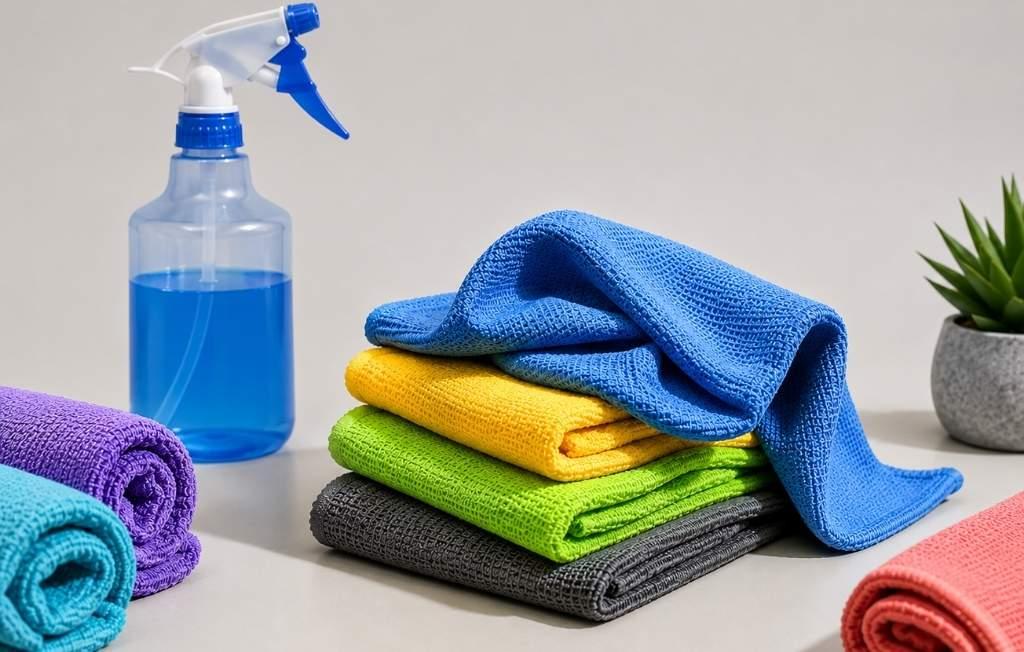
This is where procurement decisions start to look different from a household purchase. Hotels, cleaning companies, auto care brands, and private-label sellers should keep an eye out for the following services.
Customization
Look for options such as:
- Custom sizes and GSM
- Color-coded cloths
- Different weave structures
- Logo printing
- Private-label packaging
Production Capacity
The supplier should offer:
- Consistent quality across batches
- Capacity for large orders
- Reliable delivery schedules
- Relevant OEM or ODM experience
Quality Testing
Before shipment, confirm testing for:
- Absorption
- Lint shedding
- Colorfastness
- Size consistency
Conclusion
Microfiber cloths have immense potential compared to paper towels or cotton cloths. They reduce cleaning product usage, can be washed without fabric softeners, and are gentle on surfaces.
This makes them one of the most sought-after cleaning products in commercial settings. They are not just cost-effective in the long run, but also leave surfaces spotless.
Trust Manywell for Premium Microfiber Cloth Solutions
Manywell understands the real cost of a bad microfiber cloth. That’s why we deliver premium quality microfiber cloths to businesses across many industries.
We don’t just aim to meet every business need. Our ODM services already cover most of what businesses look for. But when you need something more specific, we offer custom services too. You can pick the exact type of microfiber cloth that fits your use case.
This way, you can explore both our ODM and OEM services and find the right fit, one that stays true to your brand identity.
Contact us today to get a quote on your next order.